Attic insulation
Attic insulation for Atlanta homes, done with the roof in mind
Insulation and ventilation work together. Get one right and the other wrong, and the attic still bakes, the upstairs still runs hot and the shingles still age early.
- Calls answered 24/7
- Blown-in and air sealing
- Atlanta service office
Quick answer
Attic insulation in Atlanta is usually blown-in fiberglass or cellulose added to reach the depth the energy code calls for, after air-sealing gaps around lights, pipes and the attic hatch. We keep insulation clear of soffit vents with baffles, so adding it never blocks the roof's ventilation, and we remove old insulation that is wet, compressed or contaminated first.
The work
Why insulation belongs to the roof job
The attic is where the roof and the house meet. Too little insulation lets summer heat pour into upstairs rooms; too much pushed into the eaves blocks the soffit vents that keep the roof deck dry. Gaps around recessed lights and pipes leak conditioned air into the attic, carrying moisture that condenses on the deck.
That is why we handle insulation alongside ventilation, and why re-roofing is a natural time to fix both.
Updated September 2026
We install shingle, metal and membrane systems from GAF, Owens Corning, CertainTeed, Carlisle and Firestone.
Options
Blown fiberglass, cellulose or batts
| Factor | Blown fiberglass | Blown cellulose | Batts |
|---|---|---|---|
| Coverage | Fills around framing | Fills densely into gaps | Gaps where not cut tight |
| Moisture | Does not hold water | Holds moisture if a leak recurs | Does not hold water |
| Settling | Settles little | Settles more over time | Stays put |
| Best for | Most attic top-ups | Dense cover over older insulation | Open, easy-to-reach bays |
In most Atlanta attics, blown fiberglass over air-sealed ceilings is the practical choice; cellulose suits some older homes.
Cost
What attic insulation costs depends on
Insulation is priced by attic area and target depth, plus any removal and air sealing needed first.
- Attic area
Square feet of attic floor.
- Target depth
How much is added to reach it.
- Removal
Old material vacuumed and hauled.
- Air sealing
Number and size of gaps sealed.
- Access
Tight or low attics take longer.
- Material
Fiberglass or cellulose.
What is included
What an attic insulation job includes
- Attic inspection. Depth, condition and ventilation checked.
- Old material removed. Wet, moldy or pest-soiled insulation out.
- Air sealing. Gaps at lights, pipes and top plates sealed.
- Baffles installed. Soffit vents kept open.
- Hatch insulated. Attic door weatherstripped and covered.
- Insulation blown. To the specified depth, evenly.
- Depth markers. Rulers left in place to show depth.
Blown-in insulation top-ups
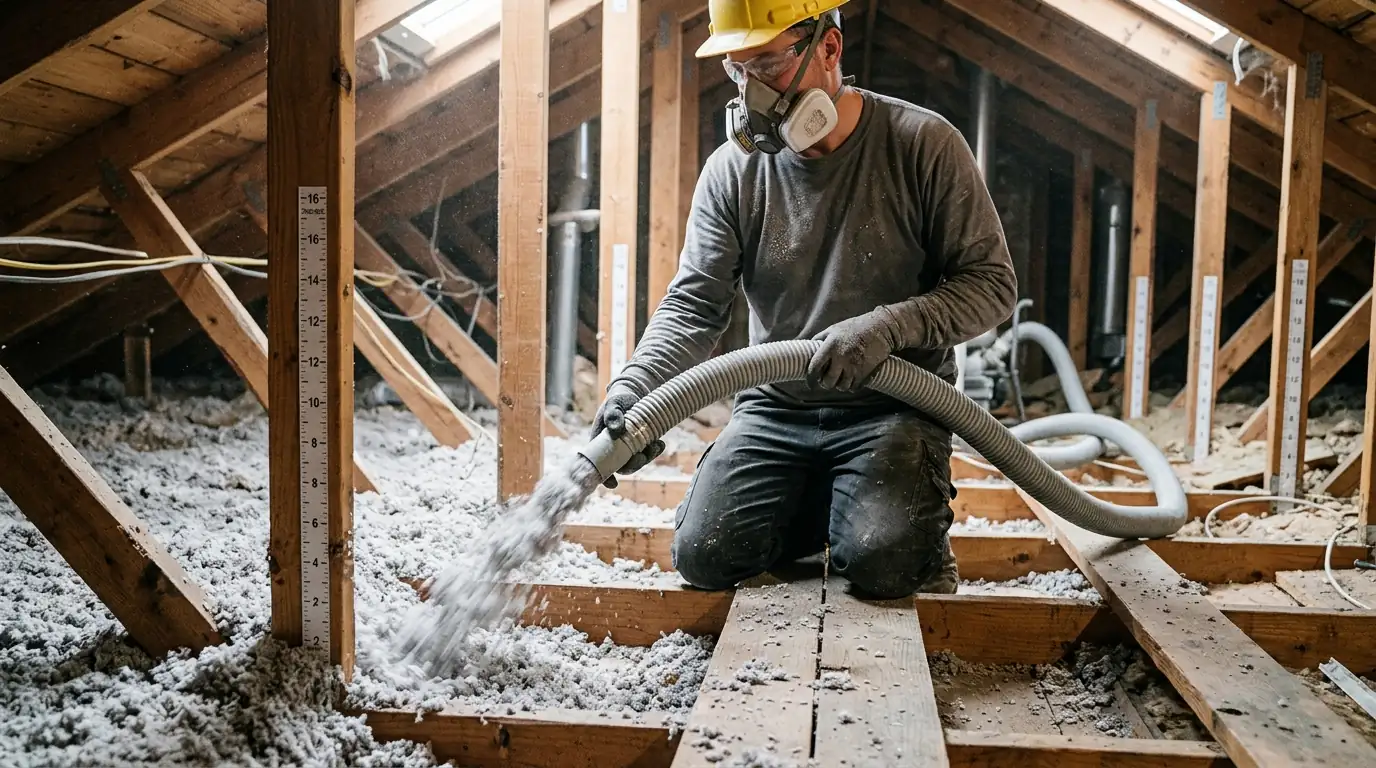
Most Atlanta attics already have some insulation, just not enough, or not spread evenly. A top-up blows loose fiberglass or cellulose over the existing layer to reach the target depth, filling around joists and wiring where batts leave gaps. We set depth rulers across the attic so the depth is visible, keep insulation off recessed light housings that are not rated for contact, and build a dam around the attic hatch so the loose material stays where it belongs instead of spilling toward the eaves.
Old insulation removal
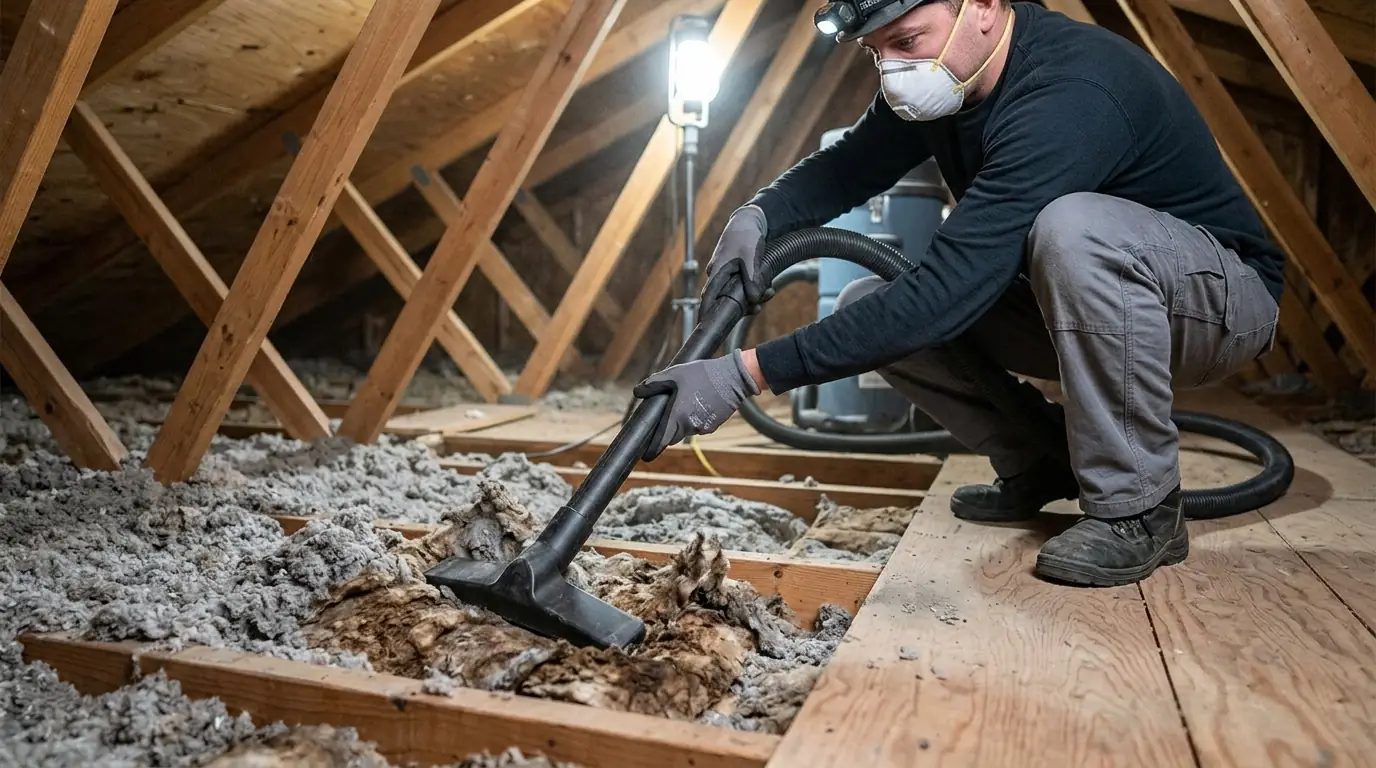
Insulation soaked by a roof leak, flattened by storage, or soiled by rodents stops working and can hold moisture against the ceiling drywall. We vacuum it out with commercial equipment, bag it and haul it away, then check the ceiling and framing it was covering before anything new goes in. Removal usually follows a roof leak repair or a pest problem, and it pairs well with air sealing, since the attic floor is fully exposed for once and every gap is easy to reach.
Air sealing before insulation
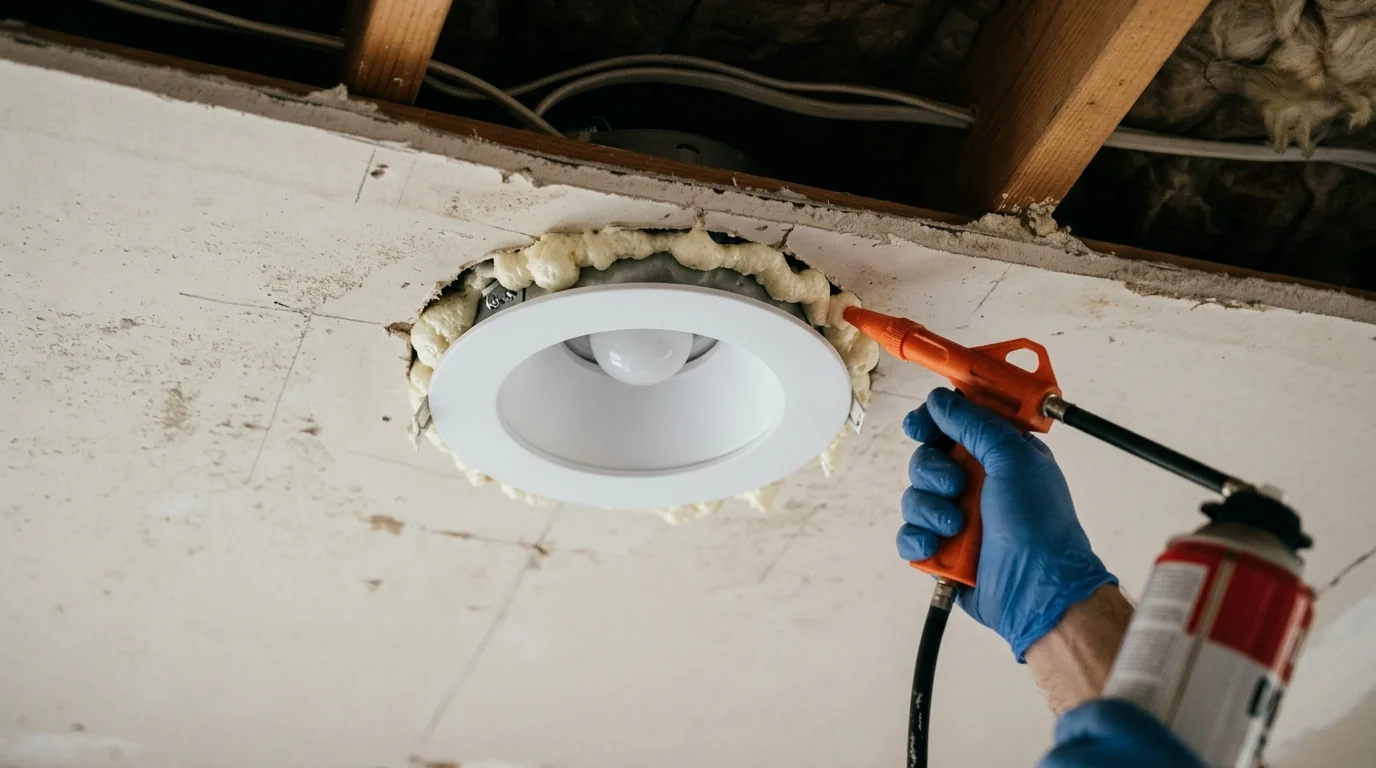
Insulation slows heat, but it does not stop air. Gaps around recessed lights, plumbing stacks, wiring holes, chimney chases and the tops of interior walls let conditioned air and moisture rise into the attic, where it condenses on the cold deck in winter. We seal those gaps with foam, caulk and fire-rated materials around flues before adding insulation, so the new layer works as intended and the roof deck stays drier. It is the least visible step and often the most valuable.
Energy code checks on Atlanta re-roofs
Re-roofing in Atlanta can trigger energy-code checks on ventilation and insulation, with R-values set under the state's IECC 2015 standard, so the attic often gets a look during permitting anyway. That makes a replacement the natural moment to bring insulation up to depth: the crew is already in the attic checking the deck and the ventilation, and correcting both together costs less than two separate visits.
How it runs
How an attic insulation job runs
- 1
Inspect the attic
Depth, damage and ventilation checked.
- 2
Written plan
Removal, sealing and depth specified.
- 3
Protect the house
Floors covered, hoses routed.
- 4
Remove and seal
Old material out, gaps sealed.
- 5
Baffles and blow
Vents kept open, insulation blown.
- 6
Show the depth
Rulers and photos left for you.
FAQ
Attic insulation questions
Enough to meet the depth the energy code sets for Georgia attics. We measure what you have and tell you how much to add.
Only if it blocks soffit vents or buries recessed lights not rated for contact. Baffles and dams prevent both.
During or right after is ideal, when the attic and ventilation are being checked anyway.
Topping up a thin attic and sealing air leaks usually helps noticeably, especially in upstairs rooms.
Yes. Wet, compressed or pest-soiled insulation is vacuumed out and hauled away before new goes in.
Blown fiberglass suits most attics; cellulose fills densely but holds moisture if a leak recurs.
Related
Attic and roof work that goes together
Roof Cleaning & Algae Treatment
Soft-wash algae treatment, moss and lichen removal and more.
Learn moreRoof Maintenance & Tune-Up
Covers debris and valley clearing and minor shingle and flashing fixes.
Learn moreAttic & Roof Ventilation
Powered and solar attic fans, plus ridge vent installation.
Learn moreUpstairs rooms too hot?
Call and we will check the attic's insulation and ventilation together and tell you what it needs.