Solar and roofing
Solar panel removal and reinstall for Atlanta roof replacements
A solar array often outlives the roof under it, so sooner or later the panels have to come off for a re-roof. Done carelessly, that job leaves a leak at every mount.
- Calls answered 24/7
- Mounts flashed into the new roof
- Atlanta service office
Quick answer
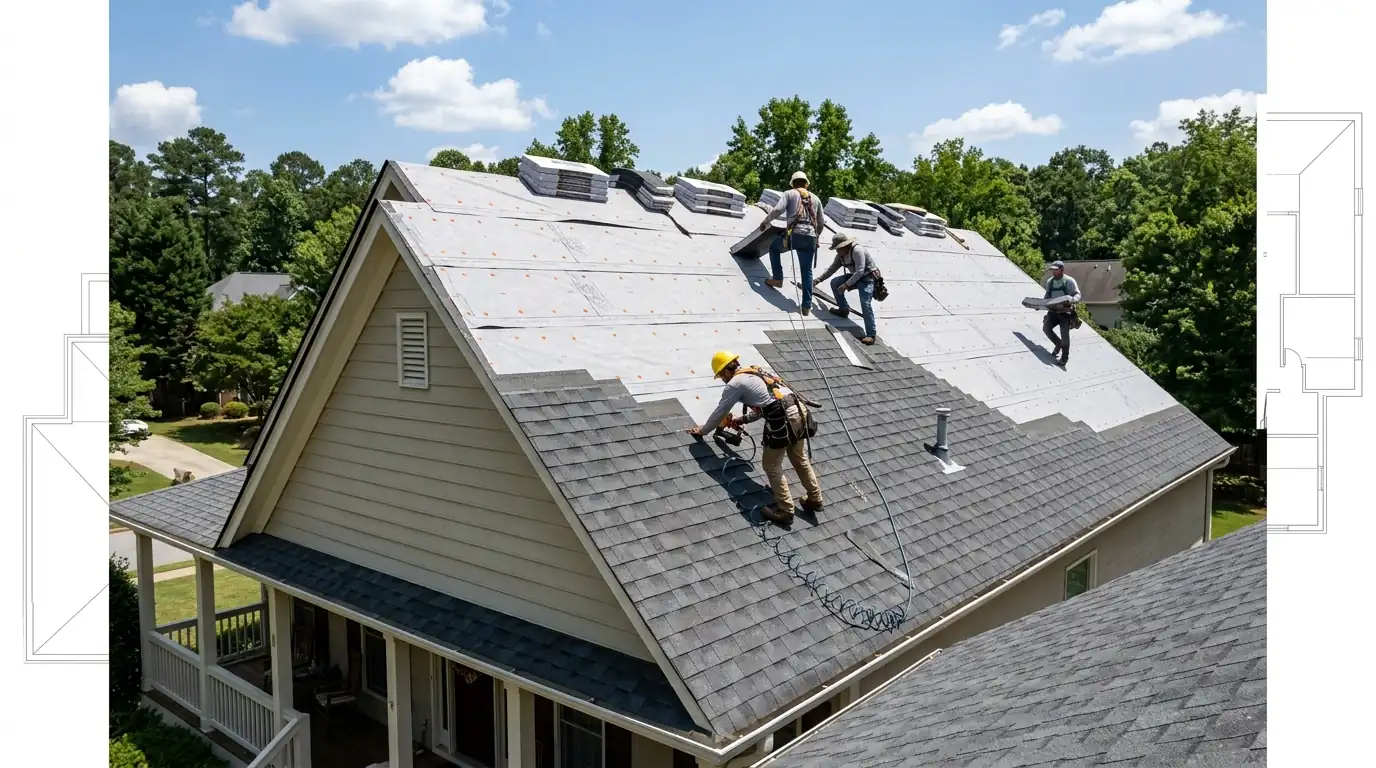
Solar panel removal and reinstall for an Atlanta roof replacement means safely disconnecting and removing the panels and racking, replacing the roof, then flashing new mounts into the new shingles before the array goes back up. The electrical disconnect and reconnect is handled by the solar installer or a qualified electrician, and adding panels does not by itself trigger the city's cool-roof rule.
The work
Why solar and roofing need to be planned together
Panels are attached through the roof at dozens of points. When the roof under them wears out, every mount has to come off, the roof has to be replaced, and new mounts have to be flashed into the new shingles. Reusing old flashing or sealing mounts with caulk is how a new roof starts leaking under an array where nobody can see it.
Timing matters too. If the roof is well into its life when solar goes on, replacing it first usually saves a second removal later.
Updated September 2026
Cost
What solar removal and reinstall costs depend on
The price depends on the size of the array and how it is mounted, on top of the roof replacement itself.
- Number of panels
Larger arrays take longer to move.
- Racking type
Rail and rail-less systems differ.
- New mount flashing
One flashing per attachment point.
- Electrical work
Installer or electrician at both ends.
- Roof access
Steep or tall roofs need more rigging.
- Storage and protection
Panels stored safely on site.
What is included
What a solar removal and reinstall includes
- Array documented. Layout photographed and panels labeled.
- Electrical disconnect. By the solar installer or an electrician.
- Panels and racking removed. Stored safely on site.
- Roof replaced. Tear-off, deck repair and new roof.
- New mount flashing. Flashed mounts set into the new roof.
- Racking and panels reinstalled. Back in the documented layout.
- Reconnect and test. Electrical reconnection and system check.
Panel removal before a re-roof
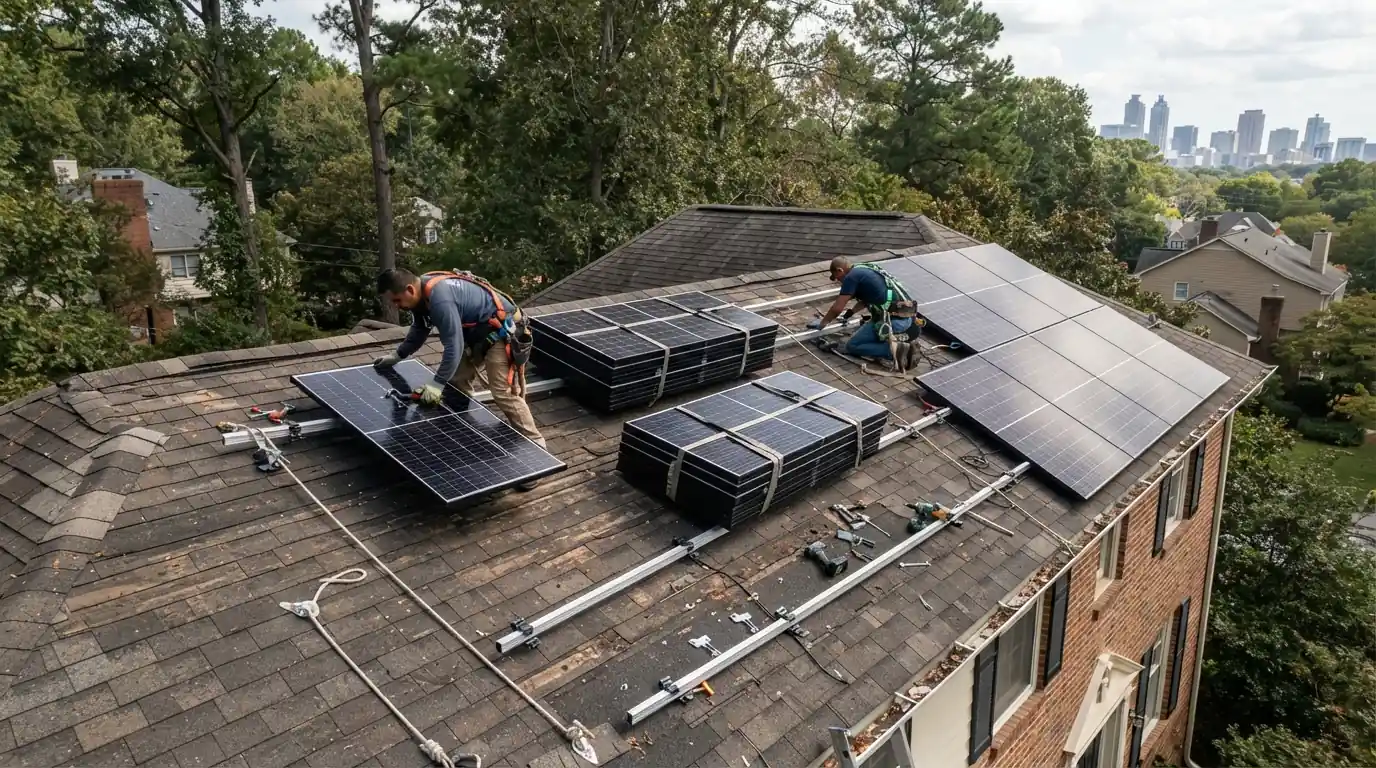
Before anything comes off, we photograph the array, label every panel and map the racking layout so it returns exactly as it was. The solar installer or a qualified electrician shuts the system down and disconnects it; only then do panels and rails come off, and they are stored flat and protected on site. Old mounts are unbolted and their holes dealt with as part of the tear-off. Planned this way, a solar home re-roofs as smoothly as any other.
Mount flashing and reinstallation
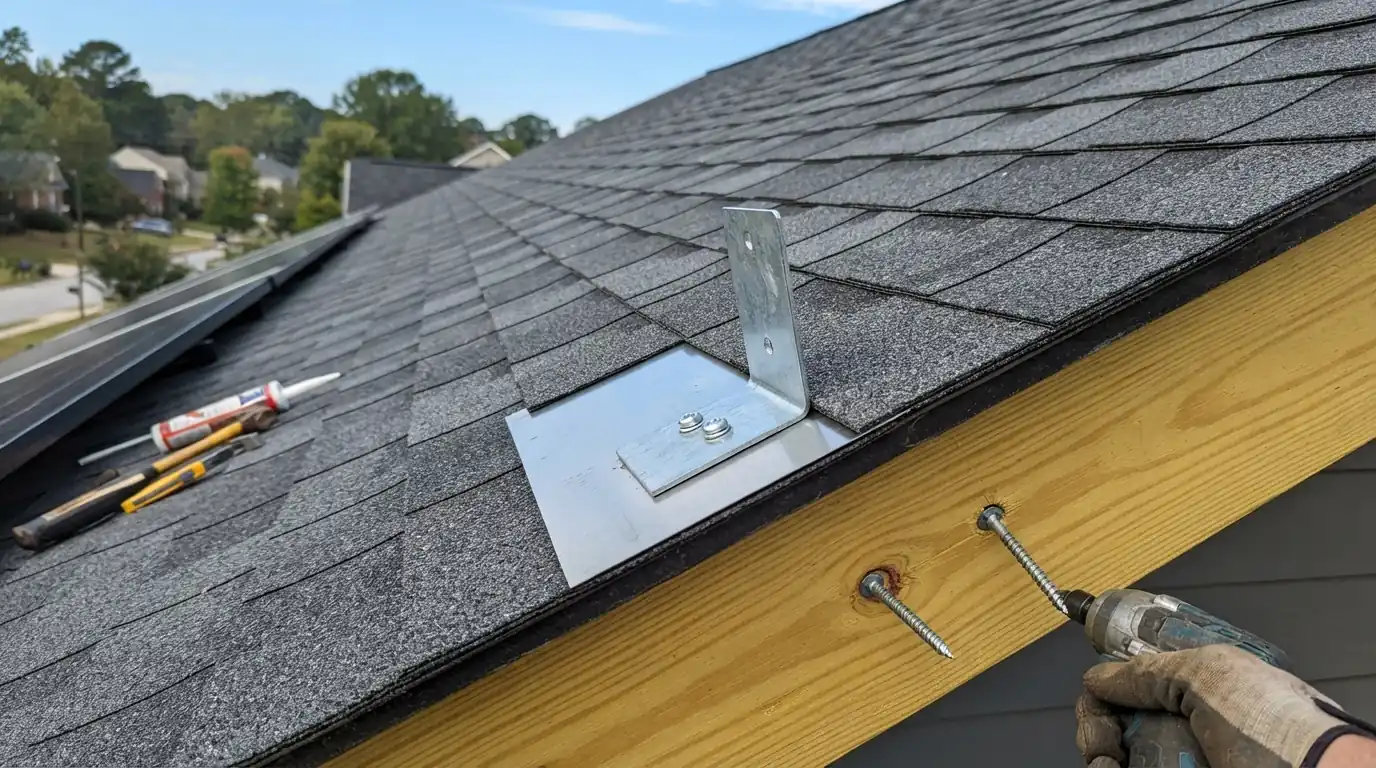
The new roof gets new mounts, not the old ones resealed. Each attachment is set into a rafter and flashed with a mount flashing woven into the shingle courses, so water sheds over it the way it does over a vent pipe. Rails go back on the flashed mounts, panels return to their labeled positions, and the installer or electrician reconnects and tests the system. The result is a new roof with no caulk-only penetrations hiding under the array where no one would see them.
Solar leak repair
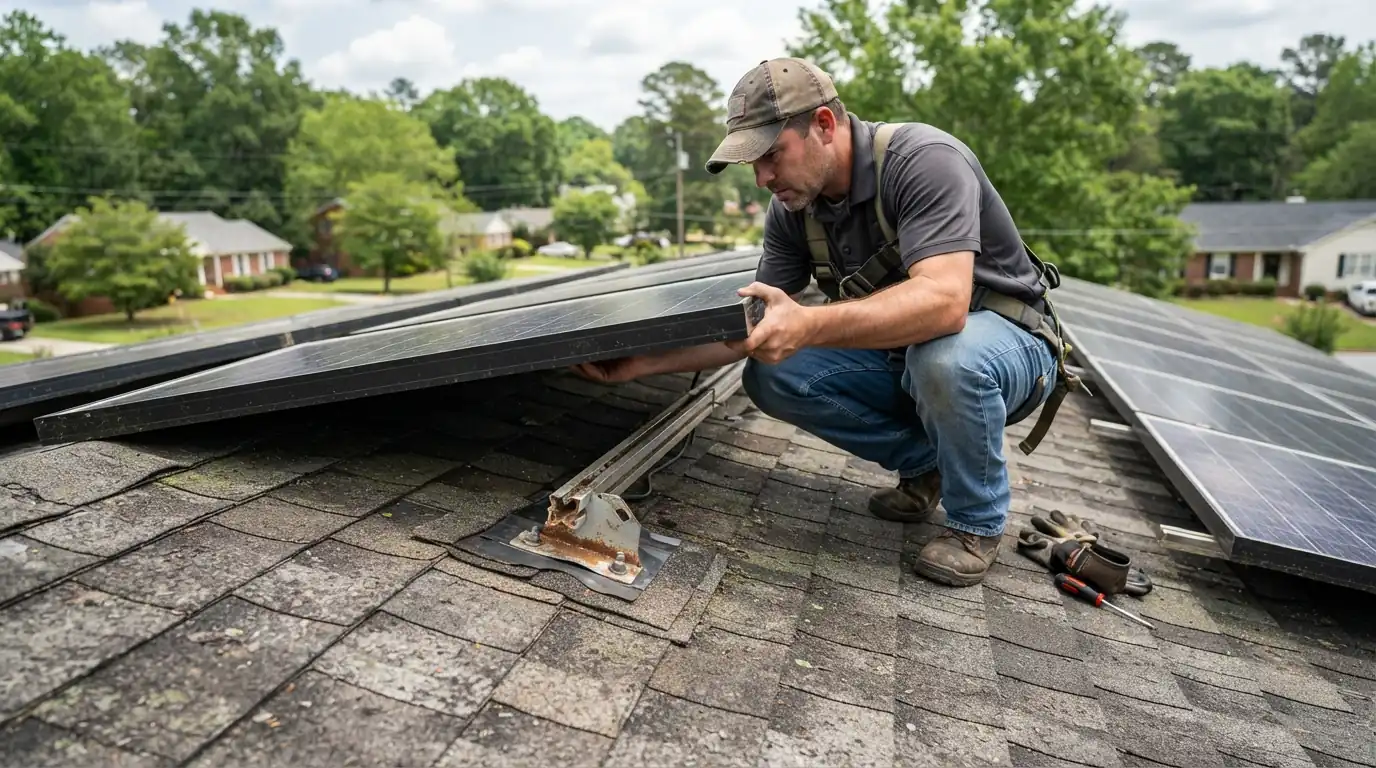
Leaks under an existing array usually trace to a mount sealed with caulk alone, a flashing never woven under the course above, or a lag bolt that missed the rafter. Finding them often means lifting a panel or two. With the system shut down, we remove the panels over the leak, rebuild the mount flashing properly, and reinstall the panels. If several mounts are leaking on an aging roof, we will tell you when a full removal and re-roof is the better investment.
Solar, re-roofs and Atlanta's roof rule
Inside Atlanta city limits, putting panels on a roof does not by itself trigger the cool-roof material requirement; the rule centers on full replacements and new construction. Replacing the roof under an array is a full replacement, though, so the new shingles have to carry the reflectance rating, and rated architectural shingles are generally priced in line with standard ones. We check the rating before ordering, so the array goes back onto a roof that has already passed inspection.
Timeline
How long the array is off the roof
The panels are off for as long as the roof takes, plus removal and reinstall. Most shingle replacements in Georgia finish in one to two days once materials are on site, and the array goes back up once the new roof and mount flashing are complete. We schedule the solar installer or electrician for both ends before work starts, so the array is not left in the yard waiting on a reconnect.
How it runs
How a solar re-roof runs
- 1
Inspect roof and array
Roof age and mount condition checked.
- 2
Coordinate the electrical
Installer or electrician booked for both ends.
- 3
Document and remove
Array photographed, labeled and taken down.
- 4
Replace the roof
Tear-off, decking and new roof.
- 5
Flash new mounts
Mounts set into rafters and flashed.
- 6
Reinstall and reconnect
Panels back up and system tested.
FAQ
Solar removal and reinstall questions
Yes. The roof under the array has to be replaced too, so panels and racking come off and go back on.
Your solar installer or a qualified electrician disconnects and reconnects the system; we handle the roof and the mounts.
They are documented, removed carefully and stored flat on site until the new roof is ready.
If the roof is well into its life, usually yes. It avoids paying for removal and reinstall a few years later.
Usually a mount sealed with caulk or a flashing not woven under the shingles. It can be fixed by lifting the panels over it.
Not by itself. Replacing the roof under the array does, so the new shingles must carry the rating.
Related
Roof replacement services
Roof under your solar wearing out?
Call and we will plan the removal, the new roof and the reinstall as one job.