Slate and tile
Slate and tile roof repair on Atlanta's older homes
A slate or clay tile roof can outlast several asphalt roofs, but only if broken pieces and worn flashing are fixed by someone who knows the material. Walking on it the wrong way breaks more than it fixes.
- Calls answered 24/7
- Matched slate and tile
- Atlanta service office
Quick answer
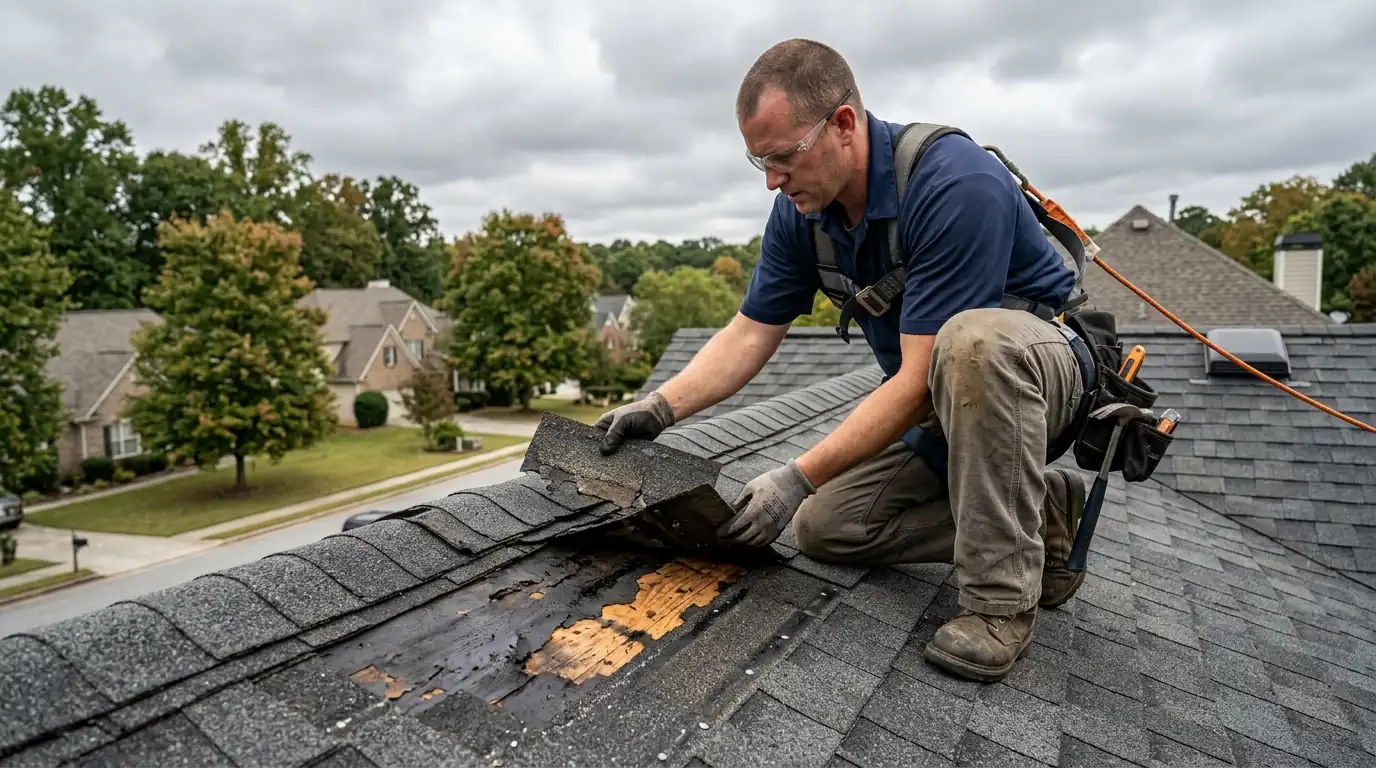
Slate and tile roof repair in Atlanta usually means replacing cracked or slipped pieces with matched material, securing them with copper slate hooks or proper tile fasteners, and rebuilding worn flashing at valleys, chimneys and ridges. The roofing itself often has decades left; the fasteners and flashing fail first, and they can be repaired without replacing the roof.
The work
Why slate and tile fail at the edges, not the middle
Natural slate and clay tile are among the longest-lasting roofing materials there are. What wears out first are the nails that hold them, the flashing around them and individual pieces cracked by a falling limb or a careless foot. A few slipped slates or broken tiles are a repair, not a reason to replace the roof.
The wrong repair does damage: asphalt shingles tucked into a slate roof, roofing cement smeared over cracks, or a crew walking the field and breaking pieces with every step. We work from ladders, hooks and roof brackets to keep weight off the slate.
Updated September 2026
Options
Slate, clay tile and synthetic replacements
| Factor | Natural slate | Clay tile | Synthetic slate |
|---|---|---|---|
| Weight | Very heavy | Heavy | Light |
| Repair approach | Matched slate on copper hooks | Matched tile, fastened or clipped | Whole sections replaced |
| Matching | Salvaged or quarried to match | Profile and color matched | Rarely blends with real slate |
| Best use | Keeping an original roof | Keeping an original roof | Additions or full replacements |
On a sound original roof, matched natural material is almost always the right repair; synthetic pieces make sense on additions or new sections.
Cost
What drives the price of a slate or tile repair
Slate and tile repairs are priced by the piece and the access, and matching material can be the biggest variable.
- Pieces replaced
Number of slates or tiles.
- Material match
Salvaged or special-order pieces cost more.
- Access
Hooks, brackets and ladders keep weight off.
- Flashing work
Valleys and chimneys in copper or heavy metal.
- Underlayment
Dried-out sections under tile replaced.
- Roof height
Steep, tall roofs need more rigging.
Broken and slipped slate replacement
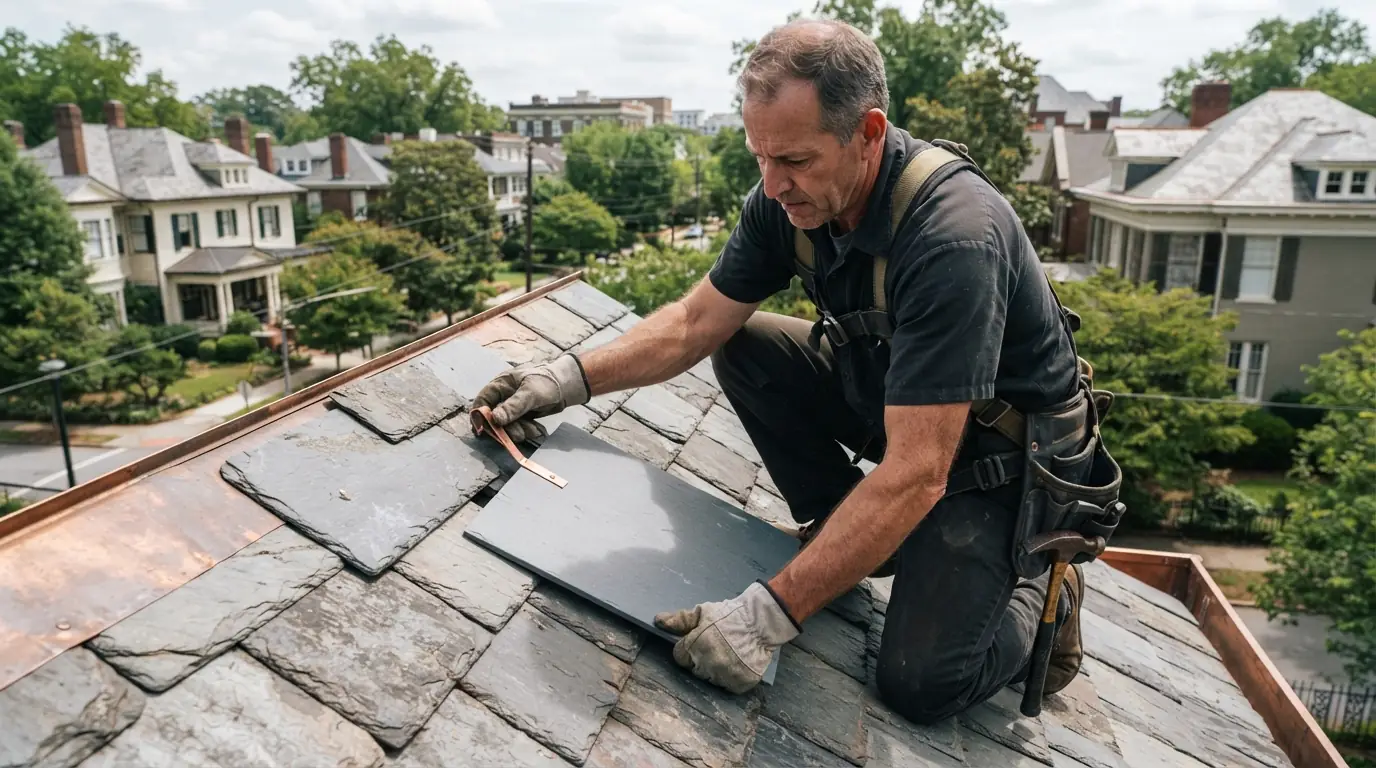
When a slate cracks or slides out of its course, the fix is a matched slate held with a copper slate hook or a copper nail and bib, not roofing cement. We source replacement slate by size, thickness and color, from salvage where the original quarry is gone, and slide it into place without disturbing the courses above. A handful of slipped slates usually points to nails that rusted through, so we check the pieces around each repair before calling it done.
Clay and concrete tile repair
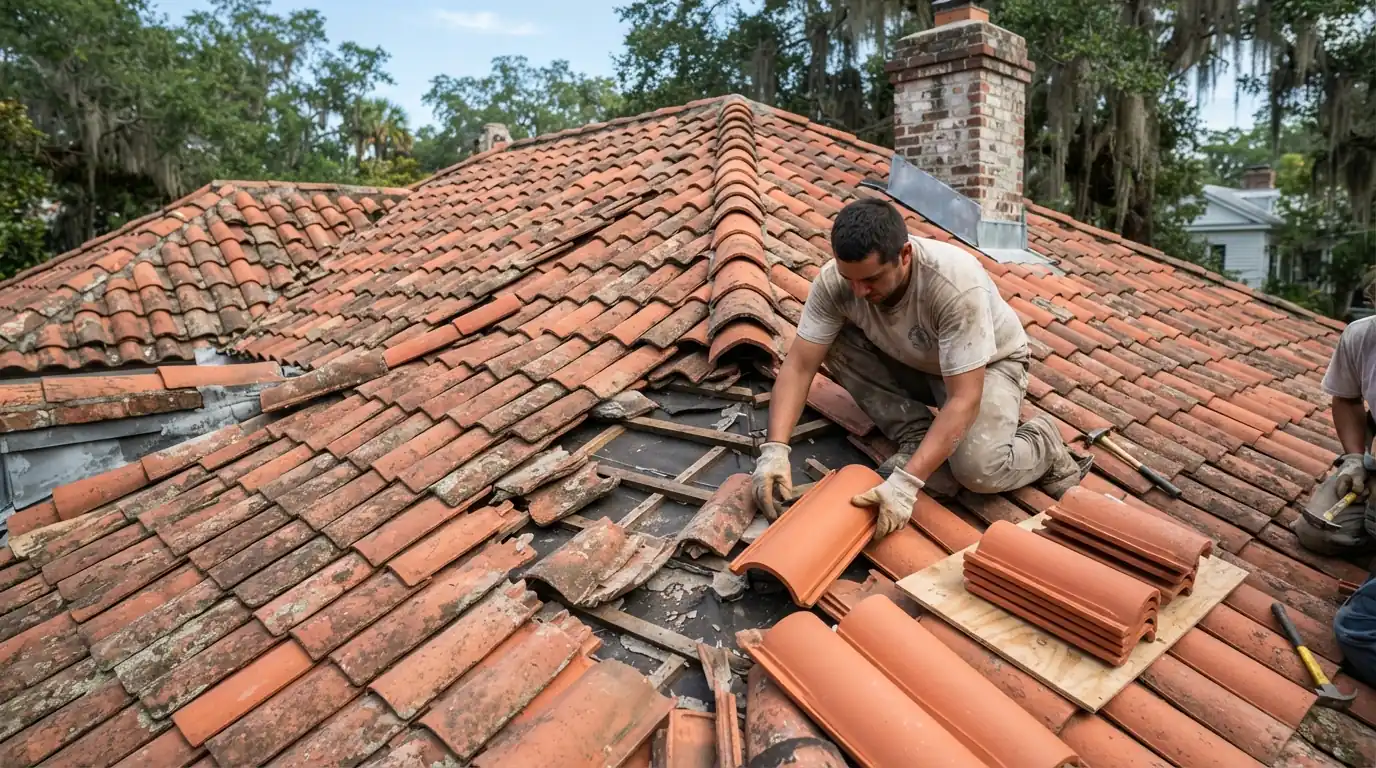
Tile breaks under foot traffic and falling limbs, and cracked or displaced tiles let water reach the underlayment. We replace broken tiles with matching profiles, lift surrounding tiles carefully to reach fasteners, and refasten or clip loose pieces. Because the underlayment beneath tile does most of the waterproofing, we check it wherever a tile is lifted; if it has dried out and cracked across a section, lifting the tiles to replace it is the lasting repair rather than another patch on top.
Flashing and ridge work on slate and tile roofs
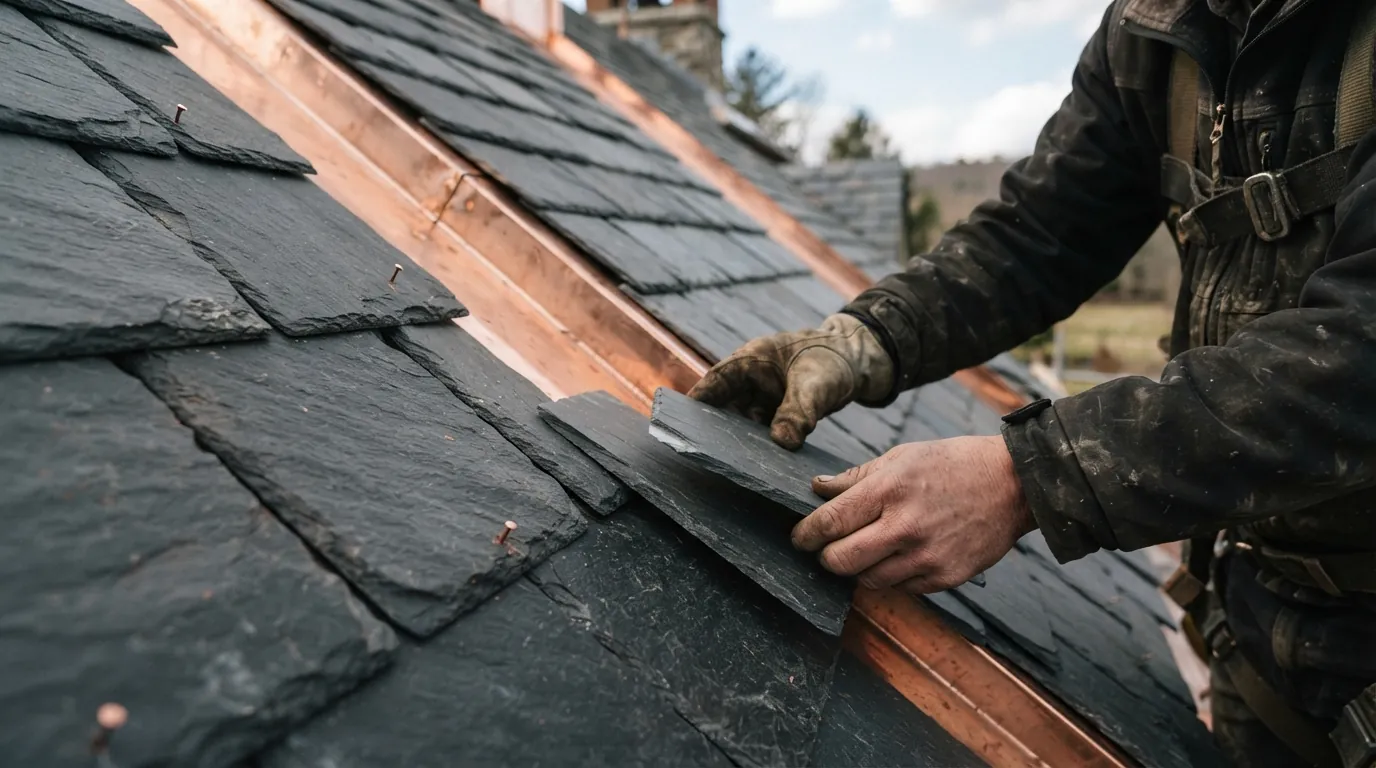
Valley metal, chimney flashing and ridge details often wear out long before the slate or tile around them. We rebuild valleys in copper or heavy-gauge metal, replace step and counter-flashing at chimneys and walls, and reset ridge pieces in the method the roof was built with. Because the flashing is woven under the surrounding pieces, those pieces are removed by hand and reused wherever they come off intact, so a flashing repair does not turn into a roof of mismatched patches.
Slate, tile and Atlanta's historic districts
Slate and clay tile belong to the older end of Atlanta's housing, which stretches from early bungalows and period homes to this decade's builds. Many of those older houses sit in locally designated historic or landmark districts such as Druid Hills and Castleberry Hill, where exterior alterations go through a Certificate of Appropriateness from the Urban Design Commission. Replacing original slate with asphalt is the kind of change that review weighs, which is one more reason repair is usually the right first answer.
How it runs
How a slate or tile repair runs
- 1
Look from ladders first
Damage mapped without walking the field.
- 2
Source matching material
Size, thickness, color and profile.
- 3
Written scope
Pieces, flashing and access itemized.
- 4
Set up roof access
Brackets and hooks keep weight off.
- 5
Replace and refasten
Matched pieces on copper hooks or clips.
- 6
Check the neighbors
Surrounding pieces and fasteners inspected.
Warning signs
Signs a slate or tile roof needs repair
Slipped or missing pieces
Gaps in a course or pieces in the yard.
Cracked slate or tile
Breaks from limbs, hail or foot traffic.
Rusted nails or hooks
Fasteners failing before the stone does.
Patches of roofing cement
Past repairs that trap water.
Worn valley metal
Rusted or pinholed flashing in valleys.
Stains on upstairs ceilings
Water getting past a missing piece.
FAQ
Slate and tile roof questions
Usually. Natural slate often outlasts its nails and flashing by decades, so replacing fasteners and flashing restores most of its life.
We match size, thickness and color, often from salvage when the original quarry is closed.
Cement cracks and traps water against the slate. Matched pieces and proper hooks shed water the way the roof was designed to.
They should not. They lie differently, leak at the transition, and look out of place, especially in historic districts.
Replacing slate or tile with a different material is an exterior change the Urban Design Commission reviews. We confirm what your project needs before starting.
Not safely without breaking pieces. We use ladders, hooks and brackets to keep weight off the slate.
Related
Other repair work
Emergency Roof Tarping & Storm Repair
Emergency tarping and dry-in, tree impact and punctures and more.
Learn moreHail Damage Roof Repair
Covers dented vents, caps and gutters and cracked or fractured shingles.
Learn moreMetal Roof Repair
Rust treatment and trim repair, plus fastener and washer replacement.
Learn moreSlipped slates or broken tiles?
Call and we will map the damage from ladders, match the material and fix what failed.