Commercial inspections
Commercial roof inspections in Atlanta with written condition reports
Owners, buyers and property managers need to know what a roof has left before they budget, buy or sign a lease. We inspect membrane and metal commercial roofs and put what we find in writing.
- Calls answered 24/7
- Written photo reports
- Membrane and metal roofs
Quick answer
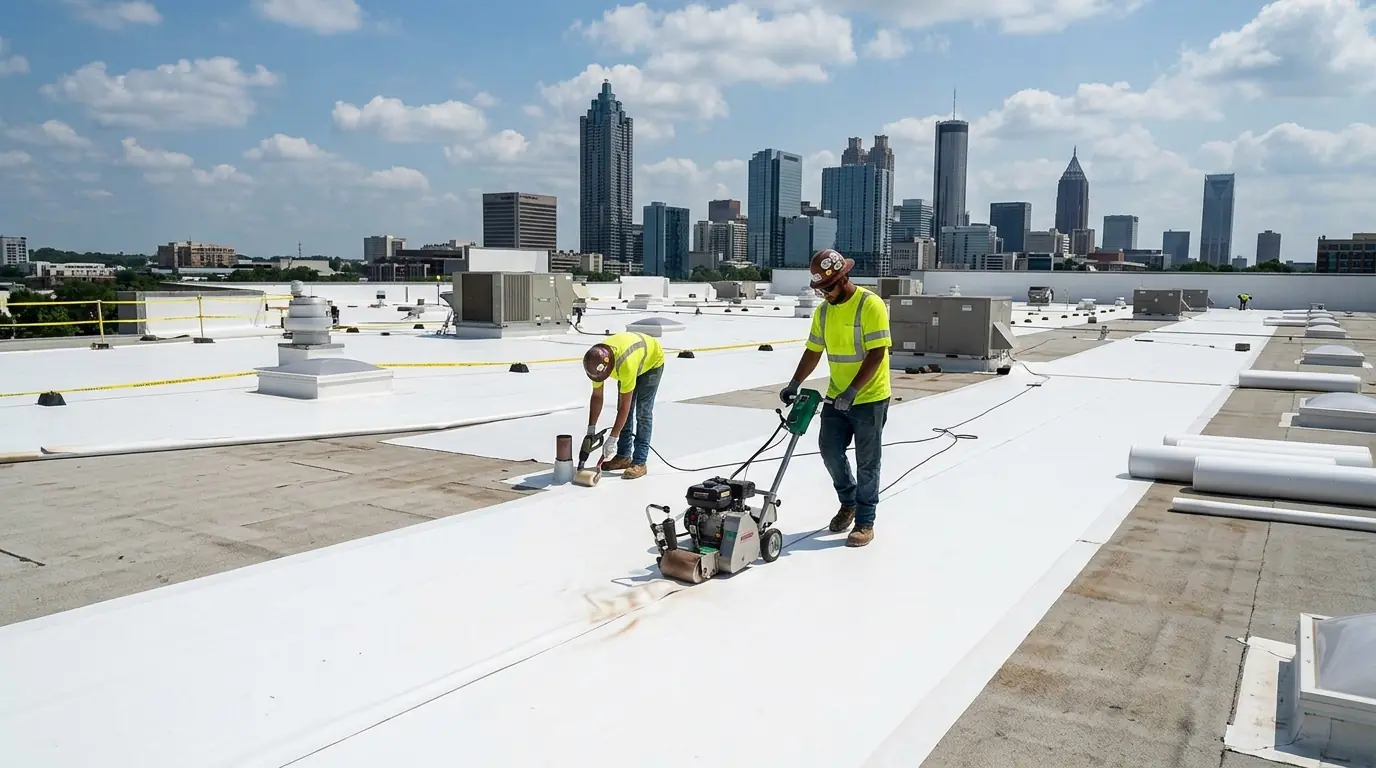
A commercial roof inspection in Atlanta covers the membrane or metal surface, seams, flashing at curbs, walls and penetrations, drains, ponding, rooftop equipment and the interior below, with moisture checks where wet insulation is suspected. The result is a written report with photos, a condition grade by area, and repairs ranked by urgency, so the owner can budget instead of reacting to the next leak.
The work
Why commercial roofs need scheduled inspections
Flat and low-slope commercial roofs rarely fail all at once. They fail at seams, flashings, drains and the equipment curbs where other trades have walked and cut, and small openings let water into the insulation long before a stain appears in the ceiling below. By the time the tenant calls, the wet insulation under the membrane can cover far more area than the leak suggests.
Scheduled inspections, usually in spring and fall and after major storms, catch those failures while they are repairs instead of tear-offs, and they give owners a dated record of the roof's condition.
Updated September 2026
What is included
What a commercial roof inspection covers
- Field of the roof. Membrane or panels checked for wear, splits and punctures.
- Seams and laps. Welds and laps probed along their length.
- Flashings. Curbs, walls, parapets and penetrations.
- Drainage. Drains, scuppers, gutters and ponding areas.
- Rooftop equipment. Curbs, condensate lines and service damage.
- Interior below. Ceiling stains and deck condition where accessible.
- Written report. Photos, grades and repairs ranked by urgency.
Annual and pre-lease inspections
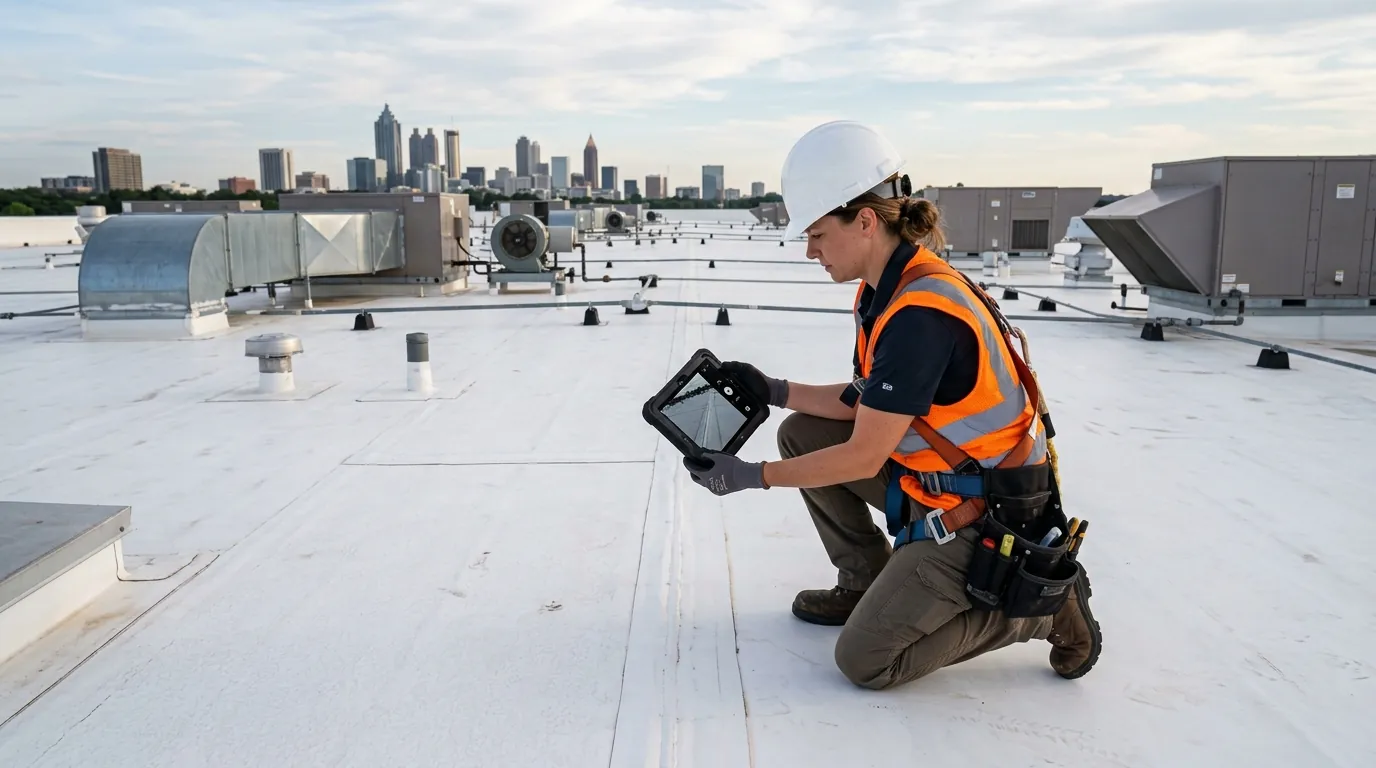
An annual inspection gives an owner a record of how the roof is aging and what it needs next. A pre-lease or pre-purchase inspection tells a buyer or tenant what they are taking on. We walk the whole roof, photograph each area, grade its condition and list repairs by urgency with rough budget ranges. The report can go straight into a capital plan or a lease negotiation. For portfolios, we keep the format the same from building to building so the reports can be compared.
Moisture surveys and core cuts
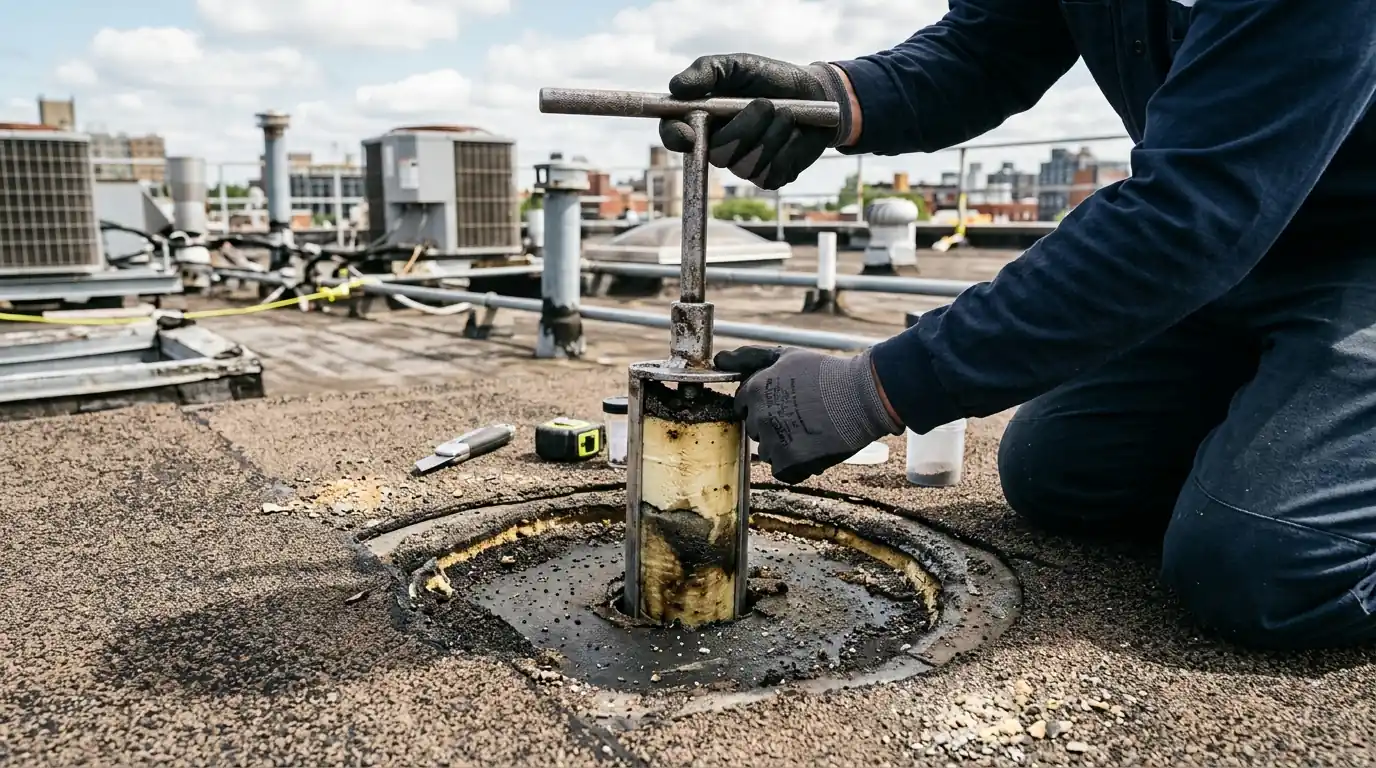
Wet insulation under a membrane is invisible from the surface but decides whether a roof can be repaired or coated, or has to come off. Where the surface suggests trapped moisture, such as soft spots, blisters or a history of leaks, we take small core cuts. They show the layers and the insulation directly, and each cut is patched watertight. The findings tell you how much of the roof is still sound, which is the number that matters when choosing between repair, restoration and replacement.
Post-storm and insurance inspections
After hail or high wind, a commercial roof should be inspected even if nothing is leaking yet, because punctures, lifted edges and dented metal often show up as leaks weeks later. We document the damage with dated photos for the insurance claim. Roof manufacturers and insurers both expect owners to maintain a roof and keep records. A written inspection after a storm or on a schedule is that record, and it gives the owner a baseline for the next storm.
Inspections and Atlanta's cool-roof rule
Atlanta's cool-roof ordinance, in effect since June 2026, applies to replacements on every building type in the city, including commercial low-slope roofs, which must meet a reflectance standard when replaced. That makes the inspection before a replacement decision more important: knowing how much of the existing roof is still dry and sound decides whether a coating, a partial repair or a compliant new membrane is the right budget line.
How it runs
How a commercial inspection runs
- 1
Scope the building
Roof age, history and access noted.
- 2
Walk the roof
Every area checked and photographed.
- 3
Check the details
Seams, flashings, drains and curbs probed.
- 4
Test for moisture
Core cuts where the surface suggests it.
- 5
Look below
Interior stains and deck checked where possible.
- 6
Deliver the report
Grades, photos and ranked repairs.
Warning signs
Signs a commercial roof needs a closer look
Water standing two days after rain
Ponding that stresses seams.
Ceiling tiles stained
Water already through the deck.
Blisters or soft spots
Moisture trapped under the membrane.
Open seams at curbs
Common after equipment service.
Clogged drains or scuppers
Water held on the roof.
Rust on metal panels
Coating worn through at laps.
Cost
What a commercial roof inspection costs depends on
Inspections are priced by the size and complexity of the roof and how much testing the report needs.
- Roof area
Square footage walked and documented.
- Roof sections
Multiple levels and additions take longer.
- Access
Ladders, hatches or lifts to reach the roof.
- Rooftop equipment
More curbs and penetrations to check.
- Moisture testing
Core cuts where wet insulation is suspected.
- Report detail
Portfolio formats and budget ranges.
FAQ
Commercial roof inspection questions
Twice a year, usually spring and fall, plus after any major hail or wind event.
Photos of each area, a condition grade, a list of repairs ranked by urgency, and budget ranges where useful.
Each cut is small and patched watertight the same day. They show whether the insulation under the membrane is wet.
Yes. Dated photos and a written report from before and after a storm show the adjuster what changed.
Yes. Pre-purchase and pre-lease inspections tell the buyer or tenant what the roof needs and roughly what it will cost.
Yes. We inspect metal panels, laps, fasteners and coatings as well as membrane roofs.
Need to know what your commercial roof has left?
Call to schedule an inspection. A roofer answers any hour.