New construction
New construction roofing for Atlanta builders and custom homes
On new work the roof is on the critical path: interior trades wait for dry-in, and inspections wait for the roof. We schedule around the build and install to code the first time.
- Calls answered 24/7
- Shingle, metal and low-slope
- Builders and homeowners
Quick answer
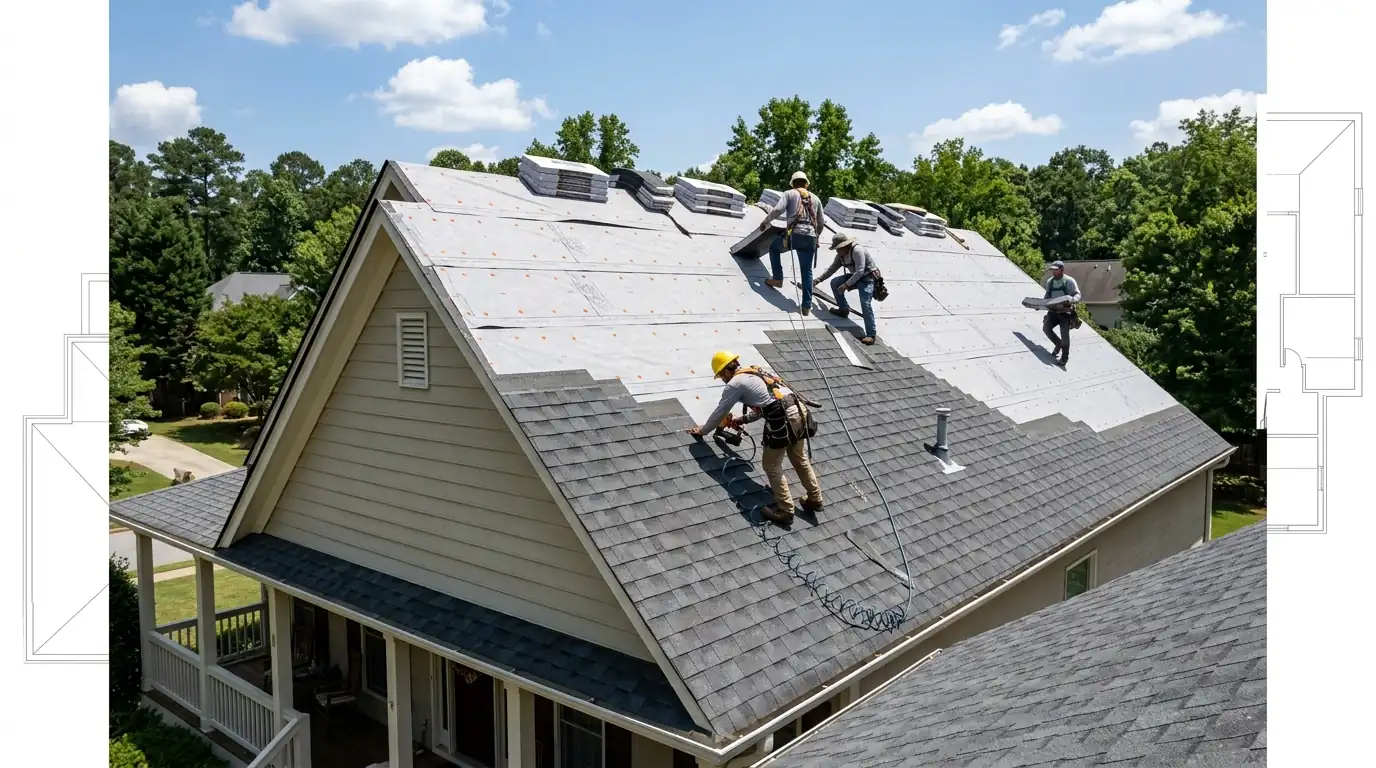
New construction roofing in Atlanta means drying in the framed deck quickly, then installing the finished roof to code: drip edge, underlayment, flashing at every wall and penetration, and a shingle, metal or low-slope system. Inside city limits the new roof must meet the 2026 cool-roof reflectance standard, and the work is permitted and inspected with the build.
The work
Why the roof sets the pace of a build
Until the roof is dried in, interior trades wait and the framing takes weather. A fast dry-in with synthetic underlayment protects the deck, and the finished roof can follow once windows, siding and flashing details are coordinated.
We work from the plans, flag framing issues that will show up in the roof, like missing crickets or tight valleys, and coordinate with window and siding crews so each layer laps the right way.
Updated September 2026
We install shingle, metal and membrane systems from GAF, Owens Corning, CertainTeed, Carlisle and Firestone.
Options
Roof systems for new construction
| Factor | Architectural shingle | Standing seam metal | Low-slope membrane |
|---|---|---|---|
| Where it fits | Most pitched homes | Modern and farmhouse designs | Porches, flat sections, additions |
| Cost position | Lowest installed cost | Higher upfront | Depends on area |
| Inside city limits | Must be cool-roof rated | Must meet the reflectance rule | Must meet the low-slope rule |
| Lead time | Usually in stock | Panels made to length | Usually in stock |
Mixed roofs are common: shingles on the main roof, metal over porches, a membrane on a flat section.
Cost
What drives the cost of a roof on a new build
New construction is priced from the plans: roof area, pitch, complexity and the system specified.
- Roof area
Squares measured from the plans.
- Pitch
Steep pitches need more labor and safety setup.
- Complexity
Dormers, valleys and turrets add flashing.
- System
Shingle, metal or membrane.
- Phasing
Separate dry-in and finish visits.
- Access
Tight lots and multi-story staging.
What is included
What a new construction roof includes
- Plan review. Pitch, valleys, crickets and penetrations checked.
- Fast dry-in. Synthetic underlayment right after sheathing.
- Drip edge and starters. Code drip edge at eaves and rakes.
- Wall and window flashing. Step and kick-out flashing lapped with siding.
- Ventilation. Ridge and soffit vents balanced to the attic.
- Roof system. Shingle, metal or low-slope per the plans.
- Inspection-ready closeout. Photos and a punch list for the builder.
Custom home roofing
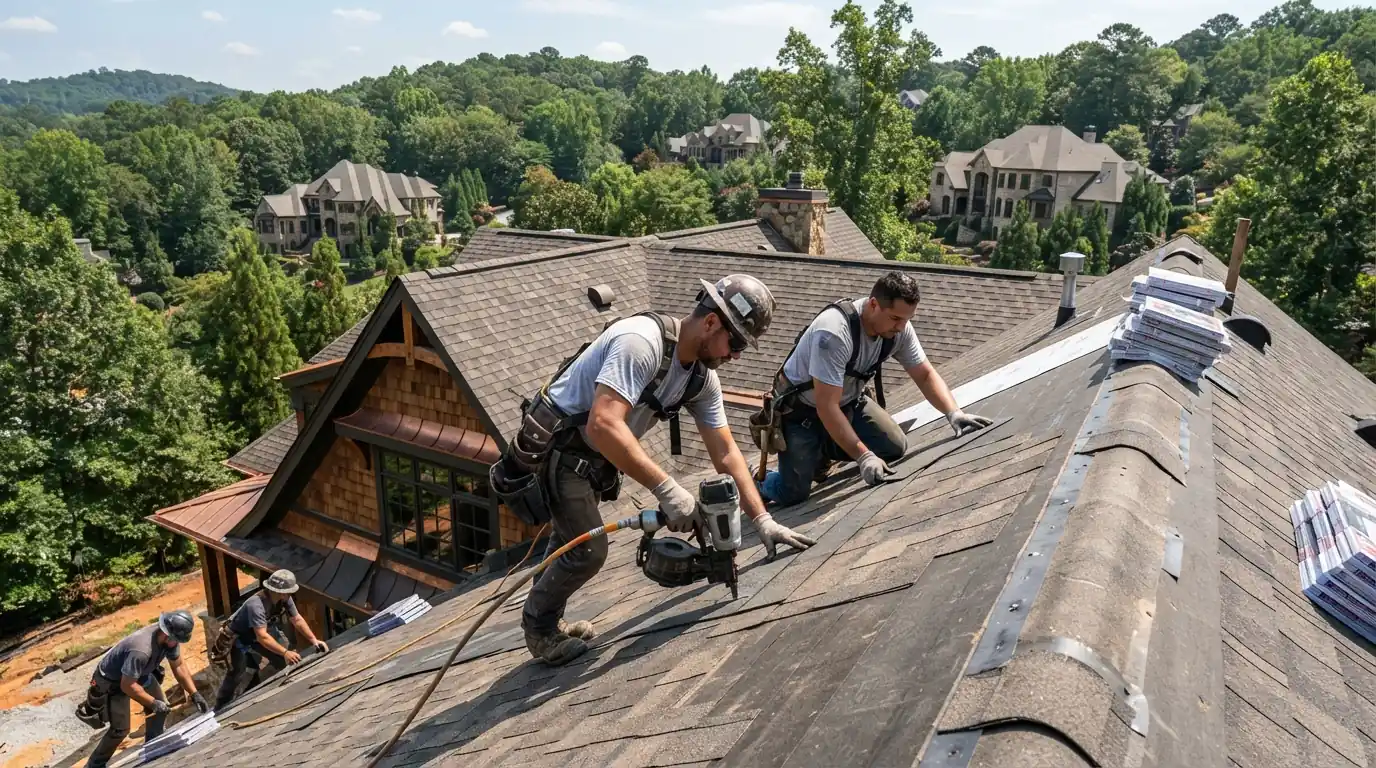
Custom homes bring the details that make a roof interesting and hard: steep pitches, dormers, turrets, low-slope transitions and mixed materials. We review the plans before framing is finished, when a missing cricket behind a chimney or a valley that dumps onto a door can still be corrected on paper. Crews dry in right behind the sheathing, then return for the finished roof once windows and wall wraps are in, so the flashing laps correctly and the roof suits the design.
Additions and garages
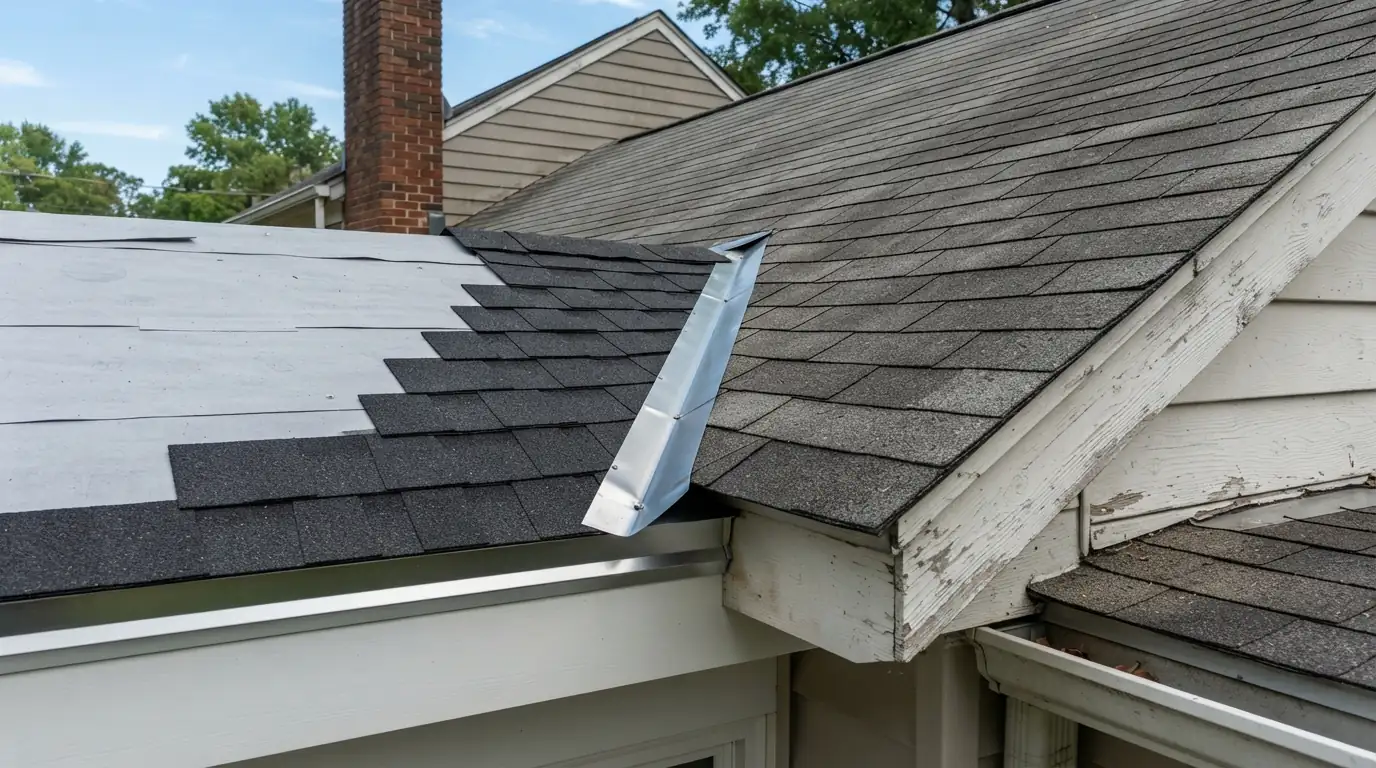
The hard part of an addition roof is the tie-in. The new roof has to meet the old one without a low spot, a mismatched pitch or a flashing joint that relies on sealant. We open the existing roof back far enough to weave new underlayment and shingles into the old courses, flash the wall where the addition meets the house, and match the existing shingle as closely as current products allow. Detached garages and workshops are simpler and can take metal or shingles.
Builder and remodeler roofing
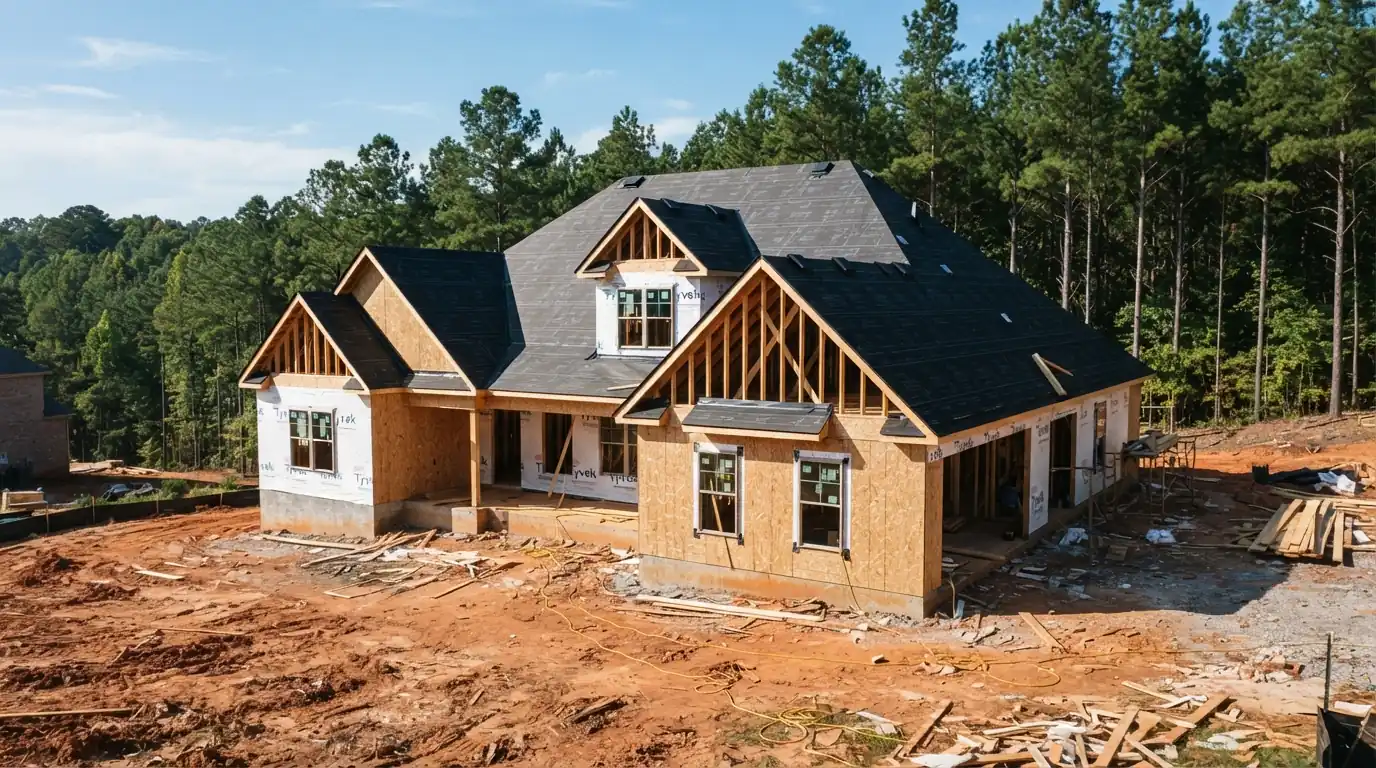
Builders need a roofer who shows up when the framing is ready, dries in quickly, and leaves the site clean for the next trade. We schedule by phase, send photos of the dry-in and flashing for your records, and handle the roofing portion of inspections. Remodelers get the same, plus the tie-ins and partial replacements that come with renovations. When a storm moves the schedule, one number reaches the dispatcher, day or night, and the dry-in date gets reset with you rather than quietly slipping.
Permits and roof rules by jurisdiction
Atlanta's cool-roof ordinance covers new construction on every building type, so a new home inside city limits gets a rated shingle, metal finish or membrane from the start rather than as an upgrade. Outside the city, jurisdiction decides the paperwork: Fulton County, DeKalb County, Cobb County and Gwinnett County each run their own permits and inspections, while code drip edge applies everywhere. We confirm the jurisdiction on the plans before materials are ordered.
How it runs
How a new construction roof runs
- 1
Plan review
Pitches, crickets and penetrations checked.
- 2
Schedule by phase
Dry-in date set to the framing schedule.
- 3
Dry-in
Underlayment and drip edge after sheathing.
- 4
Coordinate flashing
Windows, siding and roof layers lapped.
- 5
Finish roof
Shingles, metal or membrane installed.
- 6
Inspection and closeout
Photos, punch list, inspection support.
FAQ
New construction roofing questions
As soon as the sheathing is on and inspected where required. We set the dry-in date with the framing schedule.
Inside Atlanta city limits, yes. New construction of every building type must meet the reflectance standard.
We match the pitch and tie-in exactly, and the shingle as closely as current products allow. Discontinued lines may not match perfectly.
Yes. We schedule by phase, share dry-in and flashing photos, and coordinate with window and siding crews.
Shingles cost less upfront; metal lasts longer and suits modern and farmhouse designs. Many new homes mix both.
We handle the roofing portion and meet inspectors when needed, working under the build's permit.
Related
Other installation services
Building or adding on?
Call to talk through the plans and we will set a dry-in date around your schedule.