Gutters and drainage
Gutter installation and repair for Atlanta homes
Gutters finish the roof's job. When they overflow, sag or dump water at the foundation, the damage shows up in fascia, siding and crawlspaces. We size, hang and slope them for Atlanta rain.
- Calls answered 24/7
- Seamless aluminum gutters
- Atlanta service office
Quick answer
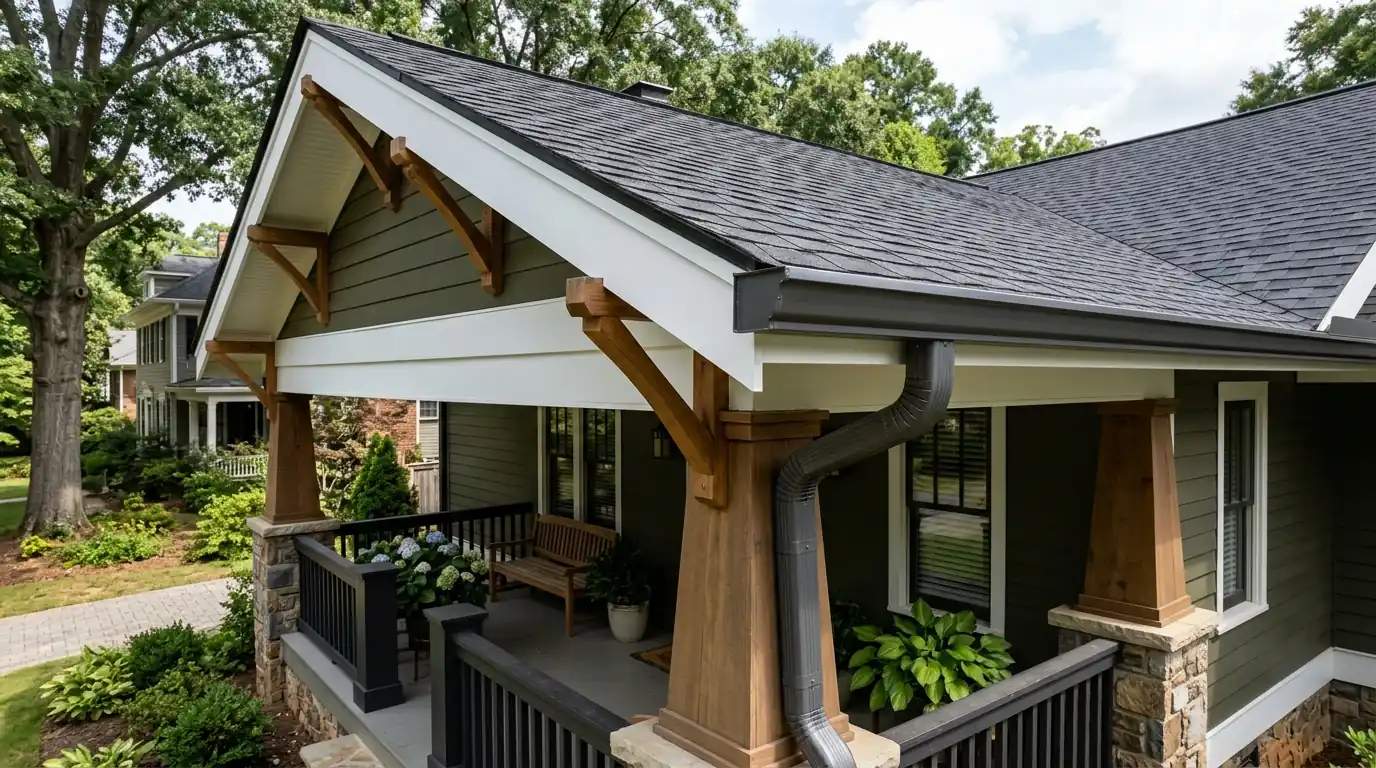
Gutter installation in Atlanta usually means seamless aluminum K-style gutters formed on site, sized 5 or 6 inches by roof area and pitch, hung on hidden hangers and pitched toward the downspouts. Repairs cover re-hanging sagging runs, resealing leaking corners and re-sloping gutters that hold water, with downspouts sized to carry it away from the foundation.
The work
Why gutters fail on Atlanta homes
Most gutter trouble comes from three things: gutters too small for a big or steep roof, hangers spaced too far apart, and slope that drifted as the fascia settled. In a hard storm, a 5-inch gutter under a large steep roof overflows no matter how clean it is.
Gutters also depend on the wood behind them. Rotted fascia cannot hold a hanger, so we check it before hanging anything new.
Updated September 2026
Options
Choosing a gutter size and profile
| Factor | 5-inch K-style | 6-inch K-style | Half-round |
|---|---|---|---|
| Capacity | Standard for most homes | Carries noticeably more | Less than K-style of equal width |
| Best for | Average roofs | Large or steep roofs, long runs | Older and period homes |
| Downspouts | 2x3 or 3x4 inch | 3x4 inch | Round |
| Look | Common modern profile | Slightly larger face | Traditional, rounded |
Seamless aluminum in either K-style size covers most Atlanta homes; half-round suits older houses where the look matters.
Cost
What sets the price of gutter work
Gutters are priced by the linear foot, plus the details that make a run work.
- Linear footage
Total length of runs around the house.
- Gutter size
6-inch uses more material than 5-inch.
- Downspouts
Number, size and extensions.
- Stories
Second-story runs need more rigging.
- Fascia repair
Rotted boards replaced before hanging.
- Old gutter removal
Tear-down and haul-away of existing runs.
Seamless gutter installation
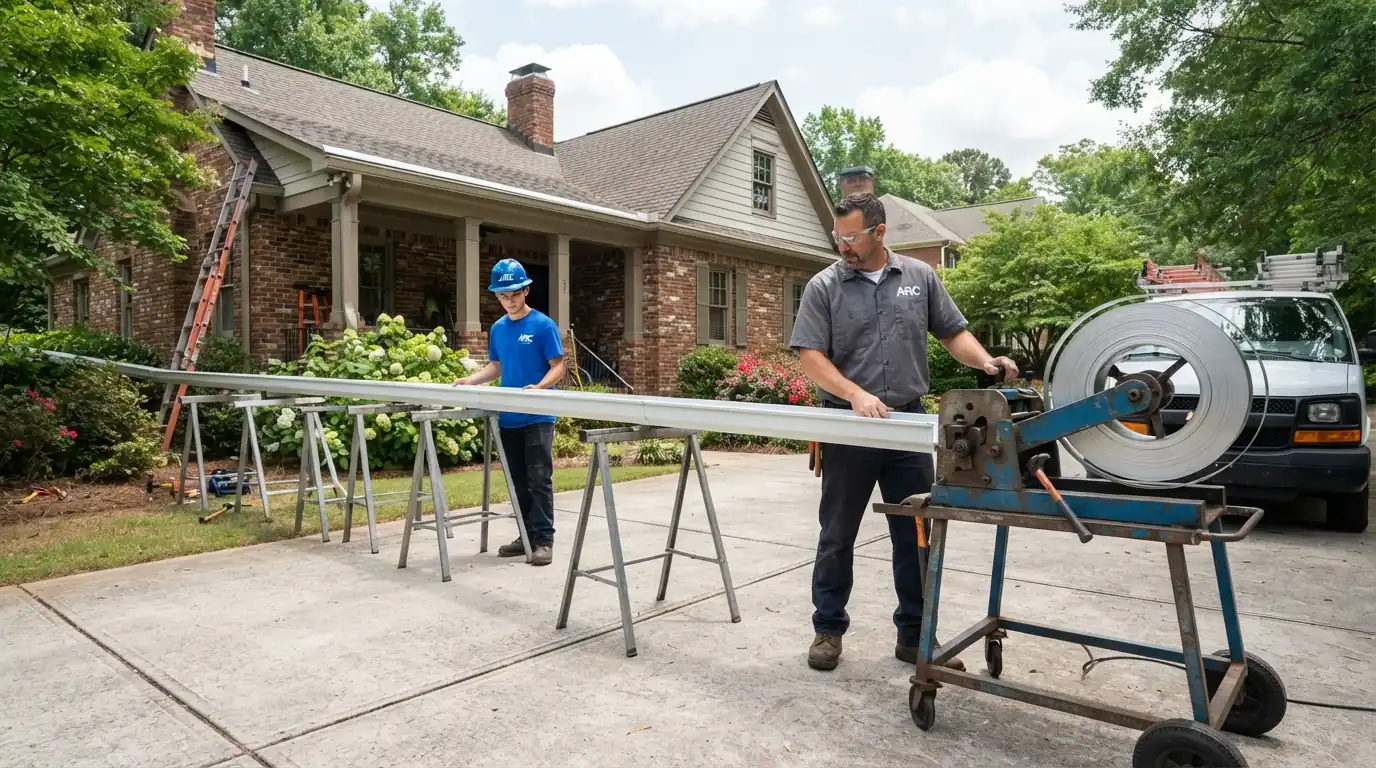
Seamless gutters are formed on site from a coil of aluminum, so each run is one piece from corner to corner, with joints only at the corners and downspout outlets. Fewer joints mean fewer places to leak. We measure roof area and pitch to choose between 5 and 6 inch, space hidden hangers close enough to carry wet leaves, and pitch each run toward its downspout. Old gutters come down first, and soft fascia is replaced before the new ones go up.
Gutter repair and re-hanging
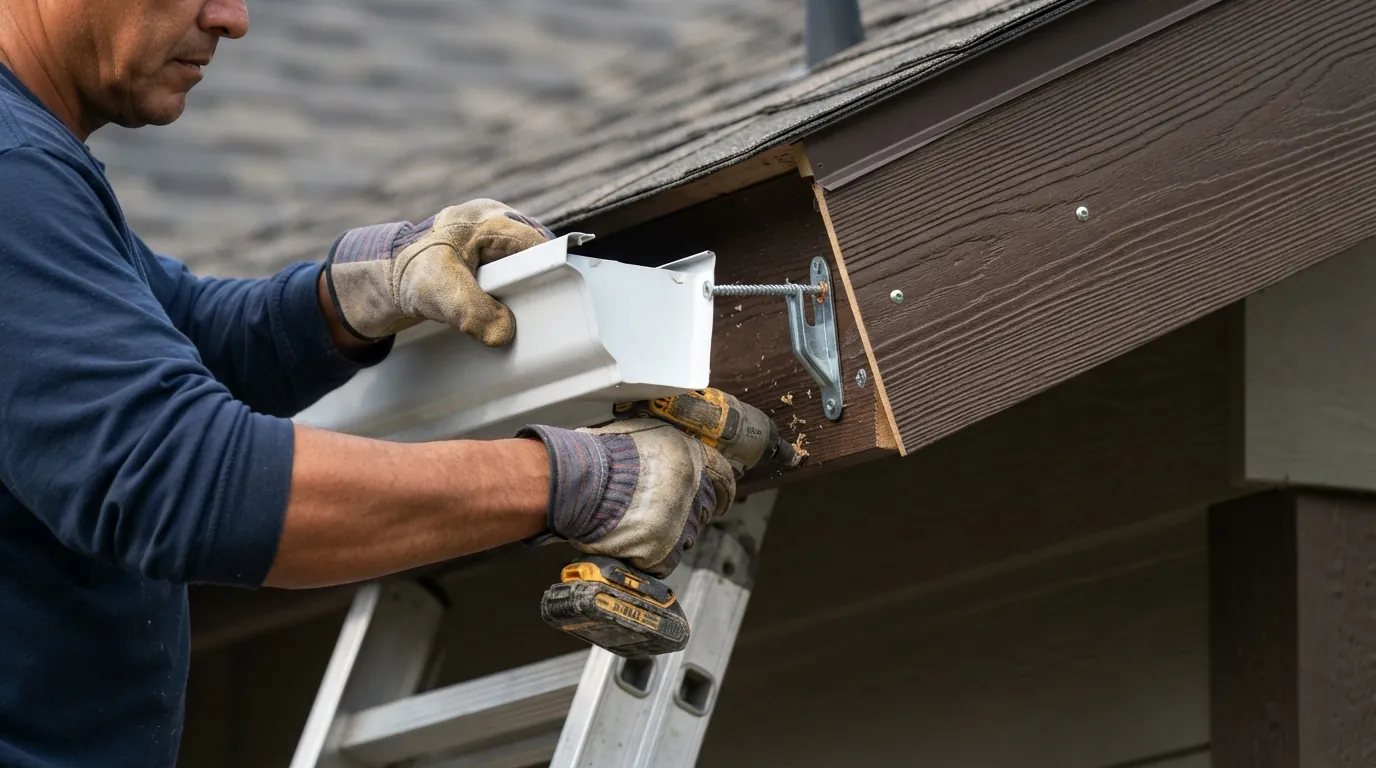
Not every gutter needs replacing, even when it looks rough. A sagging run can often be re-hung on new hidden hangers driven into sound fascia, leaking corners resealed, and a run that holds water re-pitched toward the downspout. We check the fascia first, because a hanger screwed into rotted wood pulls out in the next storm. If the gutter itself is bent from a ladder, a limb or hail, we replace that section with a matching profile rather than trying to straighten it.
Downspouts and drainage
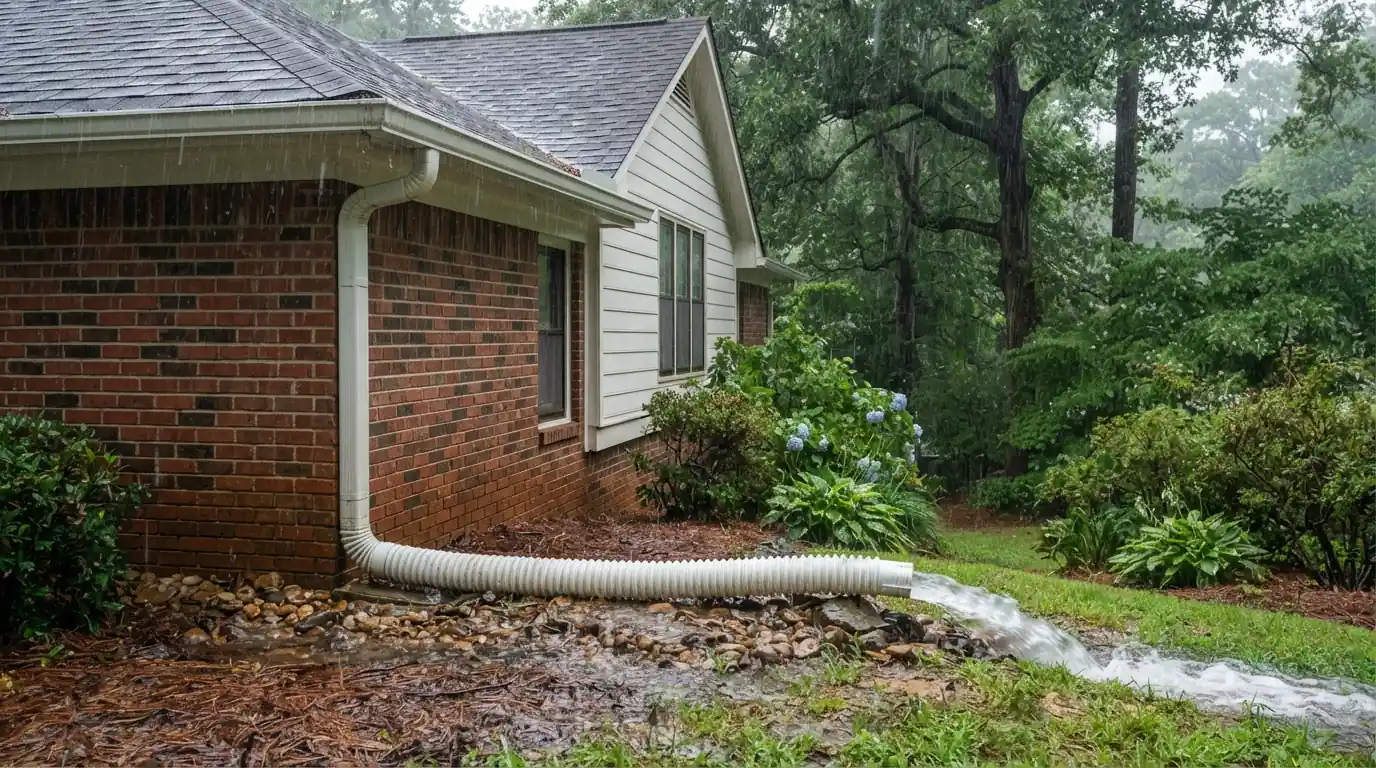
A gutter only moves water as far as the downspout, and most drainage problems start at the bottom. We size downspouts to the gutter, add outlets on long runs, and make sure water leaves several feet from the foundation through extensions or splash blocks. Where water still pools or runs toward the house, we can tie downspouts into existing drain lines or tell you when grading is the real fix. Clogged elbows are cleared and tested with a hose before we leave.
Rain, trees and gutters around Atlanta
Atlanta averages more than fifty inches of rain a year, and the city's tree canopy fills gutters with leaves and pine straw faster than open neighborhoods, so undersized or clogged gutters overflow early in any hard rain. Hail leaves its mark here too. After the February 26, 2026 storm, homeowners in Woodstock found dented gutters before they found any roof damage, and a dented run can hold water at the dent instead of draining.
How it runs
How a gutter job runs
- 1
Measure and size
Roof area, pitch and run lengths decide the size.
- 2
Check the fascia
Soft boards marked for replacement.
- 3
Written scope
Size, downspouts and repairs itemized.
- 4
Remove old gutters
Runs taken down and hauled away.
- 5
Form and hang
Seamless runs formed on site, hung and pitched.
- 6
Water test
Hose run through every gutter and downspout.
Warning signs
Signs your gutters are not doing the job
Water over the front edge
Overflow in hard rain means undersized or clogged.
Sagging runs
Hangers pulled loose or fascia rotting behind them.
Drips at corners
Failed sealant at joints and end caps.
Standing water in the trough
The slope drifted toward the wrong end.
Washout at the downspout
Water dumped too close to the foundation.
Peeling paint on the fascia
Water is getting behind the gutter.
FAQ
Gutter questions
It depends on roof area and pitch. Large or steep roofs that overflow 5-inch gutters in hard rain usually need 6-inch.
For most homes, yes. With joints only at the corners and outlets, there are fewer places to leak or pull apart.
Guards reduce clearing under heavy tree cover, but no guard is maintenance-free. We will tell you whether your trees justify them.
Often. Sagging runs can be re-hung, corners resealed and slope corrected, as long as the fascia behind them is sound.
Usually missing drip edge or a gutter hung too low, so water runs behind it and rots the fascia.
Yes. Soft fascia is replaced before new gutters go up, because hangers will not hold in rotted wood.
Related
Exterior work that goes with gutters
Interior Leak Damage Repair
Ceiling drywall replacement, water-stained wall repair and more.
Learn moreUnderground Downspout Drainage
Covers pop-up emitters and outlets and dry wells and drainage repairs.
Learn moreSiding Repair & Replacement
Vinyl siding replacement, plus storm-damaged siding repair.
Learn moreGutters overflowing or pulling loose?
Call and we will check the gutters, the fascia behind them and where the water ends up.