Commercial maintenance
Commercial roof maintenance for Atlanta property managers
Commercial roofs rarely fail all at once. They fail at a clogged drain, an open seam or a curb flashing nobody looked at for three years, and scheduled maintenance catches those while they are cheap.
- Calls answered 24/7
- Scheduled inspections
- Commercial buildings
Quick answer
Commercial roof maintenance in Atlanta is a scheduled program, usually spring and fall, that inspects the membrane, seams, flashing, curbs and drains, clears debris from drains and gutters, makes small repairs on the spot, and delivers a written condition report with photos. It catches the failures behind most commercial leaks and gives owners the records to budget repairs years ahead.
The work
What a maintenance program actually does
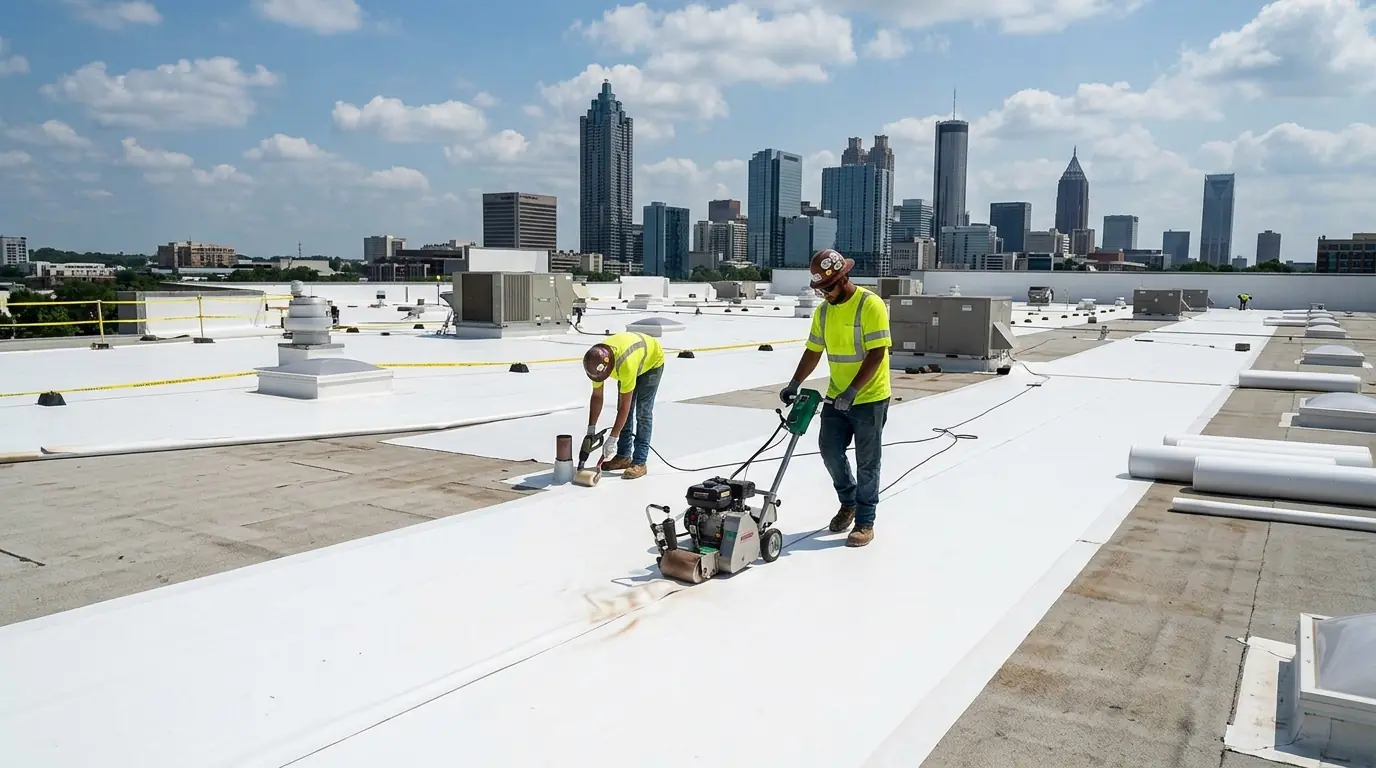
A flat roof's weak points are predictable: drains that clog with leaves, seams that open, pitch pans that dry out, flashing that pulls loose at walls and curbs, and punctures left by service traffic. A scheduled visit checks each one, fixes the small items right away, and photographs the rest.
The report is the other half. It shows what changed since the last visit and what to budget for, so replacement is planned rather than forced by a leak over a tenant's inventory.
Updated September 2026
What is included
What each maintenance visit covers
- Drains and scuppers. Strainers cleared, flow checked.
- Seams and field. Membrane probed for open seams and punctures.
- Flashing and curbs. Walls, curbs and pitch pans checked.
- Rooftop units. Service-traffic damage around equipment.
- Debris removal. Leaves, trash and tools cleared.
- Small repairs. Minor seams and flashings fixed on the spot.
- Condition report. Photos, findings and a repair budget.
Scheduled roof inspections
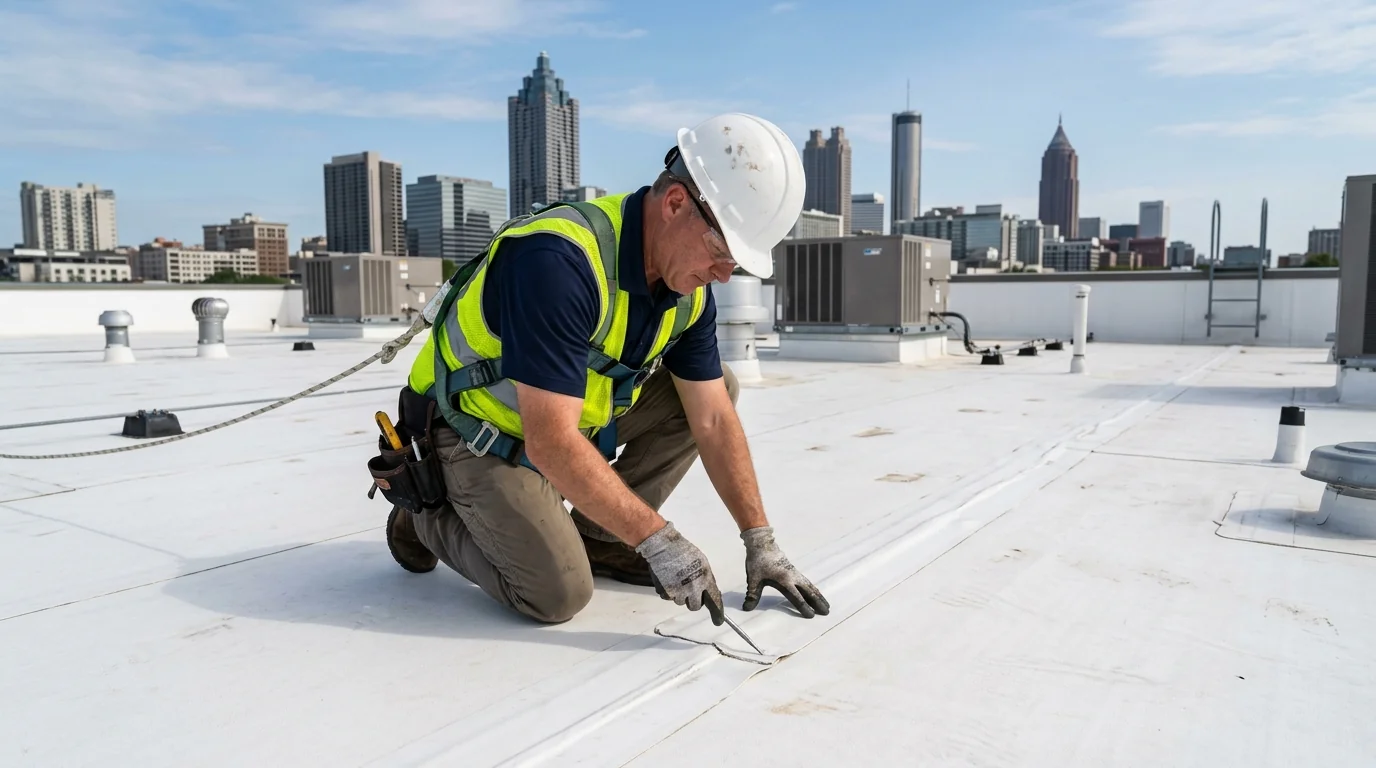
Each visit walks the whole roof: the membrane field, every seam, every penetration, the parapets and edge metal, and the curbs under rooftop units. Seams are probed, not just looked at, since a seam can look closed and still be open underneath. Findings are photographed and marked on a roof plan, so the next visit can compare. For owners with several buildings, the same format across every roof makes it easy to see which ones need money first and which can wait.
Drain and debris clearing
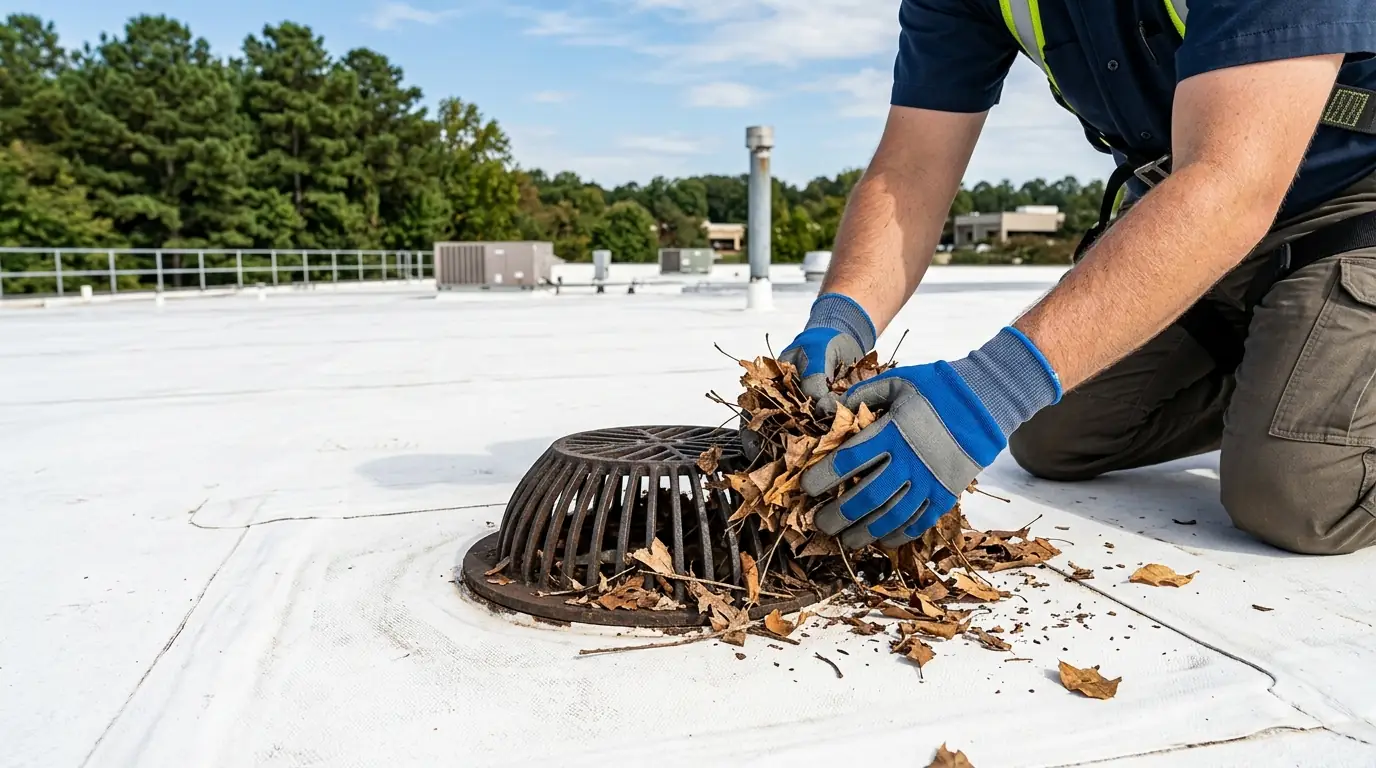
Clogged drains are behind many flat-roof leaks, because water that cannot leave stands, finds weak seams and adds weight to the deck. Each visit clears strainers, scuppers and gutters, removes leaves and trash, and checks that water actually reaches the drains rather than ponding in low spots. Ponding areas are marked on the roof plan, so tapered insulation or crickets can be budgeted if the same spots hold water visit after visit, rather than waiting for a seam in the pond to fail.
Condition reports and repair budgeting
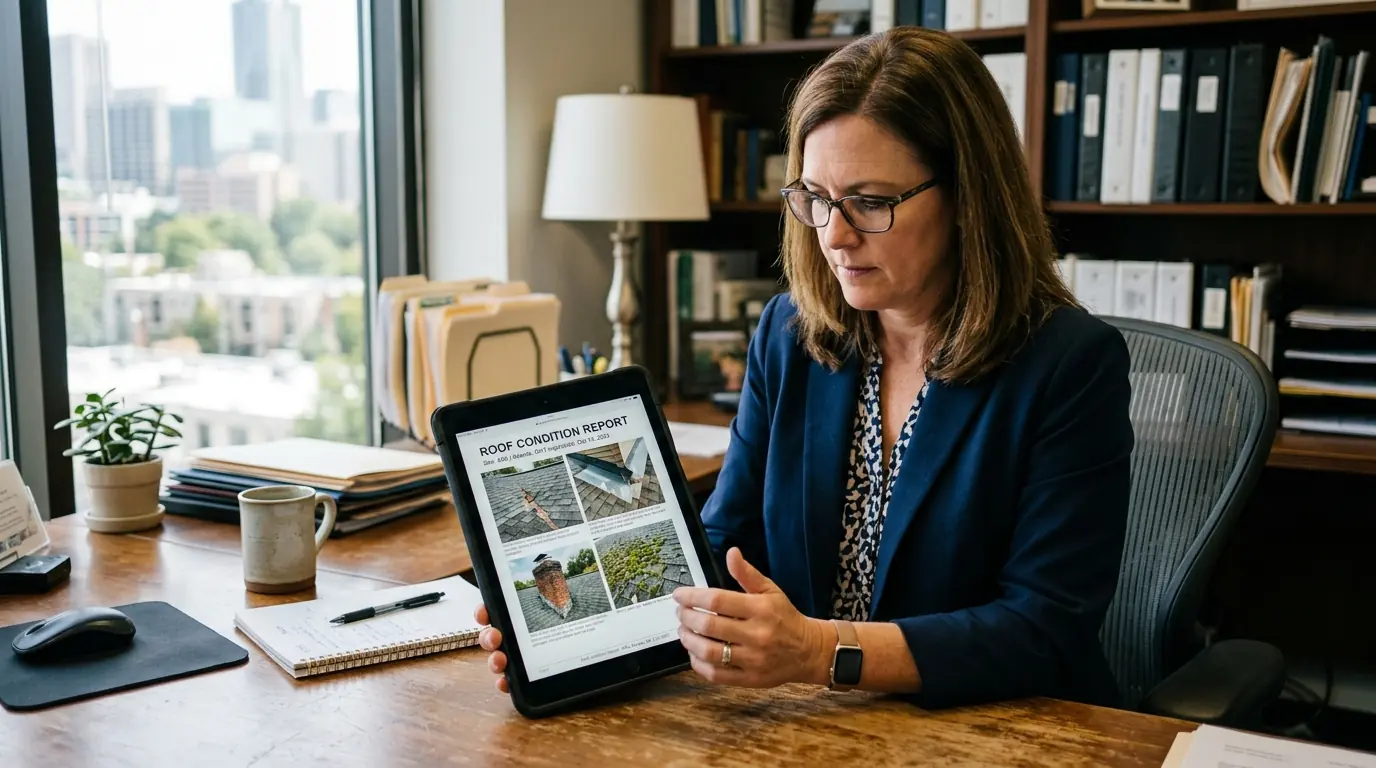
After each visit, the owner or property manager gets a written report: photos of every finding, what was repaired on the spot, what needs a quote, and an honest estimate of the roof's remaining life. Over a few years the reports show a clear trend, which turns roof replacement into a planned capital expense instead of an emergency. They also document the roof's condition before a storm, which helps if a storm claim is ever needed and the insurer asks what the roof looked like before.
Keeping reflective roofs working in Atlanta
Many commercial roofs in Atlanta are white TPO or PVC, and the city's cool-roof standard is written in 3-year aged values, a reminder that reflectance is meant to hold up over time rather than just on installation day. Code summaries differ on the exact low-slope figures, but keeping the membrane clean and sound is part of keeping a reflective roof doing its job, and maintenance visits are where dirt build-up, ponding stains and worn walkways get noticed.
Timeline
How often commercial roofs should be checked
Twice a year, in spring and fall, suits most commercial roofs: spring catches winter damage before storm season, and fall clears leaves before they block drains. Buildings under trees, with heavy rooftop equipment traffic, or with older membranes benefit from an extra visit after major storms. Visits are scheduled around the building's hours, and tenants rarely notice the crew is up there.
How it runs
How a maintenance program runs
- 1
Baseline survey
Full roof documented on a plan.
- 2
Schedule set
Spring and fall visits around building hours.
- 3
Visit and clear
Drains cleared, roof walked.
- 4
Small fixes
Minor seams and flashings repaired.
- 5
Report delivered
Photos, findings and budget.
- 6
Plan ahead
Repairs and replacement budgeted.
Cost
What a maintenance program costs depends on
Maintenance is priced per visit by roof area and complexity, with repairs beyond small items quoted separately.
- Roof area
Square feet walked and documented.
- Number of buildings
Several roofs on one schedule.
- Rooftop equipment
More units mean more penetrations.
- Drain count
Drains, scuppers and gutters.
- Visit frequency
Twice a year or more.
- Repairs found
Quoted separately beyond small fixes.
FAQ
Commercial roof maintenance questions
Twice a year, spring and fall, plus after major storms for older roofs or buildings under trees.
Drain clearing, a full walk of the membrane and flashing, small repairs on the spot and a written condition report.
It can keep a sound roof from failing early by catching open seams, clogged drains and flashing problems while they are small.
Yes. TPO, PVC, EPDM, modified bitumen and metal roofs from any installer.
They document the roof's condition before a storm, which is useful if a claim is ever needed.
Yes. Multiple roofs can share one schedule and one report format.
Related
Other commercial roof services
Managing a commercial roof?
Call to set up a baseline survey and a spring and fall maintenance schedule.