Insurance claims
Roof insurance claim help for Atlanta homeowners
A roof claim goes better when the damage is documented before anyone debates it. We inspect, photograph, meet the adjuster and repair to the approved scope, while the claim stays yours.
- Calls answered 24/7
- Photo reports adjusters can read
- Atlanta service office
Quick answer
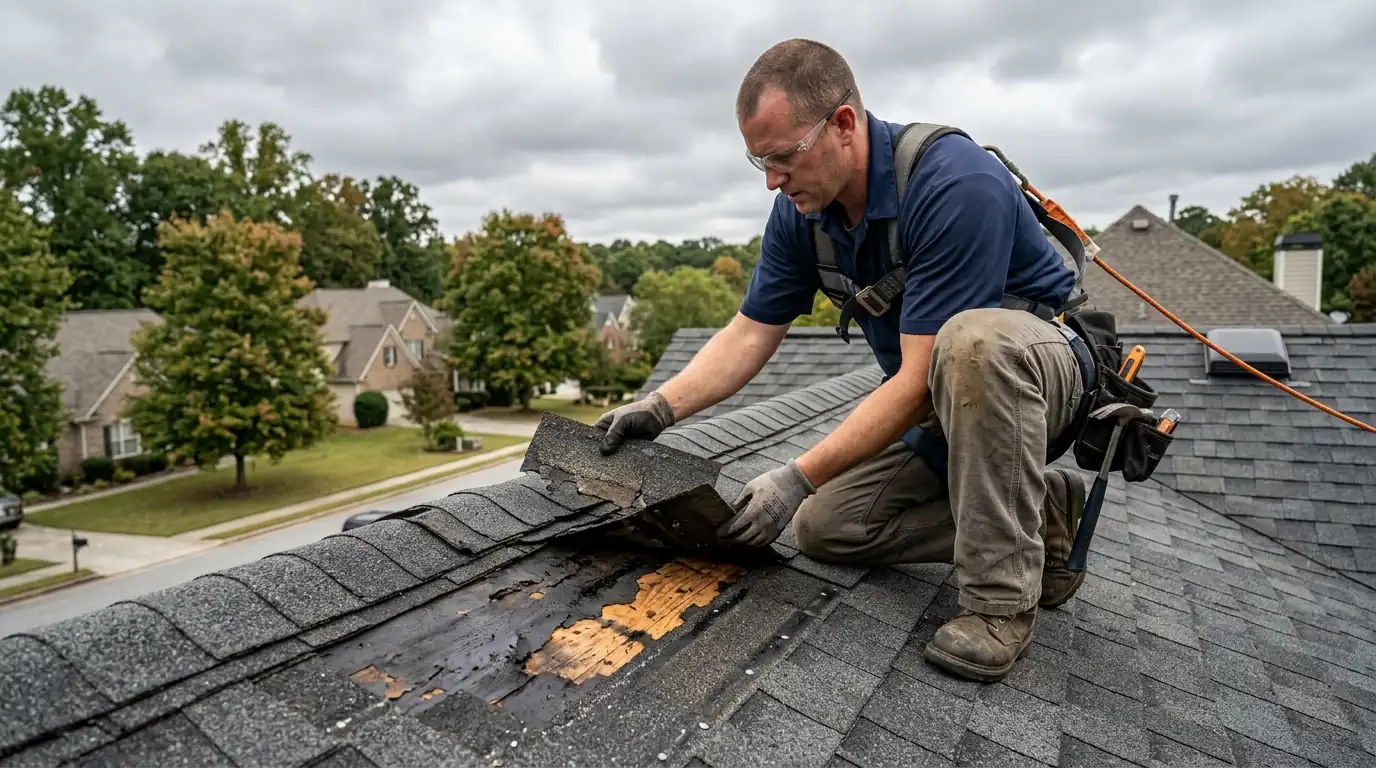
Roof insurance claims in Atlanta start with a documented inspection soon after the storm, because most Georgia policies cover hail and wind but not age and wear. We photograph and measure the damage, meet your adjuster on the roof, and repair or replace to the scope your insurer approves. Most policies also require prompt notice of the loss.
The work
What we do on a claim, and what we don't
You are the policyholder: you file the claim, talk with your insurer and make the decisions. Our part is the roof. We document what the storm did, show it to the adjuster in person, and give you a written estimate for the work.
We also tell you when damage is not worth a claim. Filing on wear that happens to look like storm damage wastes a claim and your time.
Updated September 2026
Cost
What a claim job costs you
On an approved claim, your out-of-pocket cost is usually your deductible plus anything outside the approved scope that you choose to add.
- Your deductible
Set by your policy and paid by you.
- Approved scope
What the insurer agrees to cover.
- Supplements
Items found once work begins.
- Code items
Drip edge, permits and ventilation.
- Upgrades you choose
Better shingles or extras beyond scope.
- Depreciation
Handled as your policy spells out.
What is included
What claim documentation includes
- Storm date noted. Tied to the event you are claiming.
- Slope-by-slope photos. Every elevation, with test squares.
- Measurements. Roof area, pitch and waste for the estimate.
- Metal and gutter damage. Vents, caps and gutters photographed.
- Interior damage. Stains and attic wetting recorded.
- Temporary repairs. Tarp or dry-in documented with receipts.
- Written estimate. Line items an adjuster can compare.
Storm damage documentation
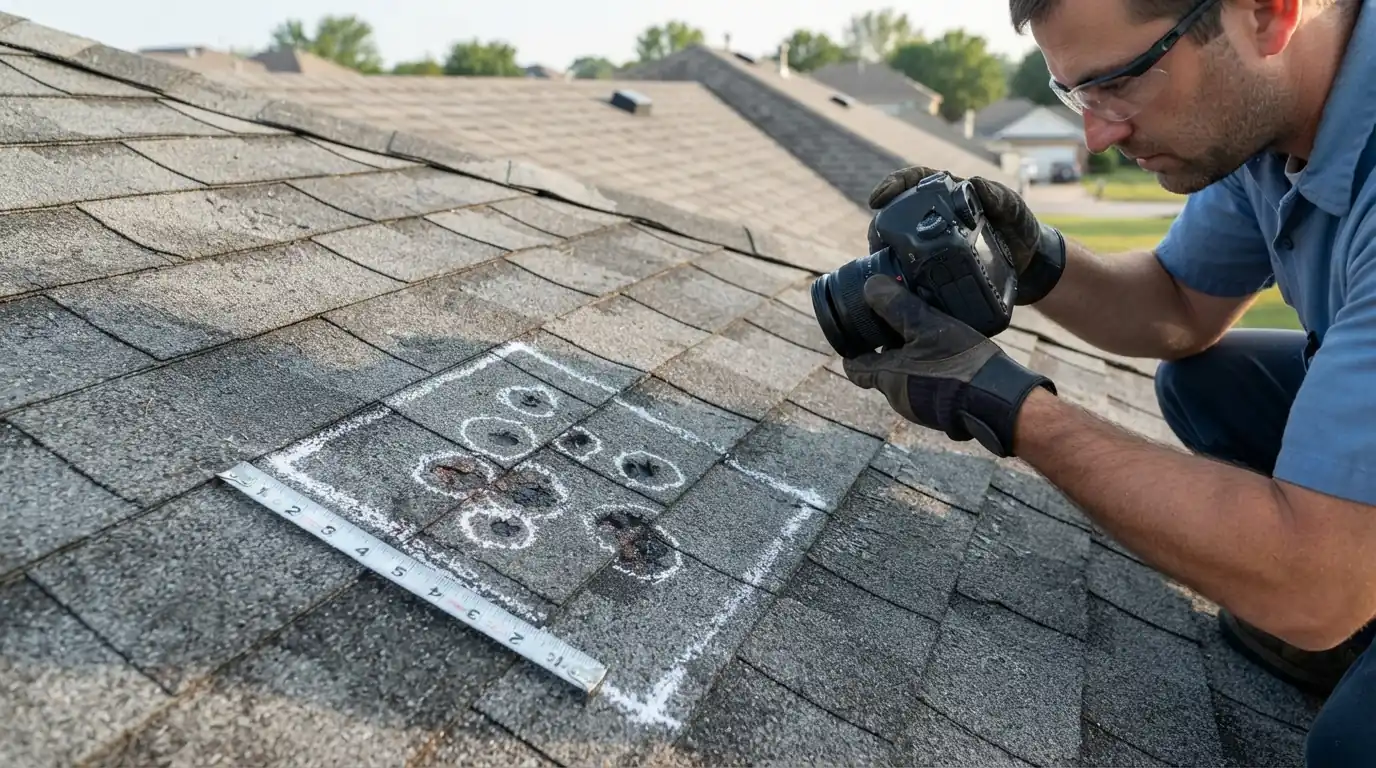
A good claim file shows the damage, the date and the scale. We walk every slope, chalk test squares, count hail hits and photograph lifted or creased shingles with a scale in the frame. Metal vents, caps and gutters are photographed too, because dents confirm hail size and direction. Interior stains and wet attic insulation are recorded alongside the roof. The result is a report organized slope by slope that an adjuster can follow without having to climb every corner of the roof.
Adjuster meetings
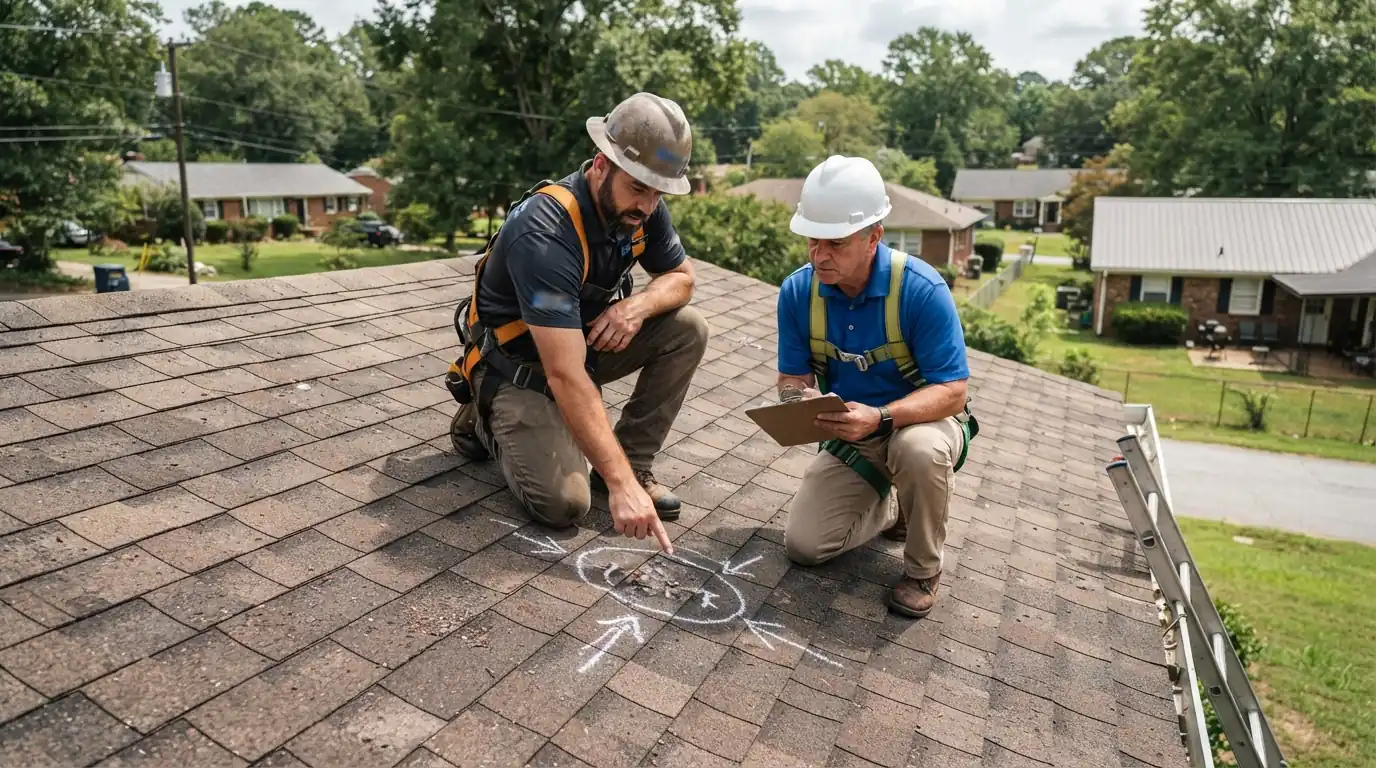
When the adjuster schedules the inspection, we meet them on the roof with your permission. We point out each marked hit, lifted tab and damaged vent, share measurements, and answer questions about materials and code items such as drip edge or permits. The adjuster makes the coverage call. Our job is making sure nothing is missed because it was hard to see, and giving you a clear account afterward of what was agreed and what is still open for discussion with your insurer.
Supplements and scope disputes
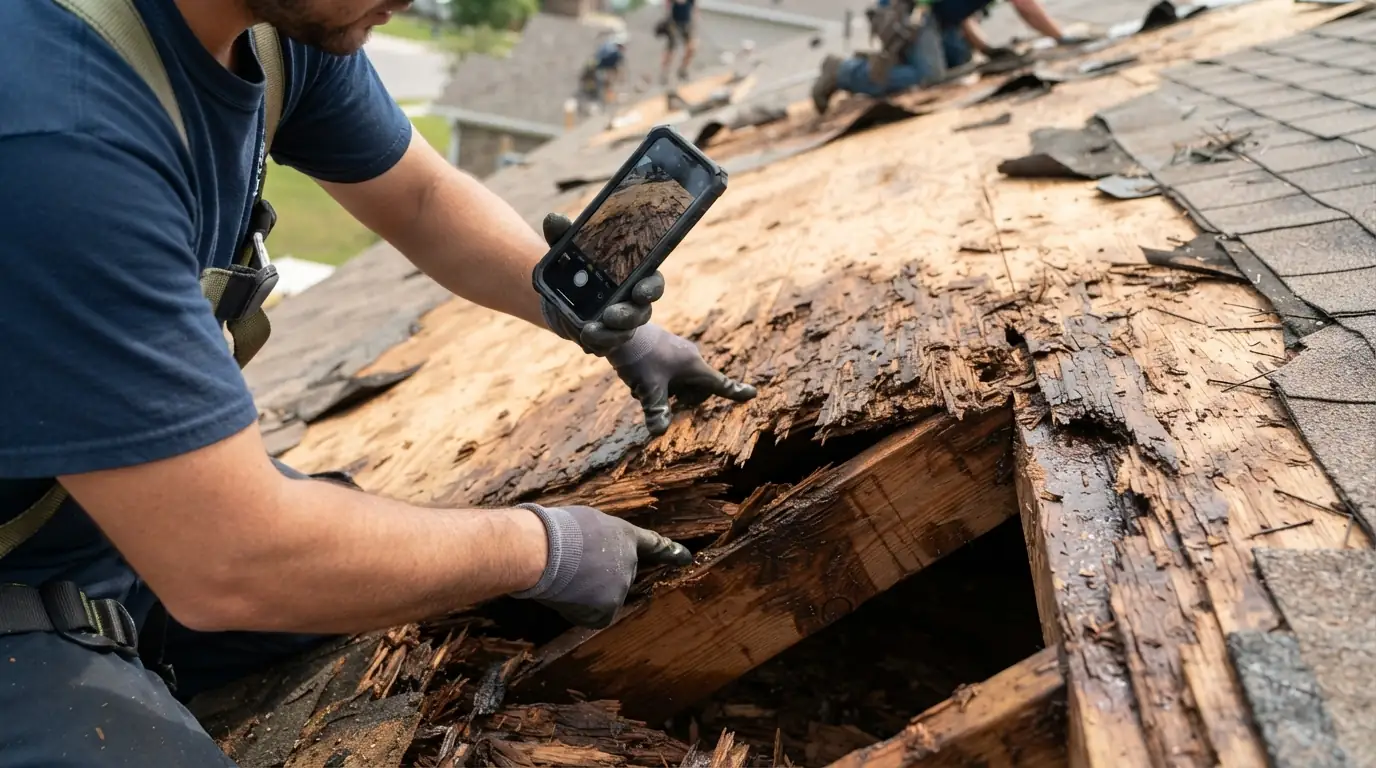
Sometimes the approved scope leaves out items the job actually needs: decking found rotten at tear-off, code-required drip edge, a ridge vent, or flashing that cannot be reused. We document those items with photos and line items and send them to you to submit to your insurer as a supplement request. If the insurer disagrees with the scope, your policy describes your options; the decisions stay with you. Nothing outside the approved scope is ever billed to you without your signature.
Georgia claim basics
Most Georgia homeowner policies treat hail and wind as covered causes of loss and leave out plain aging, so a claim stands or falls on showing storm damage tied to a dated event. Timing matters too. Georgia policies generally ask for prompt notice, and many set a window of one to two years from the date of loss, which is why the photos should be taken in the weeks after the storm rather than next season.
Timeline
Where claims slow down
Claims move in stages: inspection, filing, the adjuster's visit, the insurer's decision, then the work. Delays usually come from missing documentation or a scope that left items out, which is why the photo report and estimate are ready before the adjuster arrives. Temporary repairs should never wait for the decision; covering an opening protects both the house and the claim.
How it runs
How a roof claim runs with us
- 1
Inspection
Damage documented soon after the storm.
- 2
Your decision
We tell you plainly whether to file.
- 3
You file
You report the loss to your insurer.
- 4
Adjuster visit
We meet the adjuster on the roof.
- 5
Scope and schedule
Work set to the approved scope.
- 6
Repair and paperwork
Photos and invoice for final payment.
FAQ
Roof claim questions
Many homeowners get an inspection first so they know whether the damage is storm-related. Report the loss promptly either way.
No. The claim is between you and your insurer. We supply documentation, meet the adjuster on the roof and give you a written estimate.
Ask your insurer for the reason in writing. If you disagree, your policy describes the options, and our photos and report are yours to use.
It varies by insurer and storm volume. Having documentation ready before the adjuster visits removes the most common delay.
Yes, and you should. We photograph the damage first so the evidence is kept, then cover the opening.
No. If damage is minor or mostly wear, a claim may not make sense. We tell you what we see before you decide.
Related
Storm repairs that follow a claim
Tree Damage Roof Repair
Limb strikes and punctures, trees resting on the roof and more.
Learn moreSlate & Tile Roof Repair
Covers clay and concrete tile repair and flashing and ridge work on slate and tile roofs.
Learn moreEmergency Roof Tarping & Storm Repair
Blown-off shingle sections, plus emergency tarping and dry-in.
Learn moreStorm hit your roof?
Call for an inspection before you file, and get photos and a straight answer about what the storm did.