Roof inspection
Roof inspections in Atlanta with a written photo report
An inspection should end with facts, not a sales pitch: what we found, where, how serious it is, and what can wait. That is what our reports give you.
- Calls answered 24/7
- Written photo report
- Atlanta service office
Quick answer
A roof inspection in Atlanta covers every slope, the flashing, penetrations and gutters, plus the attic underside where it is reachable, and ends with a written report with photos of each finding. Book one after any hail or high-wind storm, before buying a house, or once a year on a roof past the middle of its life.
The work
What a real inspection covers
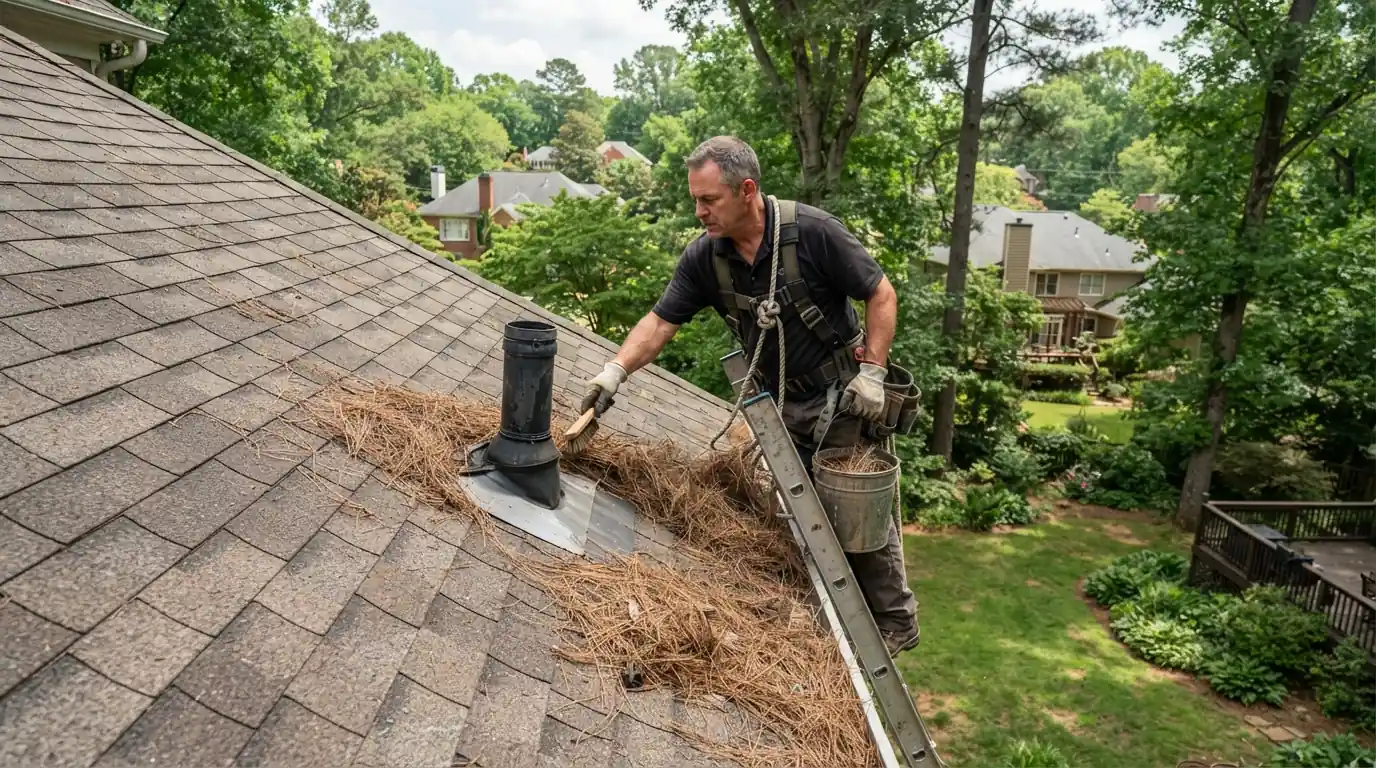
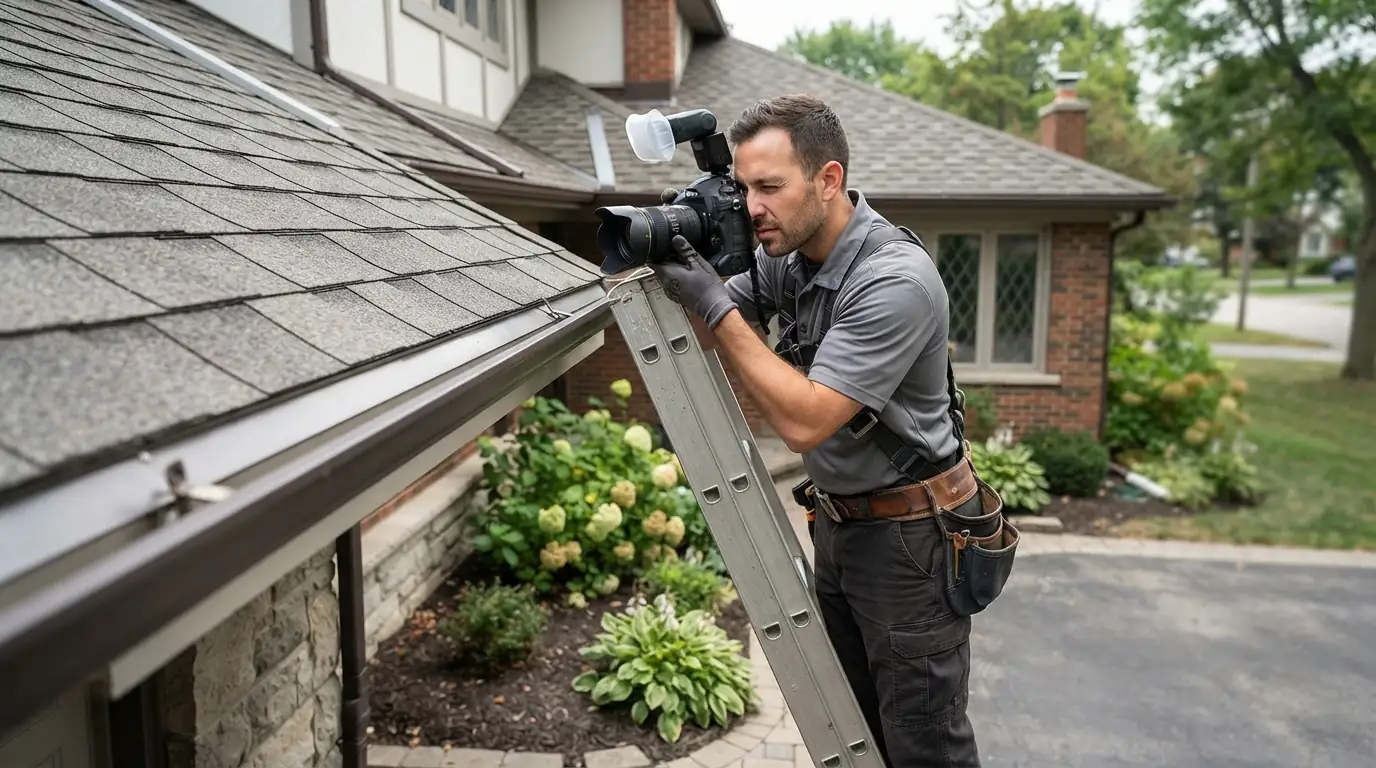
Looking at a roof from the driveway misses most of what matters. We walk each slope where it is safe, check shingles, flashing, boots, valleys and ridge, and look at the decking and ventilation from the attic. Gutters and downspouts show granule loss and hail marks that the shingles hide.
The report separates storm damage, wear and installation problems, because each leads to a different next step.
Updated September 2026
What is included
What the inspection report includes
- Slope-by-slope photos. Every elevation, with findings marked.
- Shingle condition. Granule loss, cracking, curling and hits.
- Flashing and boots. Walls, chimneys, skylights and vents.
- Attic view. Decking, stains and ventilation.
- Gutters and edges. Drip edge, fascia and gutter damage.
- Remaining life. A plain range, not a sales number.
- Priorities. What needs doing now and what can wait.
Post-storm inspections
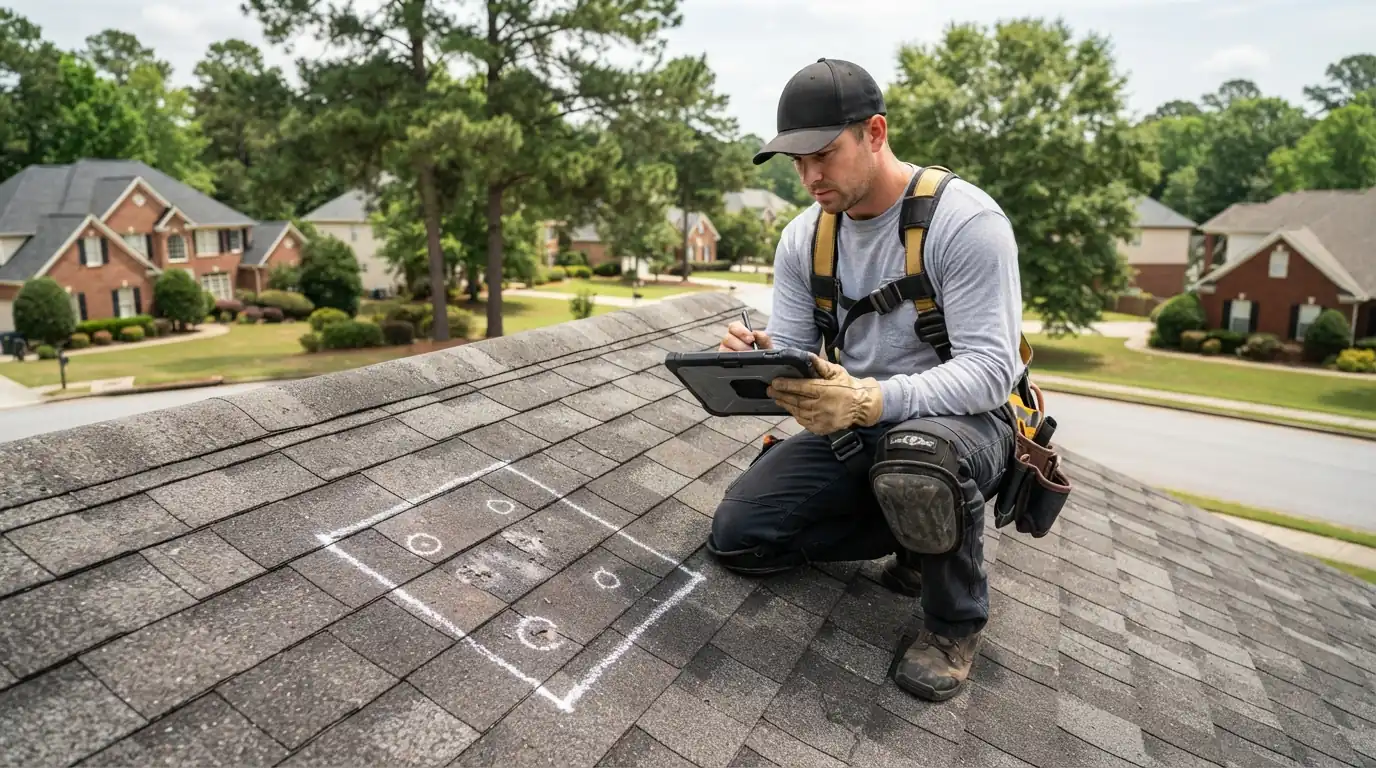
After hail or high wind, the roof can look fine from the ground while bruised shingles and broken seal strips are already there. We inspect each slope with chalked test squares, check tabs for broken seals, and photograph dented vents, caps and gutters, since metal records hail size. The report ties findings to the storm date and separates storm damage from wear, which is the distinction an insurer will draw. If the damage is not worth a claim, we say so.
Pre-purchase and real estate inspections
A general home inspection often looks at the roof from a ladder or the ground. When you are buying, a roofer's inspection answers the questions that affect the price: how old the roof is, how much life it has left, whether there are past repairs or hidden leaks, and what a replacement would involve. Sellers use the same report to fix problems before listing. We write it for the buyer or seller who ordered it, not for a sales pitch.
Annual condition checks
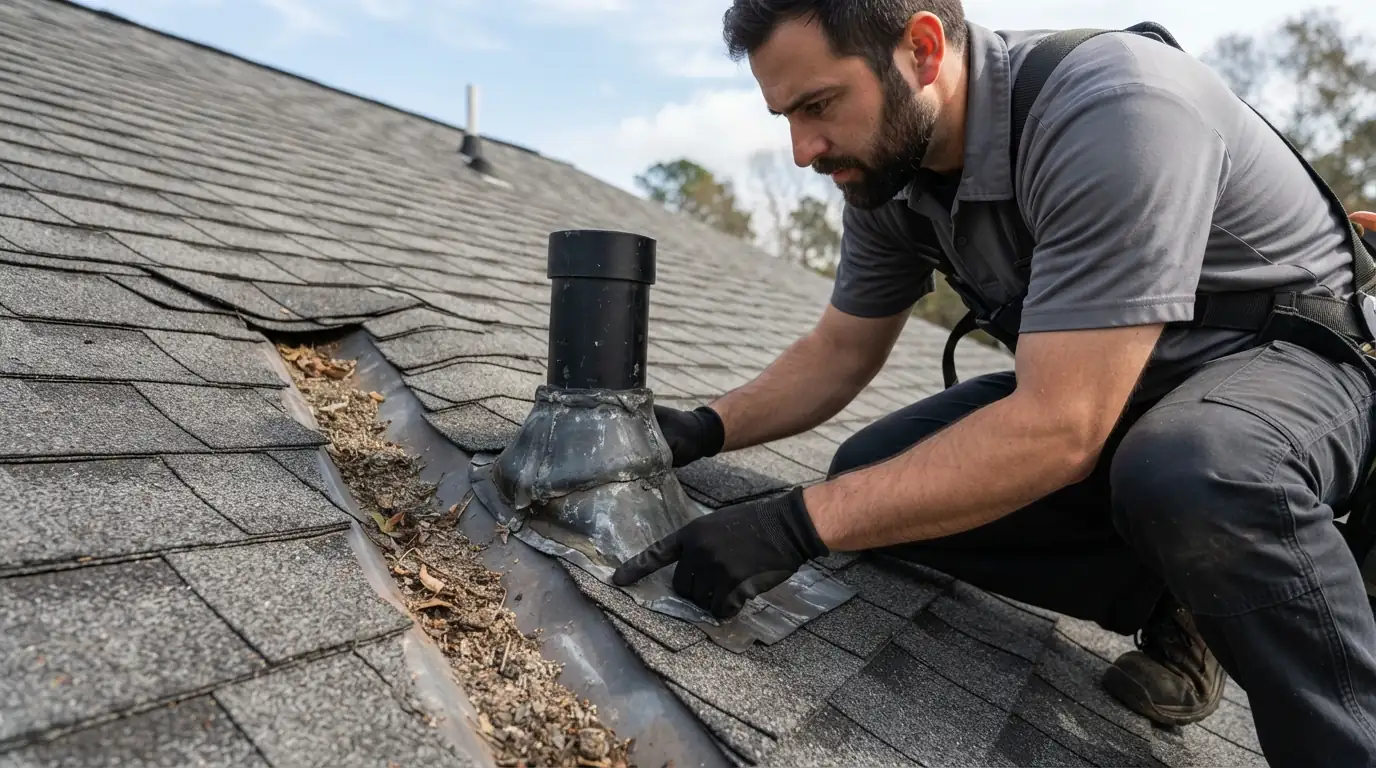
Roofs past the middle of their life benefit from a yearly look, ideally before the spring storm season. We note changes since the last visit, such as new granule loss, a boot starting to crack, or a valley collecting debris, so small repairs get planned instead of discovered through a ceiling. The report gives an honest remaining-life range, so replacement can be budgeted years ahead instead of decided in a rush after a leak. Comparing photos year over year makes the trend obvious.
Storm damage you can't see from the yard
Hail does not have to break a shingle to shorten its life. After the late-February 2026 storm, homeowners downwind in Cherokee County found dented gutters and shingle granules at their downspouts while their roofs looked untouched from the yard, and an inspection is how that kind of damage gets found and dated. Timing counts: many Georgia policies allow one to two years from the date of loss to claim, and most expect prompt notice, so a dated report now protects a claim you may need later.
Timeline
How long an inspection takes
Time on site depends on the roof's size and pitch and how much of the attic is reachable, and the written report follows with photos organized by slope. After a big storm, call early: the sooner damage is documented, the easier it is to tie to the storm date, and the more useful the report is if you decide to file.
How it runs
How a roof inspection runs
- 1
Book the visit
Tell us why: storm, sale or checkup.
- 2
Ground and gutters
Edges, gutters and downspouts checked.
- 3
Roof walk
Every slope, flashing and penetration.
- 4
Attic check
Decking, stains and ventilation.
- 5
Written report
Photos by slope, findings and priorities.
- 6
Review with you
Questions answered, no pressure to book work.
Cost
What an inspection costs depends on
Inspections are priced by the roof's size and access and by the kind of report you need.
- Roof size
More slopes take longer to document.
- Pitch and height
Steep roofs need rigging to walk.
- Attic access
Reachable attics are checked too.
- Report type
Claim, purchase or condition report.
- Extra structures
Detached garages or outbuildings.
- Follow-up visit
Re-inspection after repairs if wanted.
FAQ
Roof inspection questions
Once a year on older roofs, and after any hail or high-wind storm regardless of age.
It is a start. A roofer's inspection goes deeper on remaining life, past repairs and replacement cost.
Only if the report supports it. Many inspections end with small repairs or nothing at all.
Yes. Photos are dated and organized by slope, and storm damage is separated from wear.
Yes. Flat roofs get seam, drain and flashing checks; metal roofs get fastener, seam and trim checks.
Not for the roof itself. If you want the attic checked, someone needs to let us in.
Related
Work an inspection often leads to
Want to know where your roof really stands?
Book an inspection and get a photo report with plain answers about what needs doing and what can wait.