Leak repair
Roof leak repair in Atlanta, traced to the real entry point
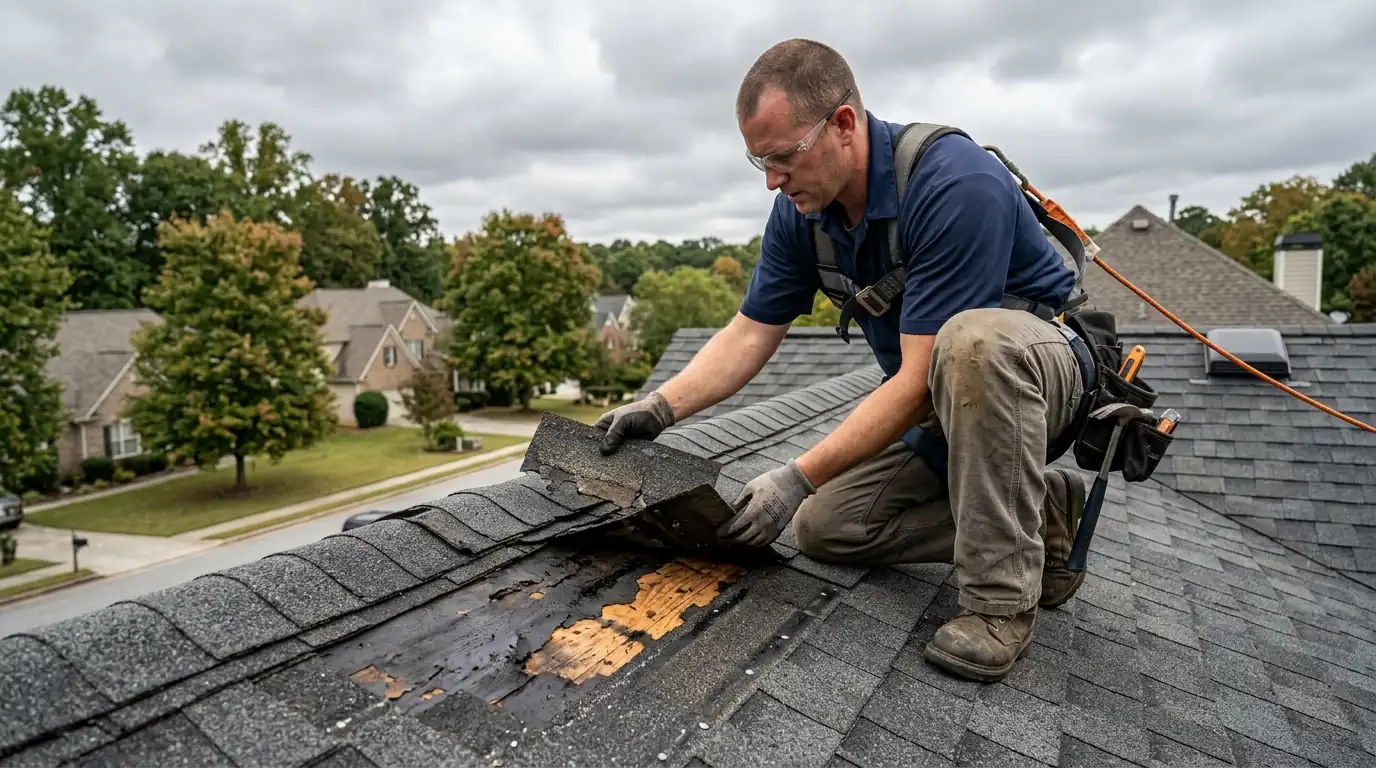
The stain is rarely under the hole. Water runs along the deck and rafters first, so we start in the attic and trace it back to where it gets in.
- Calls answered 24/7
- Leak traced before repair
- Atlanta service office
Quick answer
Roof leaks in Atlanta most often start at four places: cracked pipe boots, valleys, the flashing around skylights and dormers, and nails that have backed out. Because water travels before it drips, we trace each leak from the attic to the roof, fix the entry point rather than the stain, and check nearby spots that are wearing the same way.
How it runs
How a leak call runs
- 1
Call answered
Where it drips and how fast.
- 2
Stop the water
Tarp or dry-in if it is still raining.
- 3
Trace from the attic
Follow the water to its source.
- 4
Confirm on the roof
Entry point found, hose test if needed.
- 5
Repair the entry point
Boot, flashing, valley or nails fixed.
- 6
Check the neighbors
Nearby boots and flashing inspected.
Warning signs
Signs of a roof leak
Ceiling or wall stains
Rings that grow after each rain.
Drips from lights or vents
Water following wiring or ducts.
Wet attic insulation
Matted or dark patches.
Peeling paint near the ceiling
Water reaching the top of walls.
Musty smell upstairs
A slow leak soaking wood.
Shingle grit in gutters
Granules from a failing area.
The work
Why fixing the stain doesn't fix the leak
Water that gets past a shingle runs downhill along the underlayment or a rafter until it finds a seam to drip through. A stain in the middle of a bedroom ceiling can start at a pipe boot several feet upslope, and sealant smeared on the roof above the stain seldom stops anything.
Tracing takes a flashlight in the attic, a close look on the roof and sometimes a hose test, which is why we quote after we find it.
Updated September 2026
Pipe boot and vent flashing leaks
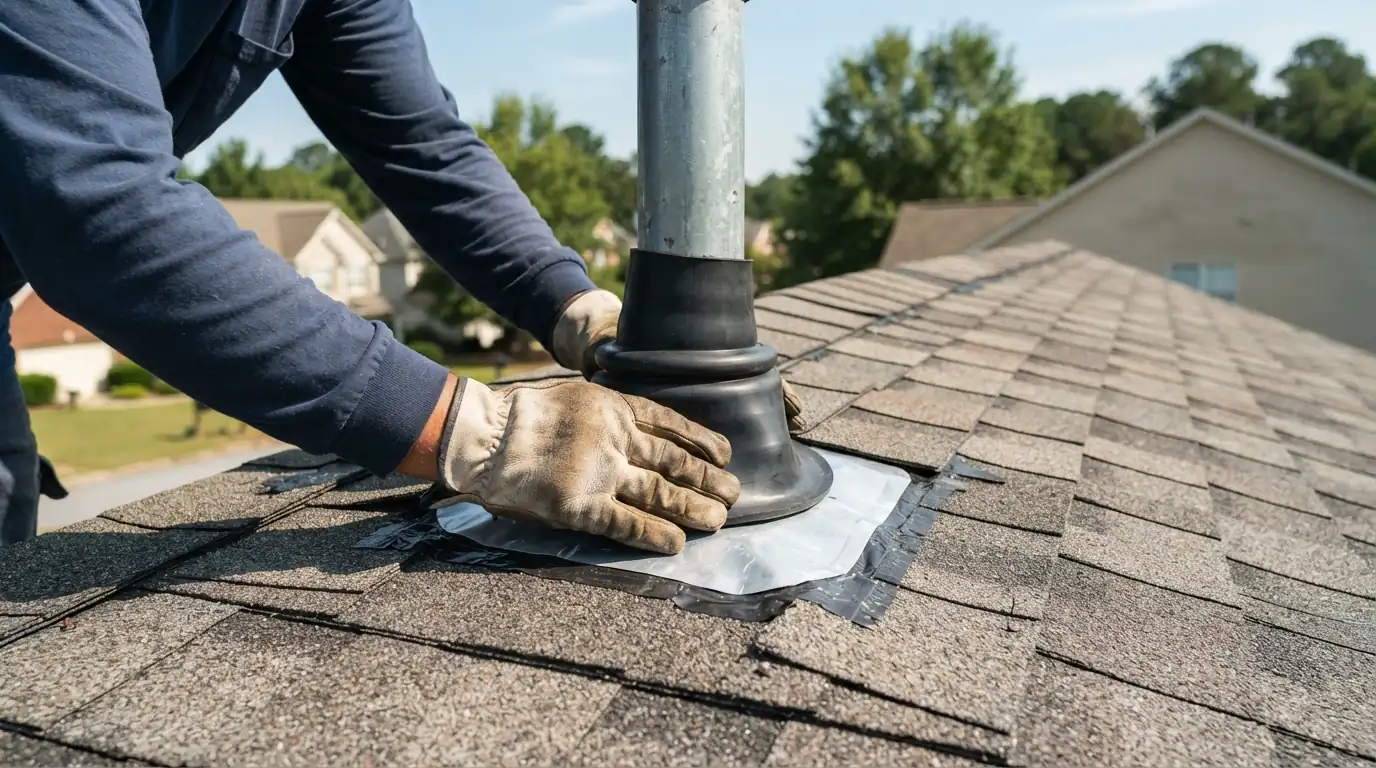
The rubber collar around each plumbing vent cracks in the sun long before the shingles wear out, and it is one of the most common roof leaks there is. Water runs down the pipe and drips from the ceiling near a bathroom or kitchen. We replace the boot, or fit a newer style with a replaceable collar, and reseal the shingles around it. Metal vent caps get the same check for rust and lifted flanges, since they leak the same way.
Valley leaks
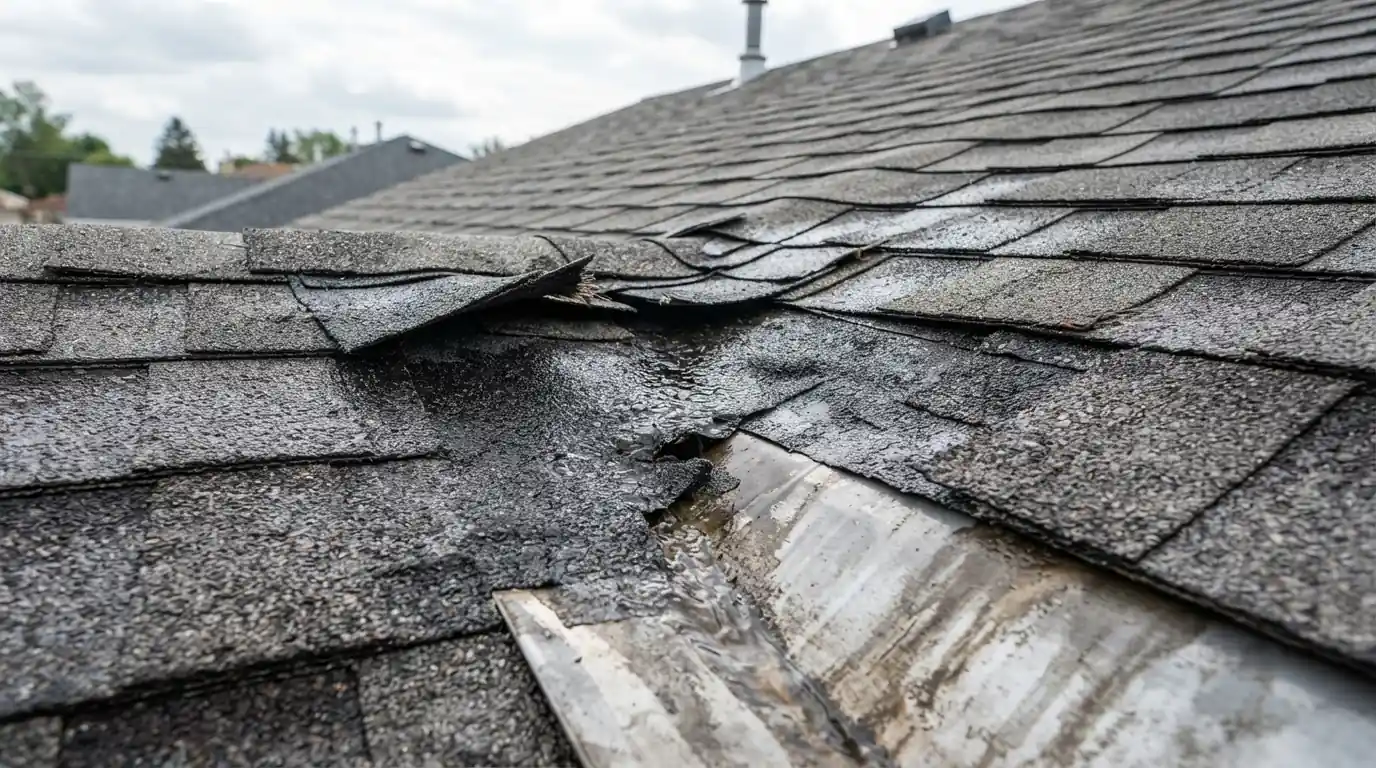
Valleys carry the water from two slopes, so any weakness there shows up quickly. Debris dams, worn shingles in a closed-cut valley, or a nail placed too close to the center line all let water under. We clear the valley, lift the shingles to check the underlayment beneath, and replace the damaged section with new underlayment and shingles, or open metal flashing where the valley needs more capacity. Valleys under trees collect the most debris and need the most attention.
Skylight and dormer leaks
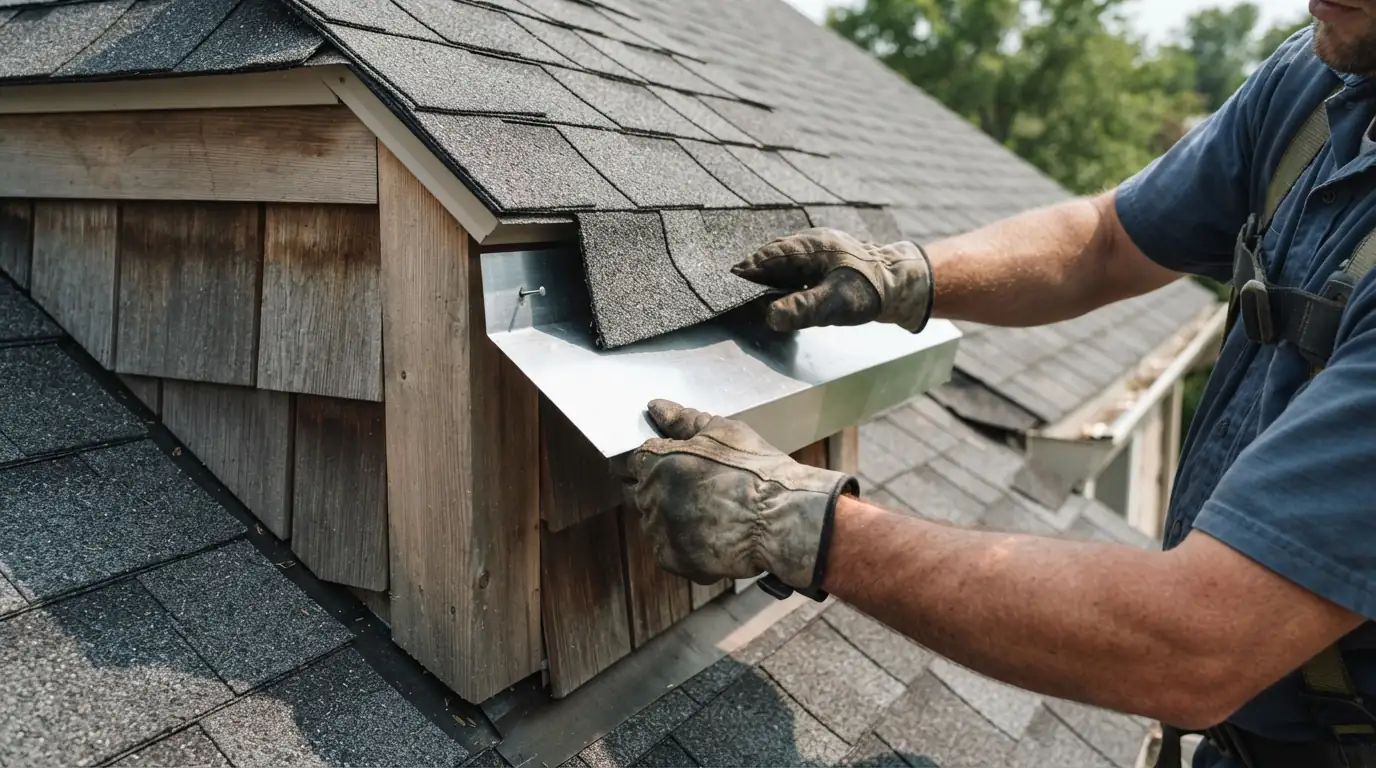
Anything that sticks up through the roof has to be flashed where it meets the shingles, and skylights and dormer walls are where that flashing is most often wrong. Leaks here usually show as stains at the corners of a skylight shaft or down a dormer wall. We check the step flashing along the sides, the head flashing at the top and the kick-out at the bottom, and replace the pieces that failed instead of adding another layer of sealant over the old one.
Nail-pop and exposed-fastener leaks
Nails can back out as the deck expands and contracts, lifting the shingle above them until it cracks or lets water run down the shank. Exposed nails in ridge caps, vents and flashing rust and leak the same way. We reset or replace popped nails, seal their heads, and replace any shingle that cracked around them. Several pops in one area often point to decking movement or poor ventilation, which we check from the attic before calling the job done.
Atlanta rain and the leaks it finds
Leaks are common in Atlanta because the city gets above-average rainfall, and back-to-back storms turn a small entry point into soaked decking faster than in drier places. The cause also decides who pays. A leak opened by wind or hail usually falls under a covered peril on a Georgia homeowner policy, while a boot that simply wore out with age does not, so the photos we give you note which it is.
DIY or call
Stopping a leak yourself or calling us
| Task | Doing it yourself | Having us do it |
|---|---|---|
| During the storm | Bucket under the drip, valuables moved, wet fixtures off at the breaker. | We answer any hour and dry in the roof. |
| Finding the source | Hard to trace from inside alone. | Attic and roof traced, hose test if needed. |
| Sealing from the roof | Sealant often misses the real entry point. | Entry point repaired with proper parts. |
| Checking for more | One leak can hide another nearby. | Nearby boots and flashing checked too. |
Do what you can from inside during the storm, and stay off a wet roof.
Cost
What a leak repair costs depends on
Most leak repairs are small once the entry point is found; the price follows what failed and how far the water spread.
- Entry point
Boot, valley, flashing or nail.
- Parts
Boots, flashing, matching shingles.
- Wet decking
Soaked wood replaced under the repair.
- Roof pitch
Steep roofs need more rigging.
- Tracing time
Hard-to-find leaks may need a hose test.
- More than one leak
Nearby failures fixed together.
FAQ
Roof leak questions
Water runs along the underlayment and rafters before it drips, so the stain can be several feet from where it gets in.
We can dry in or tarp it once it is safe; the permanent repair waits for a dry roof so materials seal.
Rarely. It can slow a drip for a while, but lasting repairs replace the boot, flashing or shingle that failed.
Leaks from wind or hail damage usually fall under covered perils; leaks from age and wear usually do not. Your insurer decides.
We check from the attic. Dark, soft or delaminated wood around the leak is replaced as part of the repair.
Not for one leak on a sound roof. When leaks keep appearing in new places, replacement usually costs less than chasing them.
Related
Other repairs we trace leaks to
Water coming through the ceiling?
Call any hour. We stop the water, trace it to the entry point, and fix what actually failed.