Low-slope roofing
Flat and low-slope roof replacement in Atlanta
Porch roofs, additions and small commercial buildings share one problem: water sits instead of running off. We tear off the failed membrane, fix the drainage, and install a system that fits the roof's use.
- Calls answered 24/7
- TPO, EPDM and mod bit
- Residential and commercial
Quick answer
Flat roof replacement in Atlanta usually means tearing off to the deck and installing a TPO or EPDM single-ply membrane or a modified bitumen system, with tapered insulation where water ponds. Inside city limits, full low-slope replacements now need a highly reflective surface under the 2026 cool-roof ordinance, which points most jobs toward white TPO.
The work
When a flat roof needs replacing rather than patching
A flat roof can take a lot of patching, but some conditions mean the membrane is finished: wet insulation under a large area, seams opening in several places, blisters across the field, or standing water that stays for days.
Replacement is also when drainage gets fixed. Tapered insulation, a cricket or a new scupper costs far less during the tear-off than after.
Updated September 2026
We install shingle, metal and membrane systems from GAF, Owens Corning, CertainTeed, Carlisle and Firestone.
Options
TPO, modified bitumen or EPDM for your roof
| Factor | TPO | Modified bitumen | EPDM |
|---|---|---|---|
| Surface | White, heat-welded single-ply | Granulated cap sheet | Black rubber sheet |
| Seams | Hot-air welded into one sheet | Overlapped and heat-fused or adhered | Taped or glued |
| Heat | Reflects sun; suits the city rule | White cap sheets available | Absorbs heat unless white EPDM |
| Foot traffic | Good with walkway pads | Tough underfoot | Punctures more easily |
| Best fit | Most low-slope roofs | Porches and roofs with traffic | Small, low-traffic roofs |
Inside city limits the product must meet the reflectance rule; outside it, choose on durability and budget.
Cost
What drives the price of a flat roof
Low-slope replacement is priced per square foot, and the membrane is only part of the number.
Planning range from published Atlanta and Georgia market data: $5.50 to $12+ per square foot. That band is 2026 commercial pricing for Atlanta; small residential flat roofs can land outside it because setup costs spread over fewer square feet. Every roof measures differently; this is a planning band, not a quote.
- Tear-off layers
Two old roofs mean more labor and disposal.
- Wet insulation
Soaked board is replaced, never covered.
- Drainage work
Tapered insulation and crickets add material.
- System choice
TPO, EPDM and mod bit differ in cost.
- Penetrations and curbs
Every vent, drain and unit needs flashing.
- Access
Crane lifts or tight alleys add setup.
What is included
What a flat roof replacement includes
- Tear-off to the deck. Old membrane and wet insulation removed and hauled away.
- Deck repaired. Soft or rotted sections replaced before anything goes down.
- Drainage corrected. Tapered insulation or crickets where water ponded.
- Insulation and cover board. Installed per the system and the energy code.
- Membrane installed. TPO, EPDM or mod bit, with seams tested.
- Edges and penetrations flashed. Walls, curbs, drains and pipes sealed to the membrane.
- Cleanup and final check. Seams probed, drains cleared, debris hauled off.
TPO membrane
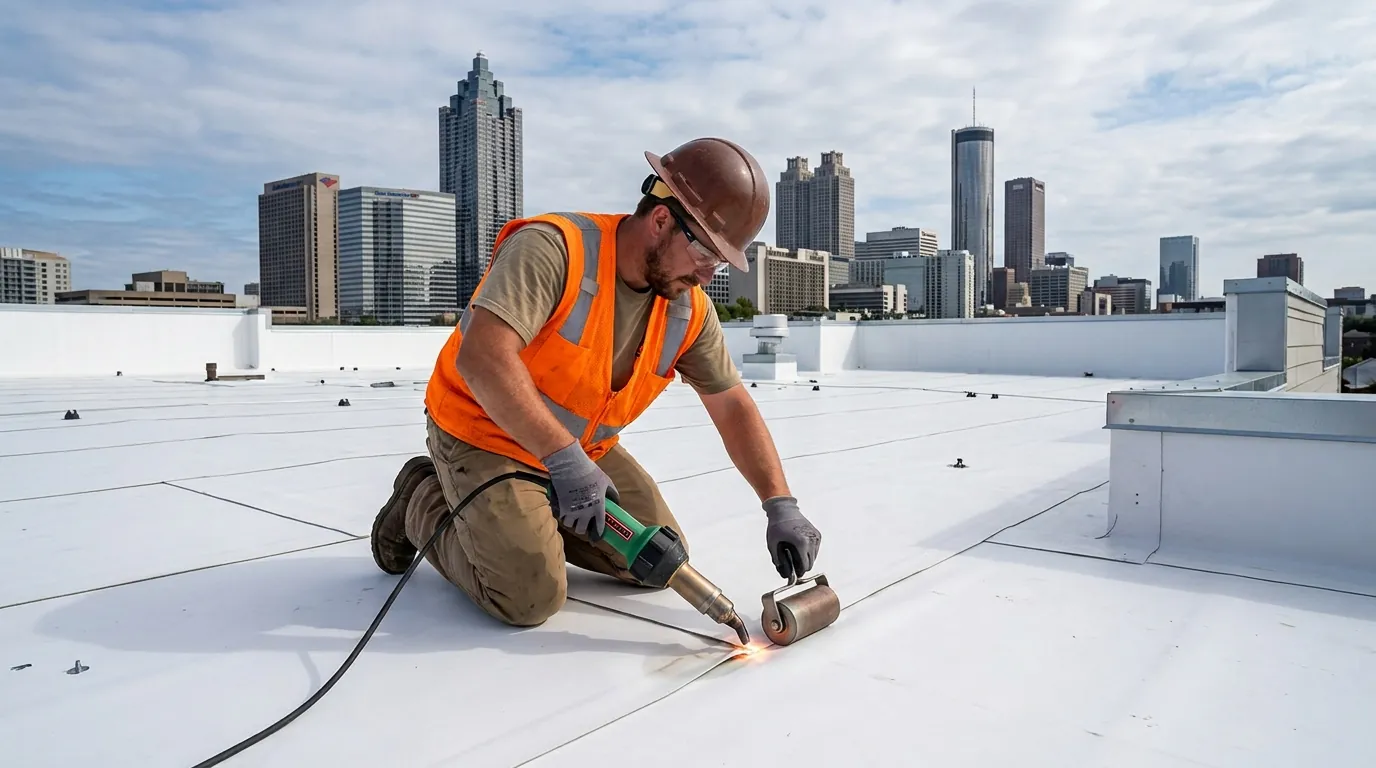
TPO is the white single-ply sheet on most new commercial roofs around Atlanta. Its seams are welded with hot air, so the finished roof behaves as one continuous sheet rather than pieces held together with glue. It reflects sunlight, which cools the rooms below and satisfies the city's reflectance rule for low-slope replacements. The trade-off is that TPO depends on good welding: a cold weld looks fine and fails early, which is why we probe every seam before we leave.
Modified bitumen
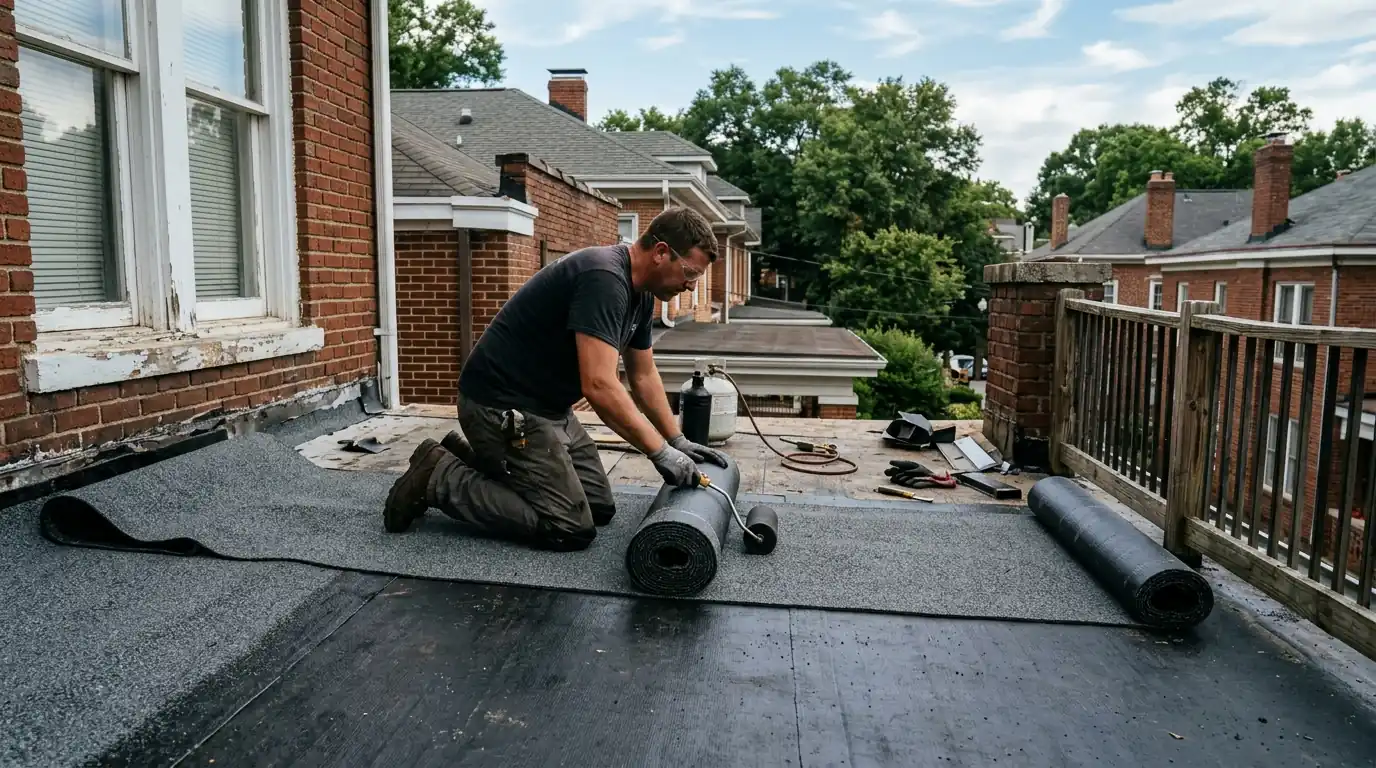
Modified bitumen is asphalt reinforced with fiberglass or polyester, rolled out in overlapping sheets and usually finished with a granulated cap. It is tough underfoot, which makes it a good choice for porches, balconies and roofs that get walked on for service. We install self-adhered or heat-applied systems depending on the building, with a reflective white cap sheet inside city limits. Its weakness is age: the seams and the cap dry out in the Georgia sun over time and need periodic attention.
EPDM rubber
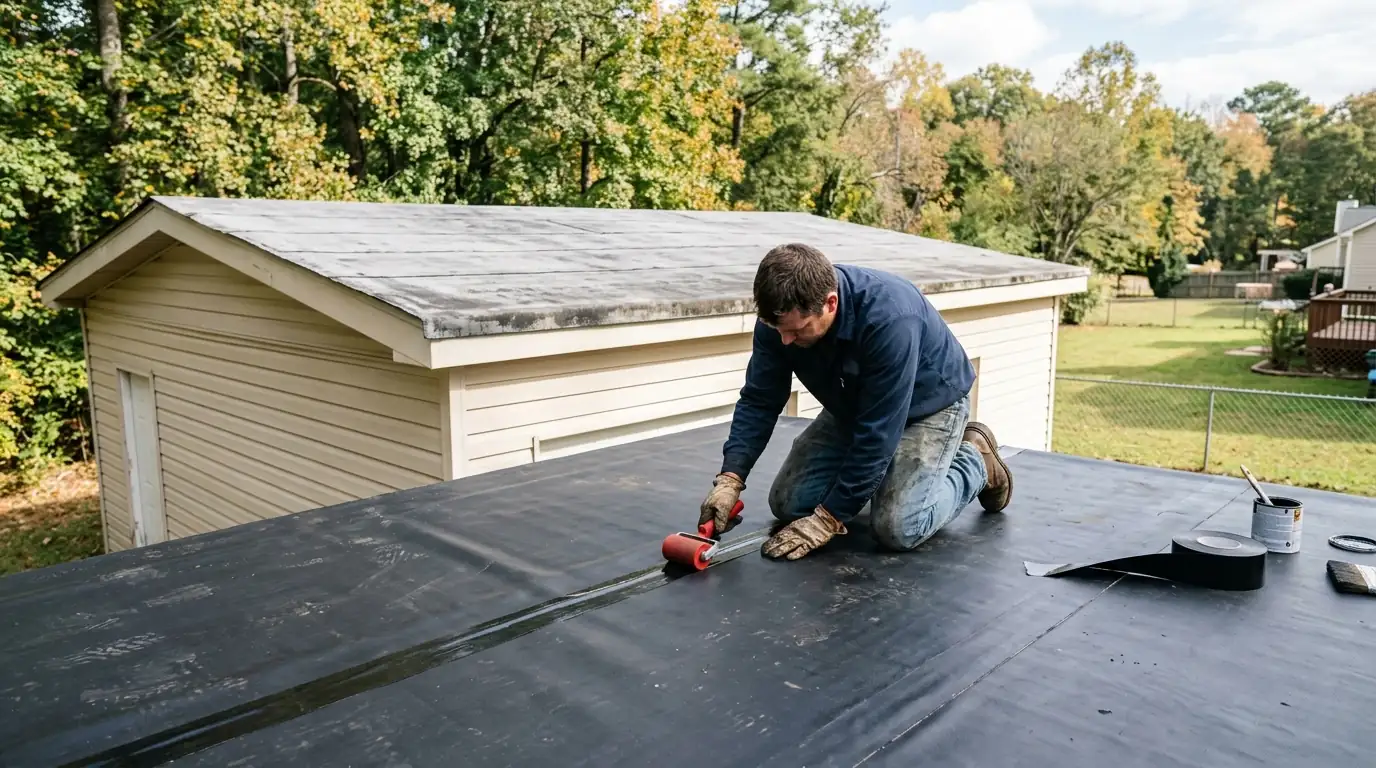
EPDM is a synthetic rubber sheet, usually black, laid in wide pieces so there are fewer seams. It stays flexible through heat and cold and has a long record on low-slope roofs. Black EPDM absorbs heat, so on a full replacement inside the city we either use a white EPDM or a different system to meet the reflectance standard. On a small, low-traffic roof it is often the most economical choice, though it punctures more easily than TPO and needs walkway pads if anyone services equipment up there.
Atlanta rules that shape a flat roof replacement
Two things set flat-roof replacements in Atlanta apart. The city's cool-roof ordinance holds low-slope replacements to a 3-year aged solar reflectance of 0.70 and an aged SRI of at least 85, which is why white TPO has become the default inside city limits. And TPO and EPDM, the two systems most metro Atlanta buildings already carry, both saw manufacturer price increases in late 2025, so a quote from last year may not reflect current material costs.
How it runs
How a flat roof replacement runs
- 1
Core cut and moisture check
We find out how much insulation is wet before quoting.
- 2
System and scope chosen
Membrane, insulation and drainage fixes in one price.
- 3
Permit filed
Filed with the city or county before work starts.
- 4
Tear-off in sections
Only what can be dried in the same day is opened.
- 5
Install and flash
Insulation, membrane, edges and penetrations sealed.
- 6
Seams tested, site cleaned
Welds probed, drains flushed, debris removed.
FAQ
Flat roof replacement questions
Sometimes, if there is one existing layer and the insulation is dry. A core cut tells us whether the insulation is dry enough.
Usually the deck has settled or the drains and scuppers sit too high or are blocked.
If the property is inside Atlanta city limits and the porch roof is fully replaced, the low-slope reflectance standard applies.
TPO reflects heat and has welded seams, which suits most Atlanta roofs. EPDM is flexible and economical on small, low-traffic roofs.
No. We open only as much roof as can be dried in the same day, so each section is sealed before the crew leaves.
Only to check leaks from below or coordinate around rooftop units. Most of the work happens on the roof.
Related
Other low-slope and replacement work
New Construction Roofing
Custom home roofing, additions and garages and more.
Learn moreCedar Shake Roofing
Covers cedar shake repair and converting shake to synthetic or architectural shingles.
Learn moreAsphalt Shingle Roof Replacement
Underlayment, drip edge and ridge vent, plus architectural shingle replacement.
Learn moreWater sitting on your flat roof?
Call and we will check how much membrane and insulation is wet before recommending a patch or a replacement.