Storm emergency
Emergency roof tarping and storm dry-in across Atlanta
A limb through the deck or a strip of shingles gone: tonight's job is keeping water out. We answer at any hour, tarp the opening, and schedule the real repair once it clears.
- Calls answered 24/7
- Damage photographed first
- Atlanta service office
Quick answer
Emergency roof tarping in Atlanta covers a storm opening with a tarp run over the ridge and fastened through battens, so rain stays out until a permanent repair is possible. Call any hour: we photograph the damage before covering it, secure the tarp, check the attic for wet insulation, and book the repair once the roof is dry.
How it runs
What happens on an emergency tarping call
- 1
Call answered and triaged
Where is water coming in, and is anyone at risk?
- 2
Make it safe
People kept clear of sagging ceilings and wet fixtures.
- 3
Photograph the damage
Opening, debris and interior stains documented first.
- 4
Tarp, or board and tarp
Fastened over the ridge through battens, edges sealed.
- 5
Check the attic
Wet insulation and framing noted for the repair scope.
- 6
Book the permanent repair
Scope and price written once the roof can be inspected dry.
Warning signs
Signs the roof needs covering tonight
Daylight through the attic
An opening that size takes on water with the next rain.
Water dripping from a light
Water is running along framing to the lowest exit.
Shingles or felt in the yard
The layer beneath is exposed and cannot shed water for long.
A limb resting on the roof
Even without a hole, the weight can crack decking.
Sagging ceiling drywall
Water is pooling above it; keep people out from under it.
Sections flapping in the wind
Loose tabs tear further with every gust.
The work
What a tarp does, and what it does not
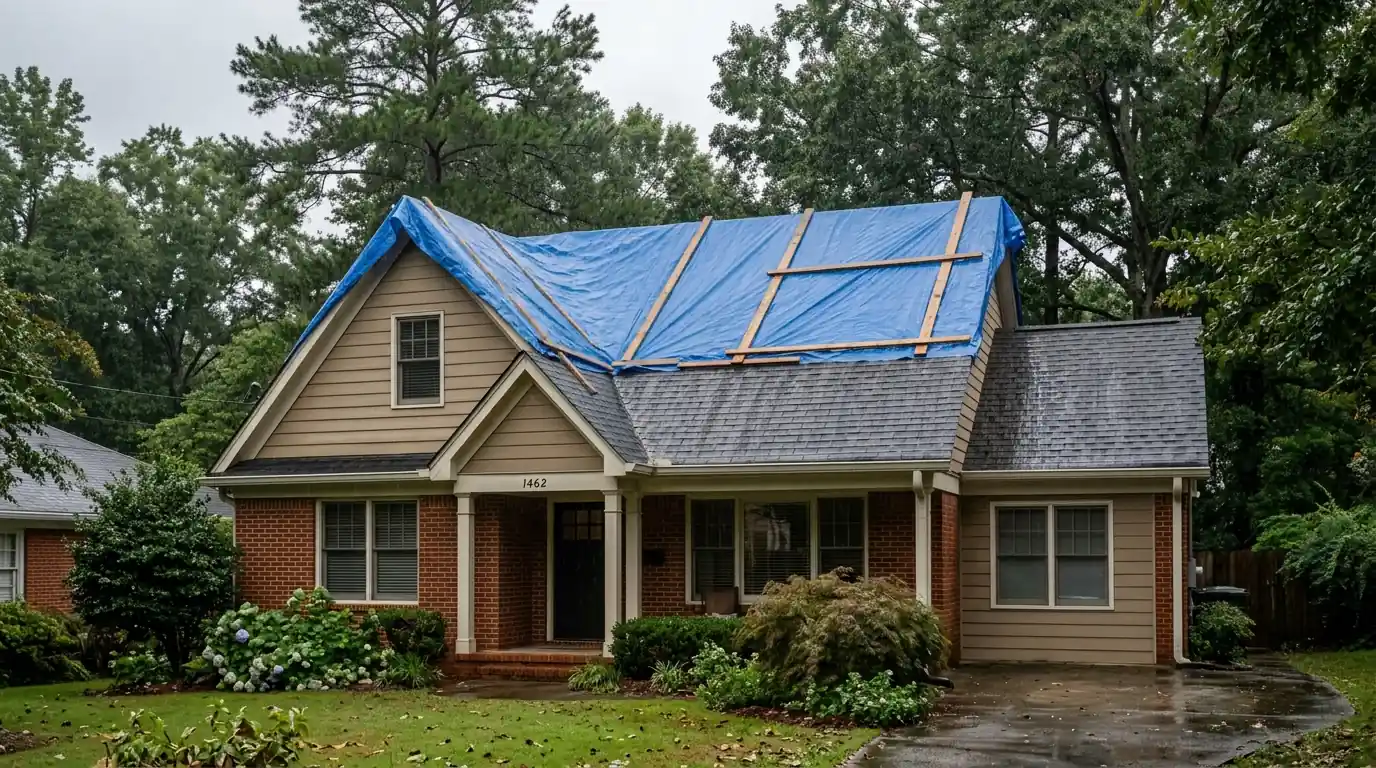
A tarp is a stopgap. Wrapped over the ridge and fastened through battens into the deck, it can keep a torn section dry through several storms, but sun and wind wear it down, and it is never meant to be the roof.
An adjuster will want to see what the storm did before anything was covered, so we photograph the opening first and again once the tarp is on.
Updated September 2026
Emergency tarping and dry-in
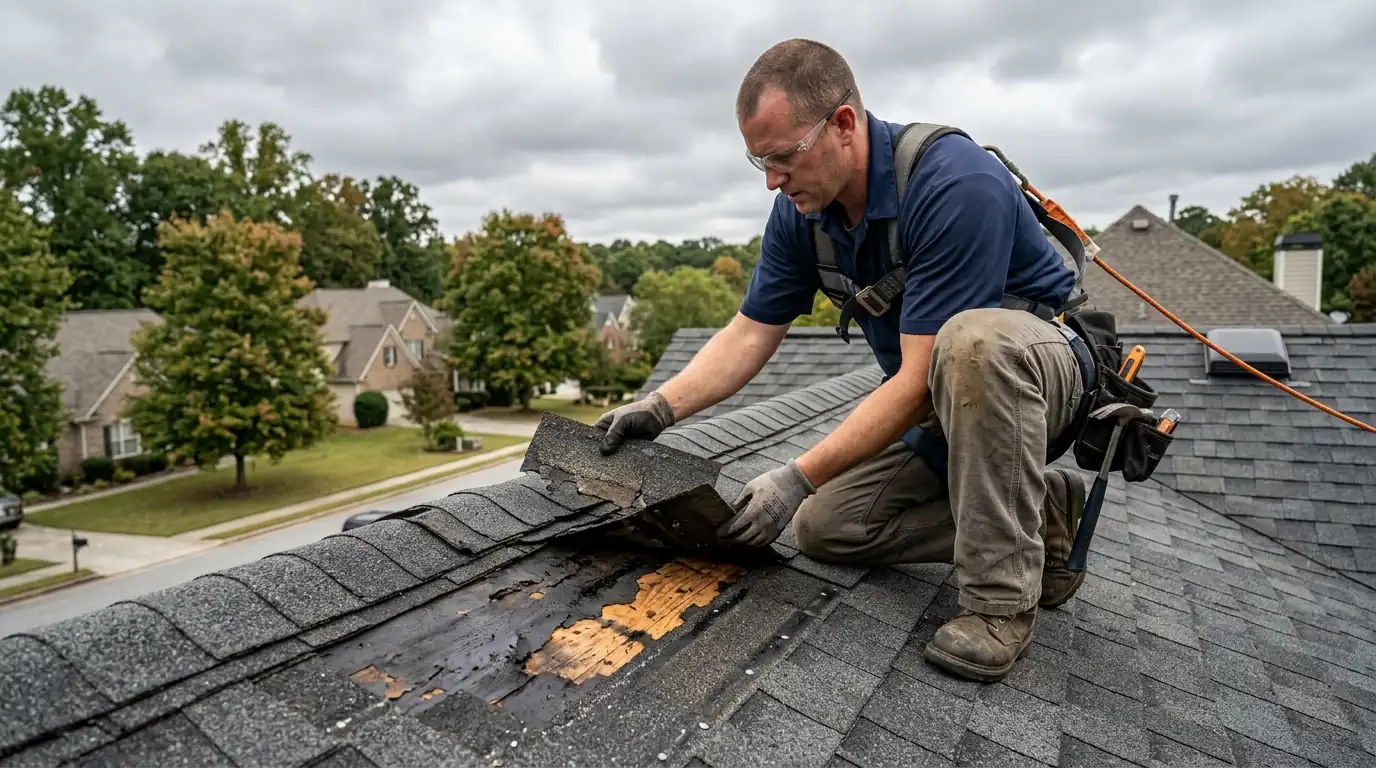
For torn shingles and small openings, the tarp runs over the ridge so water cannot get under the top edge, then it is fastened through wood battens instead of nailed straight through the plastic. Where the deck is intact but exposed, we dry it in with synthetic underlayment, which lies flatter and holds better in wind. Inside, we check the attic for wet insulation and tell you what needs to come out before it starts to smell. The permanent repair goes on the first dry day.
Tree impact and punctures
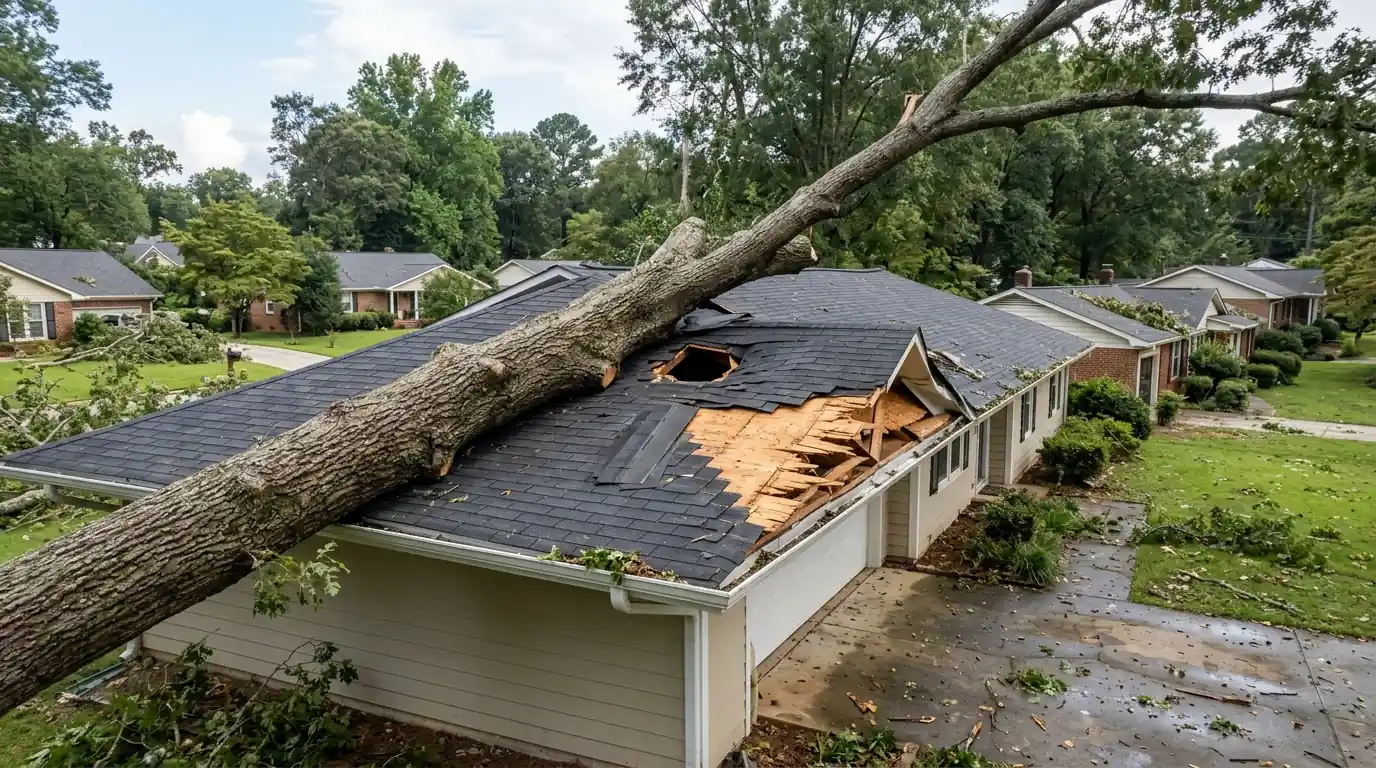
A limb through the roof is a two-part job. The limb has to come off first, and on large trees that means a tree crew working alongside us, because tarping around a limb that is still carrying load can hide cracked rafters. Once it is clear, we cut the broken decking back to solid wood, board the opening if it is large, and tarp over the boards. Cracked rafters are photographed and flagged, since they turn the permanent repair from a patch into framing work.
Blown-off shingle sections
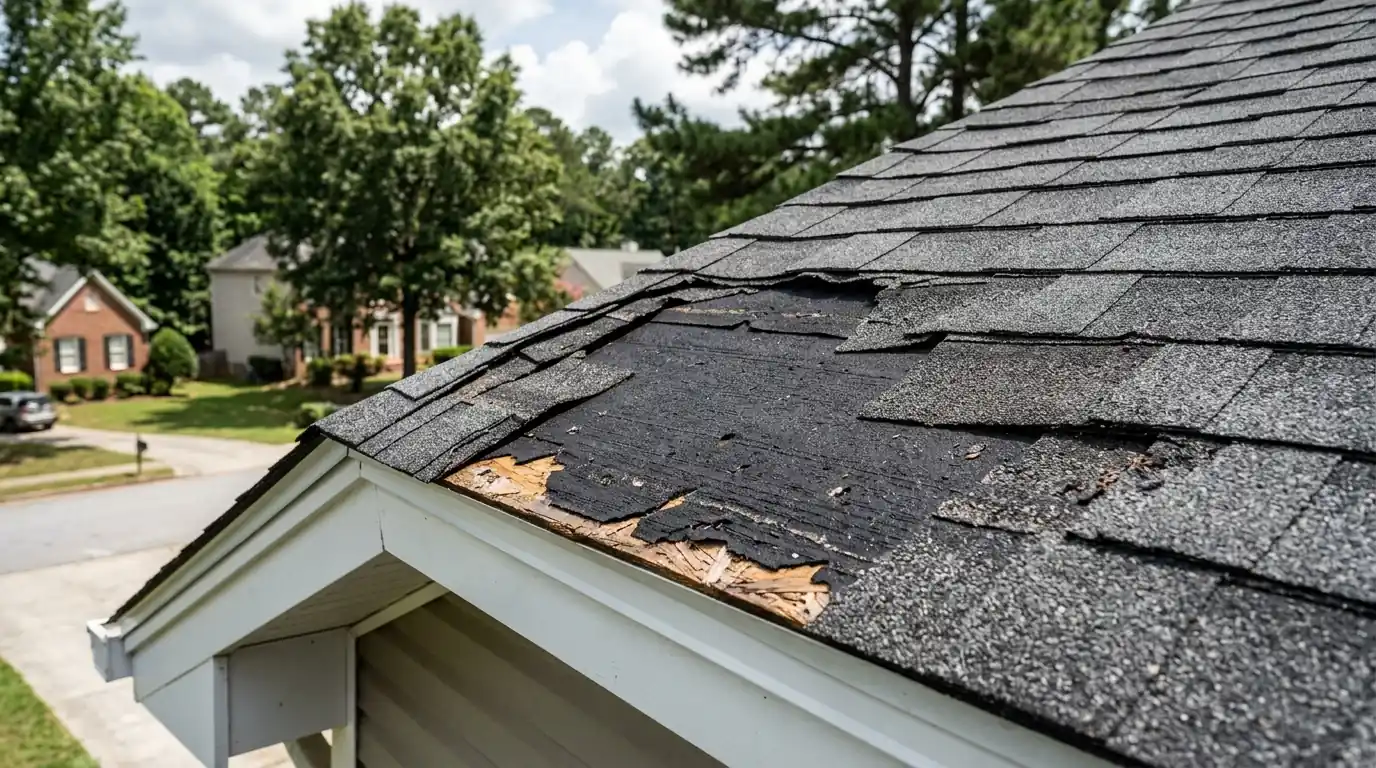
Wind tends to peel shingles from the rakes, the ridge and the upper courses, leaving felt or bare deck exposed. If the underlayment is still sound, a tarp or a temporary shingle patch holds until the repair. If the deck is showing, it gets dried in right away, because plywood swells quickly once it soaks. We collect intact shingles from the yard whenever we can, since even one sample helps us match the color and product on the permanent fix.
Storm season on Atlanta-area roofs
Tarping calls around here follow the metro's afternoon thunderstorms between April and September. The July 3, 2026 cell over Acworth came with a National Weather Service warning for 60 mph gusts and quarter-size hail, and the late-July storms across Cobb County and Gwinnett County lifted shingle tabs on roofs that looked fine a day earlier. Wind that strong finds any tab whose seal has let go, which is why one storm can open several roofs on the same street.
Timeline
How long a tarp can stay on
A properly fastened tarp is a short-term measure counted in weeks, not seasons. Sun breaks down the plastic, battens can loosen in high wind. If another storm is forecast before your repair date, call and we will check the fastening. The permanent work is scheduled as soon as materials and the claim allow.
Water coming in right now?
Move valuables from under the drip, set out a bucket, and call. A roofer answers at any hour.
Call (470) 802-9803Cost
What affects the cost of emergency tarping
Tarping is priced on the size and location of the opening and how hard it is to reach safely. You get the number before the tarp goes on, even at night.
- Size of the opening
Larger openings need boards under the tarp.
- Pitch and height
Steep or two-story roofs need more rigging.
- Limb removal
Limbs come off first, sometimes with a tree crew.
- Weather during the work
Rain and wind slow rigging and fastening.
- Interior water
Wet insulation or drywall adds cleanup.
- Number of openings
Wind damage often means more than one spot.
FAQ
Emergency tarping questions
Often, once lightning has passed and the wind drops enough to work safely.
That is your insurer's decision. We give you an itemized invoice and dated photos of the opening before and after covering, to submit with the claim.
We would rather you did not. Wet shingles, wind and a damaged deck are how storm injuries happen.
Weeks, not months. Sun and wind wear the tarp and battens.
The limb comes off before the roof is covered, because tarping around it can hide cracked rafters.
Yes. The crew that tarps the opening inspects the roof once it is dry and writes the scope for the repair or, when damage is widespread, the replacement.
Related
Storm work that usually follows a tarp
A roof open to the sky can't wait for morning
Call at any hour. A roofer answers, talks you through what to do inside, and gets the opening covered.