After the hail
Hail damage roof repair for Atlanta homes
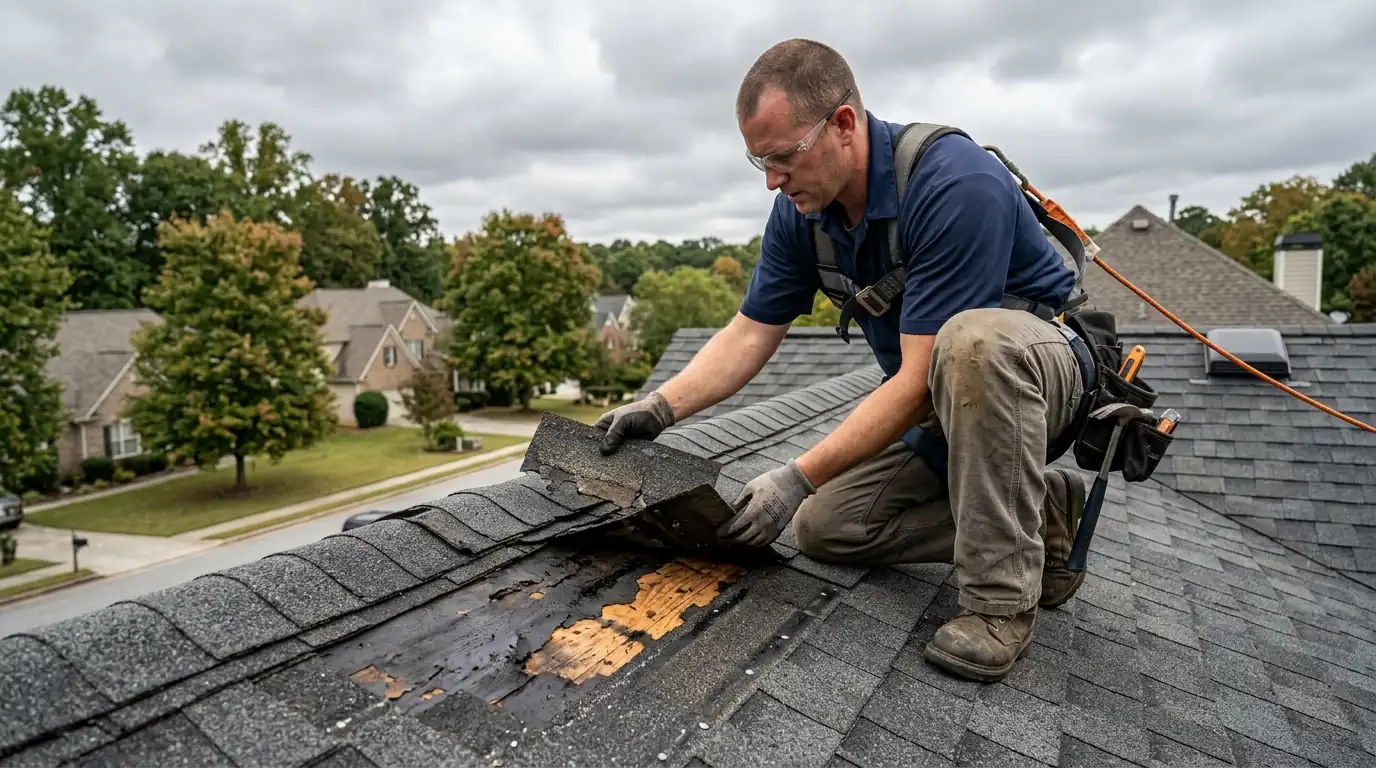
Hail rarely leaves a hole. It bruises shingles and dents metal, and the leaks show up weeks later. We find the hits, document them for your insurer, and fix what the storm broke.
- Calls answered 24/7
- Every hit photographed
- Atlanta service office
Quick answer
Hail damage on Atlanta roofs usually shows as dark, soft spots where granules were knocked off, plus dented vents and gutters and cracked shingle edges, most of it invisible from the ground. We inspect each slope, mark and photograph impacts in test squares, and repair single shingles or, when hits cover whole slopes, write the scope for replacement.
How it runs
How a hail damage call runs
- 1
You call after the storm
We note the storm date and what you saw from the ground.
- 2
Slope-by-slope inspection
Test squares chalked and hits counted on each slope.
- 3
Metal and gutters checked
Vents, collars and gutters photographed with scale.
- 4
Written report with photos
Laid out so an adjuster can follow it.
- 5
Adjuster meeting if you file
We walk the roof with the adjuster and point out each hit.
- 6
Repair or replace
Scheduled once the scope is agreed, matching product where possible.
Warning signs
Hail damage you can check from the ground
Granules at the downspouts
Shingle grit piled at the splash blocks.
Dents in gutters
Soft metal records hail size better than shingles.
Dinged vent caps
Round dents on roof vents and chimney caps.
Spatter marks on siding
Clean spots where hail knocked off grime.
A dented car or mailbox
If the car took hits, the roof likely did too.
Ceiling spots weeks later
Bruised shingles often start leaking late.
The work
Why hail damage hides until it leaks
A hailstone that lands hard crushes the granule layer and can fracture the fiberglass mat underneath. The shingle still sheds water that week. Over the following months, sun works on the exposed asphalt, the bruise softens and cracks, and water gets through on a heavy rain.
That delay is why dated photos taken soon after the storm matter to an adjuster.
Updated September 2026
We install shingle, metal and membrane systems from GAF, Owens Corning, CertainTeed, Carlisle and Firestone.
Granule loss and bruising
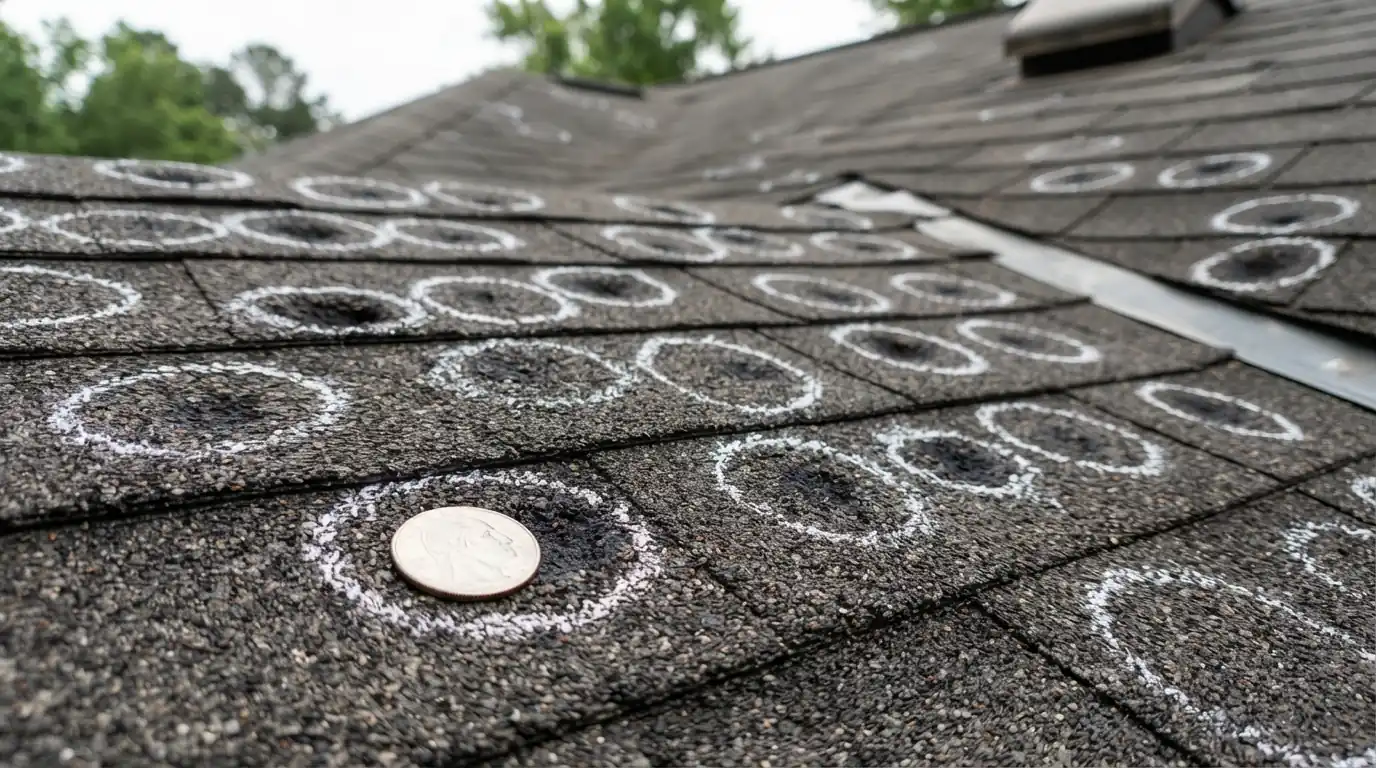
A bruise is a dark circle where the granules are gone and the shingle feels soft when pressed, like a bruise on fruit. It is the most common hail damage on asphalt and the easiest to miss, because from the driveway a whole slope just looks slightly darker. We chalk a test square on each slope, count the hits, and photograph them with a scale. Scattered bruises can be repaired shingle by shingle; consistent hits across a slope usually mean replacement.
Dented vents, caps and gutters
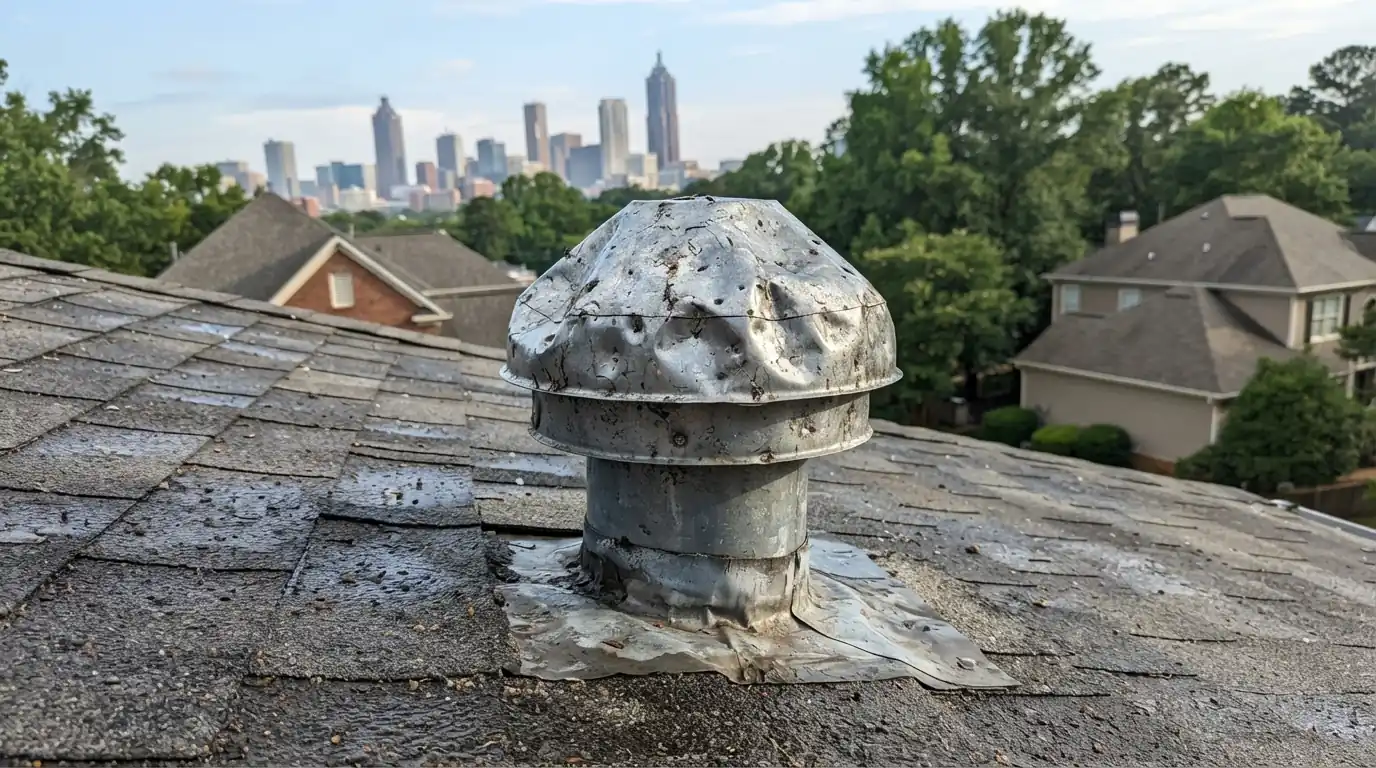
Metal keeps a permanent record of the storm that hit it. Box vents, pipe collars and chimney caps show round dents that tell us the hail size and the direction it came from, and gutters show the same pattern at the eaves. Dented metal does not always leak, but a crushed pipe collar or split vent can, and adjusters compare metal damage with shingle damage to confirm the storm reached your roof. We photograph both and replace metal that no longer seals.
Cracked or fractured shingles
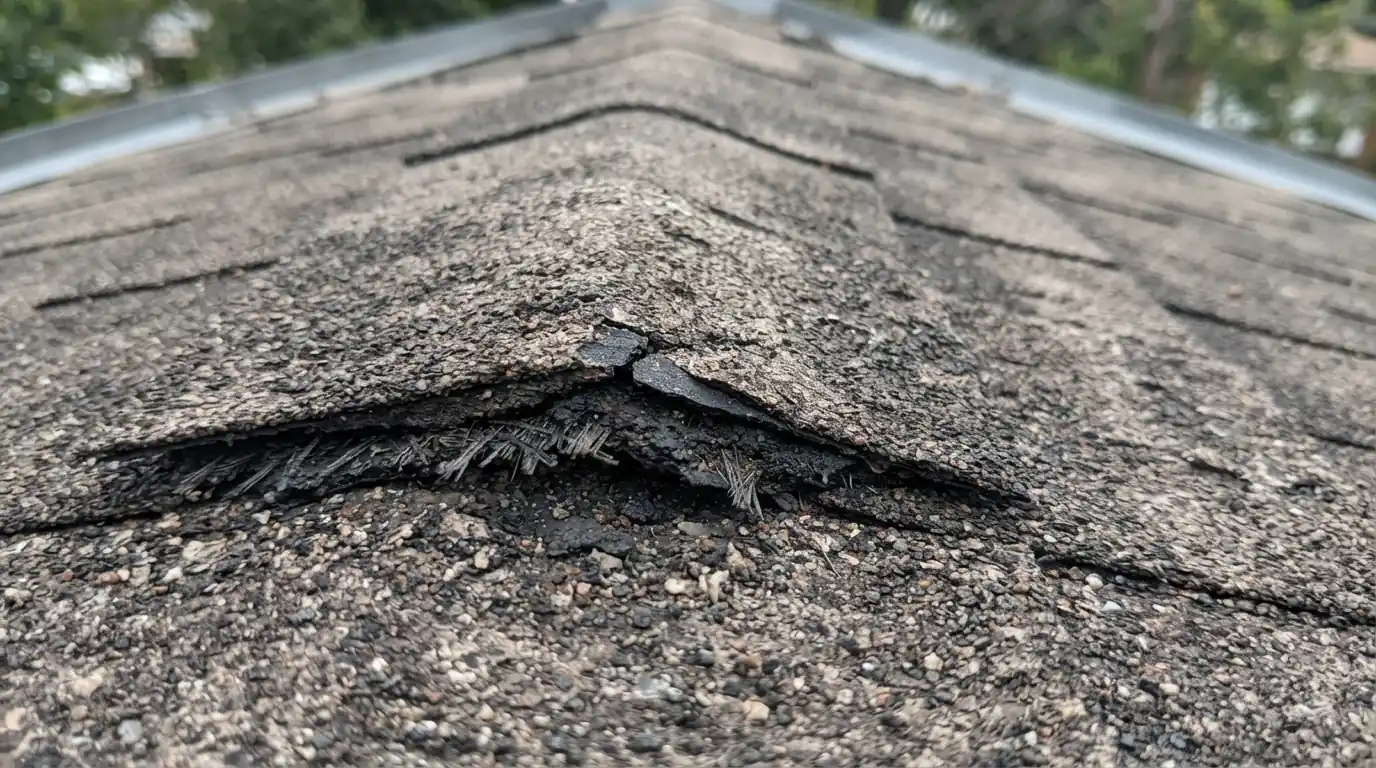
Larger hail, or hail on an older and more brittle roof, can crack shingles outright or snap off corners and tab edges. Those are the hits that leak soonest, often within the first few heavy rains. We replace cracked shingles with a matching product when one is still made and seal the new tabs down by hand. If the roof is brittle or no match exists, patching leaves a visible, weaker spot, and we explain that before you choose between a repair and a claim for replacement.
2026 hail across the north metro
The February 26, 2026 storm dropped pea-to-ping-pong-ball hail across the north Georgia mountain counties, and downwind neighborhoods in Cherokee County and Cobb County, Woodstock among them, reported dented gutters and granules piled at the downspouts. Roofs there are worth inspecting even when nothing looks wrong. For the claim itself, wind and hail are standard covered perils on most Georgia homeowner policies while age and wear are not, so a dated inspection that separates the two is what an adjuster needs.
DIY or call
Checking for hail damage yourself
| Task | Doing it yourself | Having us do it |
|---|---|---|
| Looking from the ground | Safe and useful: gutters, vents, siding, downspout grit. | Every slope walked with test squares and photos. |
| Climbing on the roof | Wet, hail-softened shingles make falls likely. | Harnessed crew and anchors on steep slopes. |
| Repair or replace | A bruise is hard to tell from wear. | Hits counted per slope and compared with wear. |
| Documenting it | Yard photos rarely show shingle damage. | Dated close-ups with scale, plus metal damage. |
Check from the ground; leave the roof to someone with fall protection.
Cost
What decides the cost of a hail repair
Hail repair is priced on what the inspection finds, and when the damage is covered, the scope your insurer approves sets most of the number.
- Hits per slope
A few bruises is a repair; a full slope is replacement.
- Shingle availability
Discontinued products can widen the repair.
- Metal components
Vents, caps and collars replaced separately.
- Gutters
Dented runs replaced or left as cosmetic.
- Roof age
Brittle shingles crack when lifted for repairs.
- Pitch and height
Steep and two-story roofs need more rigging.
FAQ
Hail damage questions
Look for granules at the downspouts, dents in gutters and vents, and dings on cars or mailboxes.
Size matters less than the roof's age and the wind behind the hail. Older, brittle shingles can be damaged by stones that a newer roof shrugs off.
Most Georgia policies require prompt notice, and many set a window of one to two years from the date of loss.
That depends on your insurer and policy; we can tell you whether the damage is real before you file.
Yes, when hits are scattered and a matching shingle is available.
Yes. We walk the roof with the adjuster, show the marked hits and metal damage, and supply the photos and measurements from our inspection.
Think the hail hit your roof?
Call and we will inspect every slope, photograph what we find, and tell you plainly whether it is worth a claim.