Slate and tile
Slate and tile roof installation in Atlanta, natural and synthetic
A slate or tile roof can outlast the house when it goes on right, and it fails early when the details are rushed. We install natural slate, clay and concrete tile and synthetic versions of both.
- Calls answered 24/7
- Natural and synthetic
- Historic district experience
Quick answer
Slate and tile roof installation in Atlanta starts with the structure: natural slate and clay tile are much heavier than shingles, so the framing has to carry them. We check that first, then install over the right underlayment with copper or heavy-gauge flashing, proper fasteners and battens where tile needs them. In historic districts, the material choice usually needs a review before the permit.
The work
What makes a slate or tile roof last
Slate and tile themselves can last a century or more. What fails first on these roofs is everything around them: flashing in light metal that wears out in twenty years, underlayment that dries out, the wrong nails, and valleys and dormers detailed as if they were shingle roofs. A long-life roof needs long-life parts at every joint.
Weight is the other question. Natural slate and clay tile weigh several times what asphalt shingles do, so a house that was not built for them may need its framing checked and reinforced before the first course goes on.
Updated September 2026
Options
Choosing slate, tile or synthetic
| Factor | Natural slate | Clay or concrete tile | Synthetic slate or tile |
|---|---|---|---|
| Weight | Very heavy | Heavy | Light, close to shingles |
| Lifespan | Can exceed 75 years | 50 years or more | Often 40 to 50 years |
| Framing check | Almost always | Usually | Rarely needed |
| Historic districts | Usually approved in kind | Usually approved in kind | Often reviewed closely |
When the framing can carry it and the budget allows, natural material lasts longest; synthetics make sense where weight or cost rules the real thing out.
Cost
What a slate or tile roof costs depends on
Slate and tile roofs cost more than shingles to buy and to install, and the material and the structure set most of the price.
- Material
Natural slate costs the most, synthetics the least.
- Framing work
Reinforcement where the weight requires it.
- Roof complexity
Valleys, dormers and turrets add labor.
- Flashing
Copper costs more and lasts far longer.
- Tear-off
Removing an old heavy roof safely.
- Reviews and permits
Historic district approvals where needed.
What is included
What a slate or tile installation includes
- Structure checked. Framing confirmed or reinforced for the weight.
- Deck prepared. Sound decking, replaced where needed.
- Underlayment. A long-life underlayment suited to the material.
- Flashing. Copper or heavy-gauge metal at valleys, walls and chimneys.
- Fastening. Copper or stainless nails, battens for tile.
- Ridges and hips. Detailed in kind with the field material.
- Cleanup. Broken pieces and offcuts hauled away.
Natural slate roofs
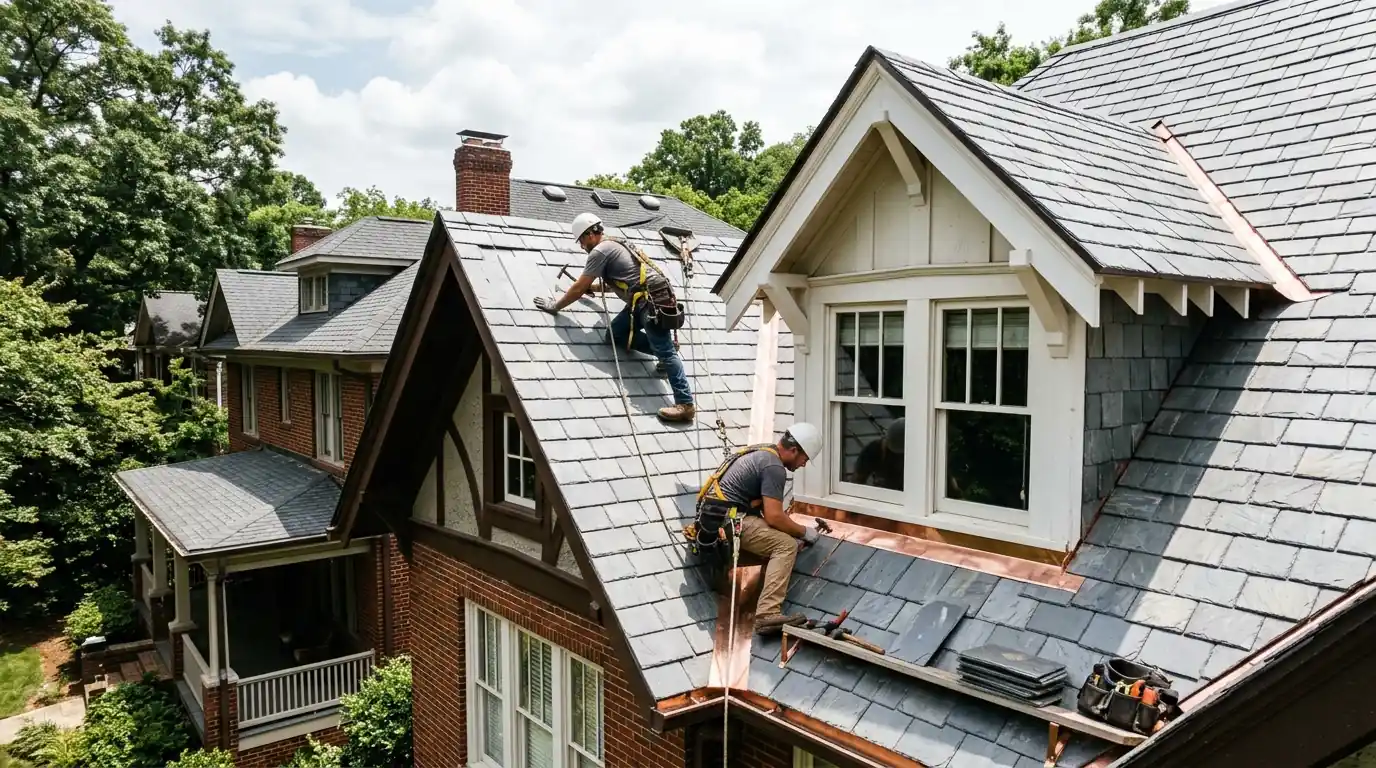
Natural slate is the longest-lived roof you can put on a house, and the most demanding to install. We confirm the framing can carry the weight, lay slate over a quality underlayment, fasten each piece with copper nails so it can be replaced later without disturbing its neighbors, and form copper flashing at every valley, wall and chimney. On historic homes, we match the size, color and exposure of the original slate so the new roof reads as the house intended.
Clay and concrete tile roofs
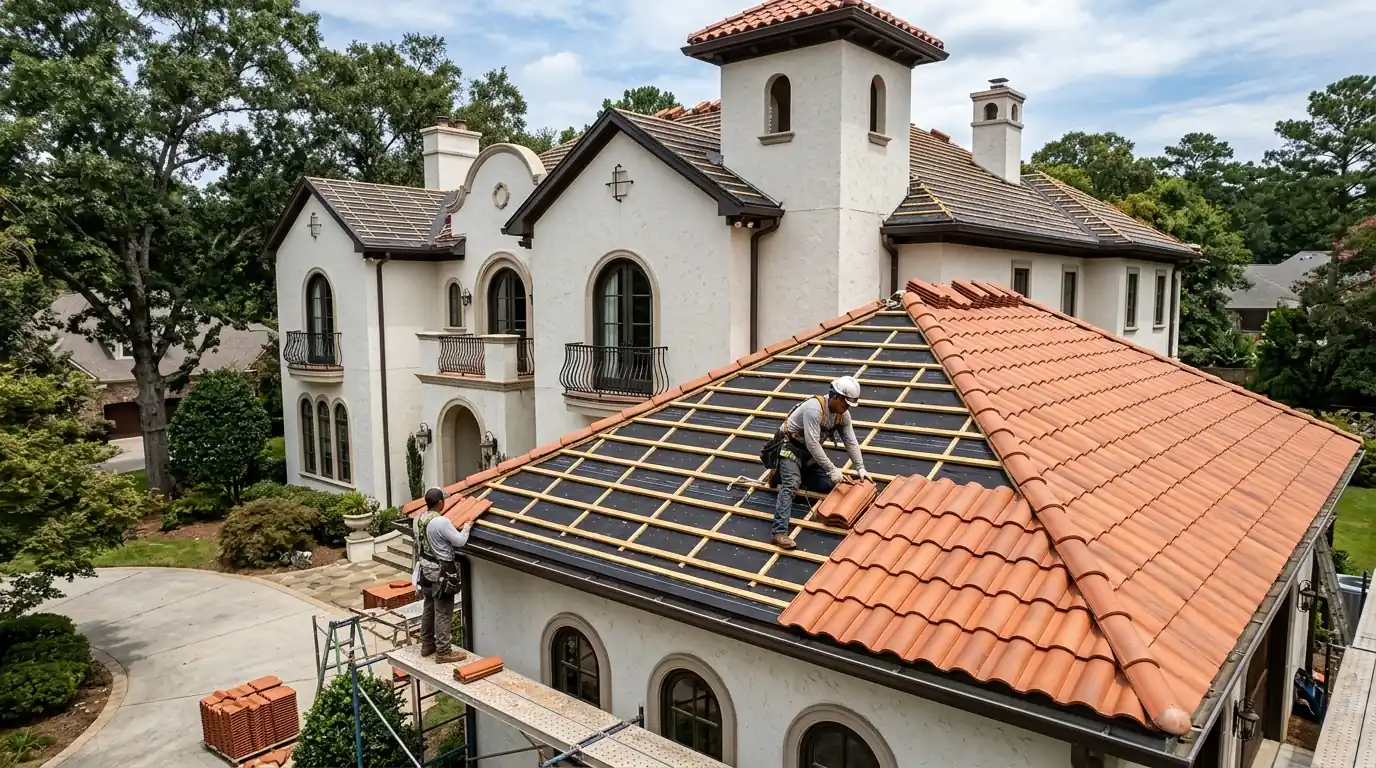
Clay and concrete tile suit Spanish, Mediterranean and some revival houses, and they last for decades when installed properly. Tile is laid on battens or direct to the deck depending on the profile and slope, with fasteners and clips sized for wind, and with weather blocking at the eaves and ridges. Concrete tile is heavier than many owners expect, so the framing gets the same check it would for slate. We source matching profiles when a house is replacing an original tile roof.
Synthetic slate and tile
Synthetic slate and tile are molded from polymer or rubber blends to look like the real thing at a fraction of the weight, which makes them practical on houses whose framing cannot carry natural material. They cost less than slate, install faster and handle impact well. The trade-off is lifespan and, in historic districts, appearance: some review boards look closely at whether a synthetic product truly matches the original, so we check before recommending one, and we show you samples of each product next to the real material before you decide.
Slate and tile in historic districts
In historic districts, the material question gets serious attention. At its April 2026 meeting, the DeKalb County Historic Preservation Commission reviewed a request to replace a historic clay tile roof in Druid Hills with synthetic slate, and staff found the synthetic product did not match the scale and texture of the original. Repairing or replacing in kind is usually the safer path on a contributing historic house.
Timeline
How long a new slate or tile roof takes
A slate or tile roof takes longer than a shingle roof of the same size, often two to four times as long, because every piece is set and fastened by hand and the flashing is formed on site. Add time for a framing check or reinforcement, and for a historic district review where one applies. We give you a schedule up front and tell you which steps depend on the weather.
How it runs
How a slate or tile installation runs
- 1
Look at the house
Style, structure and district checked.
- 2
Choose the material
Natural, tile or synthetic, with samples.
- 3
Reviews and permits
Historic review first where it applies.
- 4
Prepare the structure
Framing reinforced and deck made sound.
- 5
Install by hand
Courses set, flashing formed on site.
- 6
Final walk
Ridges, valleys and cleanup checked.
FAQ
Slate and tile roof questions
Many older houses were built for it; many newer ones were not. We check the framing and tell you whether reinforcement is needed.
Good slate can last 75 years or more. The flashing and fasteners decide whether the roof gets there, which is why we use copper.
It can be, especially where weight or cost rules out natural slate. In a historic district, check whether the review board accepts it first.
Yes. We install clay and concrete tile on new and existing homes, with battens, clips and flashing matched to the profile.
If the house is in a locally designated district, usually yes. We prepare the material details for the review.
We source slate to match size, color and thickness as closely as the quarries allow.
Related
Work that goes with a slate or tile roof
Thinking about slate or tile?
Call and we will look at the house, the framing and the district rules before recommending anything.