Metal roof repair
Metal roof repair and leak fixes in Atlanta
Metal panels usually outlast the screws, washers and sealants that hold them. Most metal roof leaks are small hardware failures, and fixing them properly adds years to the roof.
- Calls answered 24/7
- Exposed-fastener and standing seam
- Atlanta service office
Quick answer
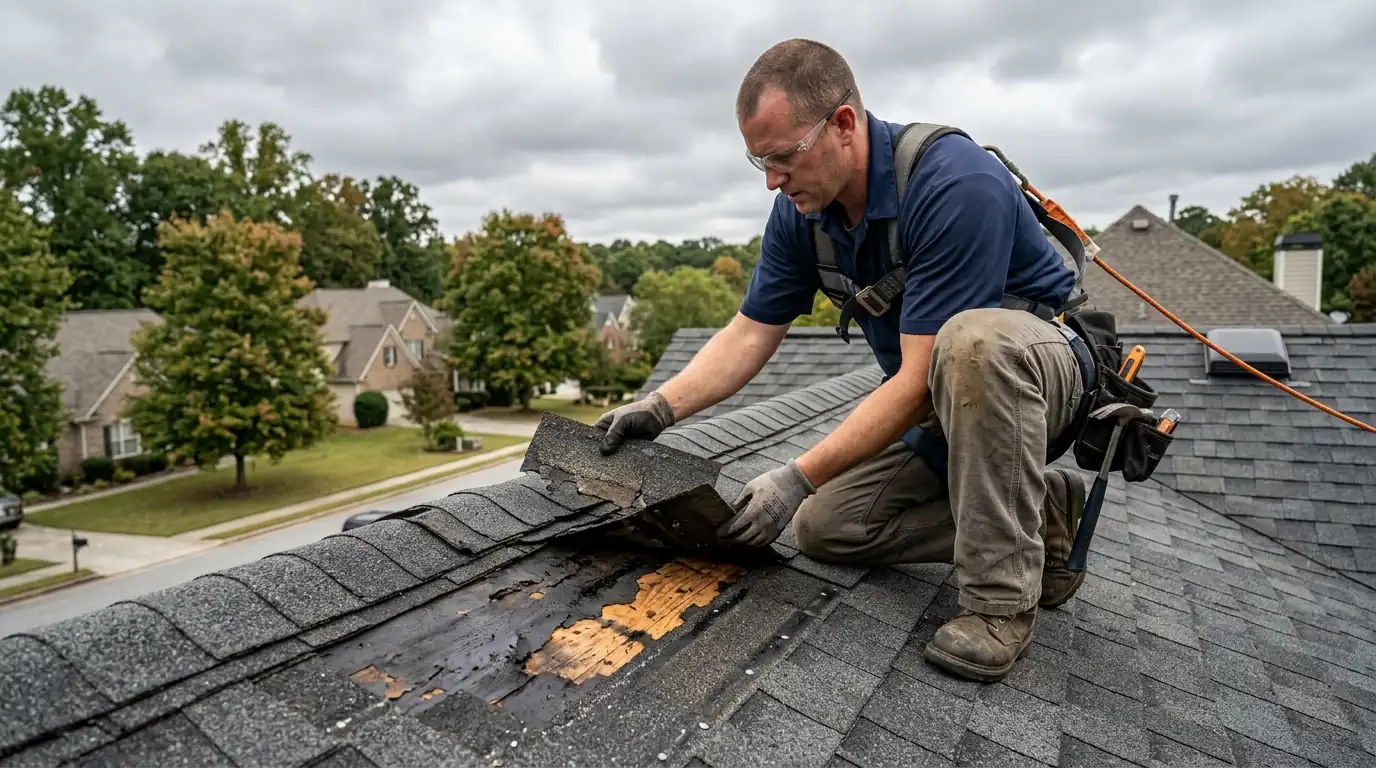
Metal roof leaks in Atlanta usually come from exposed-fastener screws that backed out or have cracked rubber washers, failed sealant at panel laps and trim, or rust starting at seams and cut edges. The repair is replacing or re-seating fasteners with oversized gasketed screws, resealing laps and trim with the right sealant, and treating rust before it spreads.
The work
Why metal roofs leak
Metal expands and contracts with every hot afternoon and cool night. On exposed-fastener roofs, that movement slowly works screws loose and dries out their rubber washers until water runs down the shank. On standing seam roofs, problems usually start at the trim: ridge closures, wall flashing and penetrations.
The panels themselves rarely fail unless they are dented, rusted through, or were cut and left unsealed.
Updated September 2026
Cost
What decides the cost of a metal roof repair
Metal repairs are priced on how many fasteners, laps and trim pieces need attention, and on access.
- Fasteners replaced
A few screws or a full pass.
- Laps and seams
Linear feet cleaned and resealed.
- Panel replacement
Matching profile and gauge.
- Rust treatment
Areas cleaned, treated and coated.
- Trim and closures
Ridge, eave and rake pieces.
- Access and pitch
Steep or tall roofs need more setup.
Fastener and washer replacement
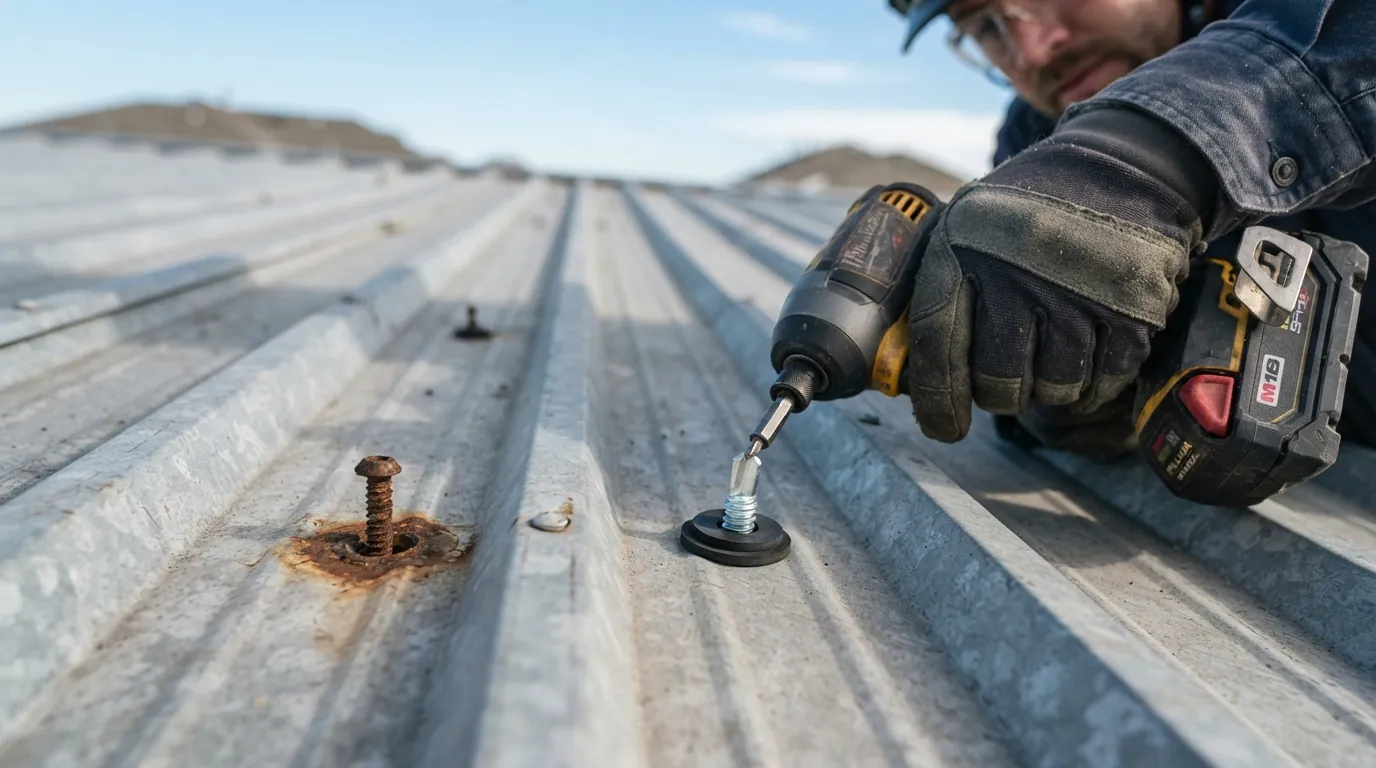
On an exposed-fastener roof, every screw is a potential leak. Over years of heat cycles, screws back out and their washers dry, crack and shrink. We walk the roof along the purlins, replace failed screws with oversized gasketed screws that bite into fresh metal, and seat each one to the correct depth: too loose leaks, too tight crushes the washer. On older roofs with widespread failure, replacing every fastener in one pass is more reliable than chasing leaks one at a time.
Seam and panel repair
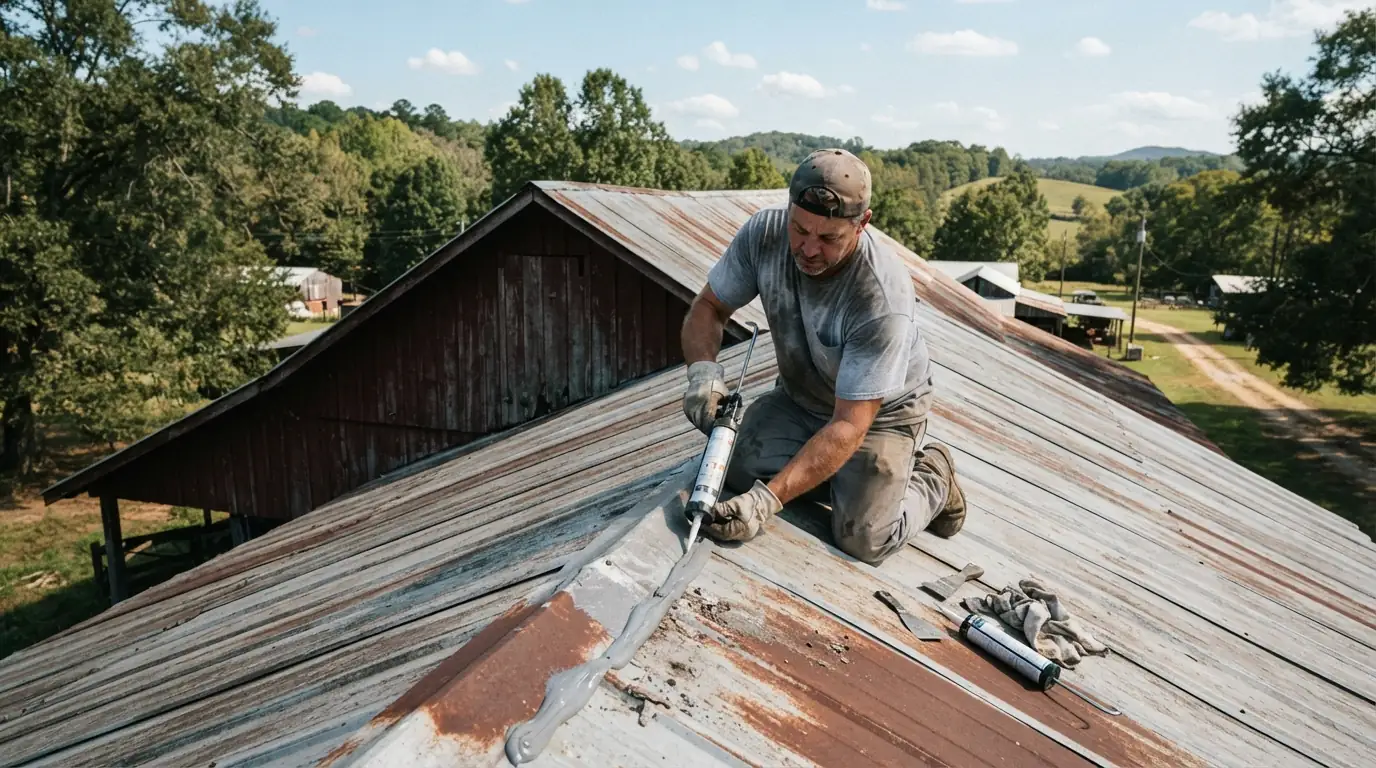
Panel laps and seams leak when the sealant between them fails or the lap was never sealed. We clean the lap, reseal it with sealant made for metal, and re-fasten it. Dented or punctured panels are patched only when the damage is small; otherwise we replace the panel with a matching profile and gauge. On standing seam roofs, we reseat opened seams and repair clips, since a seam pulled open by wind needs mechanical fixing rather than another bead of caulk.
Rust treatment and trim repair
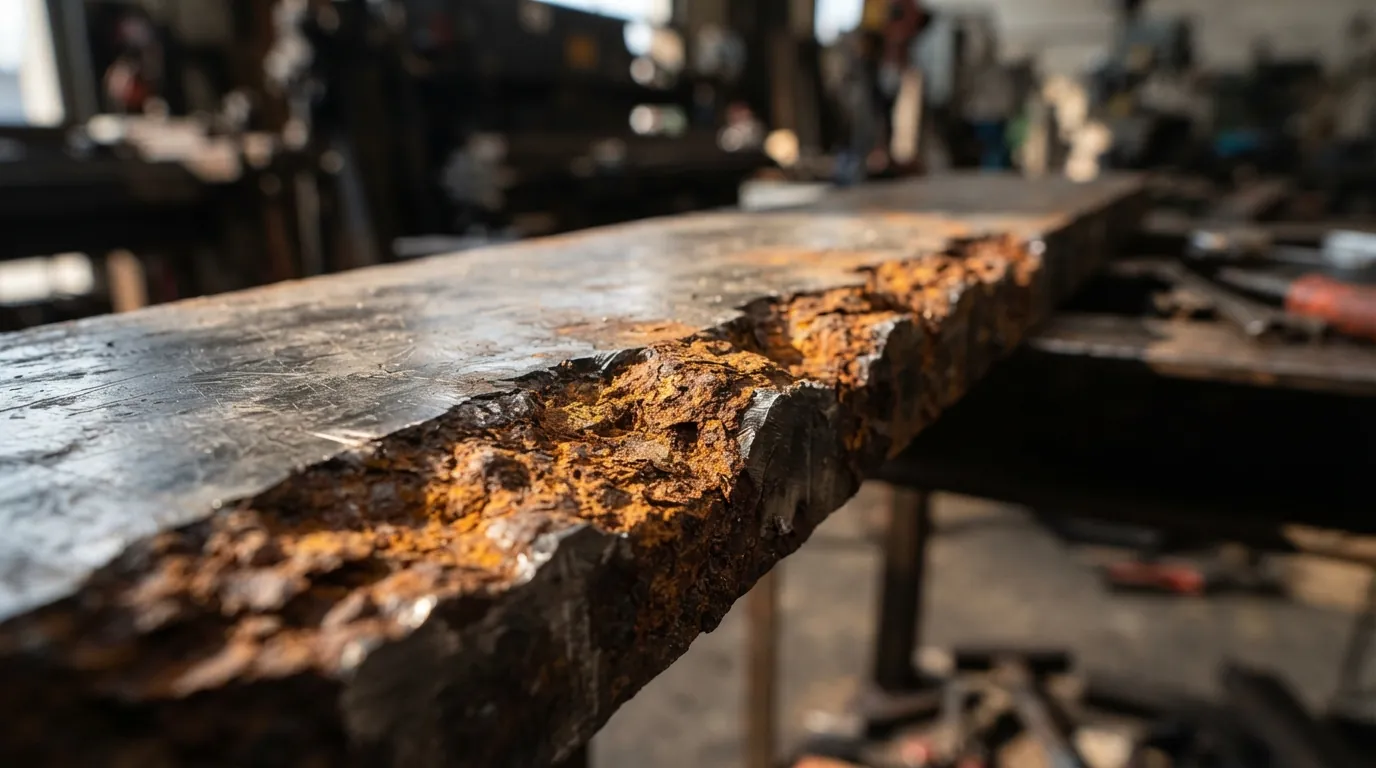
Rust starts at cut edges, scratches and laps where water sits. Caught early, it is cleaned to bare metal, treated and coated so it stops spreading. We also replace trim that has worked loose: ridge caps, eave trim, rake trim and closure strips that keep wind-driven rain and insects out. Where trim meets a wall or chimney, the flashing is often the real leak, and we rebuild it rather than seal over it. Badly rusted panels are replaced rather than coated.
More metal roofs, more metal repair
Metal roofing has been growing fastest across North Atlanta and Alpharetta, where homeowners planning to stay are choosing roofs built to last decades. That means more metal roofs in the metro are reaching their first round of fastener and trim maintenance, which is when small leaks start. On an exposed-fastener roof, a full screw-and-washer pass at that point costs far less than repairing the deck and ceiling a slow leak leaves behind.
How it runs
How a metal roof repair runs
- 1
Trace the leak
From inside the attic, garage or barn.
- 2
Walk the purlins
Fasteners, laps and trim checked.
- 3
Written scope
Screws, seams, panels and rust itemized.
- 4
Replace fasteners
Oversized gasketed screws seated right.
- 5
Seal and repair
Laps resealed, panels and trim replaced.
- 6
Water test
Hose test on the traced leak.
DIY or call
Tightening screws yourself or calling us
| Task | Doing it yourself | Having us do it |
|---|---|---|
| Tightening a loose screw | Over-driving crushes the washer and leaks. | Screws seated to the correct depth. |
| Replacing screws | Same-size screws spin in worn holes. | Oversized gasketed screws bite fresh metal. |
| Sealing laps | The wrong sealant fails in heat and sun. | Sealant made for metal, on clean laps. |
| Walking the roof | Panels dent and footing is poor. | Walked on the purlins with proper footing. |
A single loose screw on a low shed is a fair do-it-yourself fix. A roof with many failed fasteners needs a full pass.
Warning signs
Signs a metal roof needs repair
Screws backing out
Heads raised above the panel.
Cracked washers
Rubber gaskets split or missing.
Rust at laps and edges
Orange streaks where panels overlap.
Loose trim or closures
Ridge and eave pieces moving in wind.
Drips under the roof
Stains in the attic, garage or barn.
Dents or holes
Damage from limbs or hail.
FAQ
Metal roof repair questions
It depends on sun exposure and the original screws. Exposed-fastener roofs typically need a fastener pass well before the panels wear out.
Usually. Most leaks are fasteners, laps or trim, which are repairable if the panels are sound.
A coating can seal an aging roof once fasteners and rust are dealt with. It is not a substitute for fixing them first.
Yes. We reseat opened seams, repair clips and fix trim and flashing on standing seam roofs.
Yes. Garages, barns and workshops with metal roofs get the same fastener, lap and trim repairs.
Hail can dent panels. Most dents are cosmetic, but punctures and damaged seams need repair.
Related
Related metal and repair work
Roof Leak Repair
Pipe boot and vent flashing leaks, valley leaks and more.
Learn moreChimney Cap & Crown Repair
Covers crown repair and rebuilds and chase covers for framed chimneys.
Learn moreChimney Flashing & Cricket Repair
Chimney cap and crown leaks, plus step and counter-flashing rebuilds.
Learn moreMetal roof dripping?
Call and we will trace the leak and fix the screws, laps or trim that let it in.