Interior repair
Ceiling and wall repair after a roof leak in Atlanta
A roof leak doesn't end at the roof. Once the entry point is fixed, the ceiling and walls it soaked need to dry, be cut out where ruined, and be finished so the repair disappears.
- Calls answered 24/7
- Roof fixed first, then the ceiling
- Atlanta service office
Quick answer
Interior leak damage repair in Atlanta starts only after the roof leak is fixed: we confirm the ceiling cavity and insulation are dry, cut out and replace drywall that sagged or stayed soft, seal remaining stains with a stain-blocking primer, and match the texture and paint. Painting over a water stain without sealing it lets the stain bleed back through within weeks.
The work
Why the order of repairs matters
Fixing a ceiling before the roof means doing it twice, and closing up wet drywall traps moisture that can grow mold. So the sequence is fixed: stop the leak, dry the cavity, replace what is ruined, then seal and finish.
Because we repair the roof and the ceiling, one crew answers for the whole leak, from the entry point to the paint.
Updated September 2026
Cost
What an interior repair costs depends on
Interior repairs are priced by the area cut out and the finish that has to be matched.
- Area replaced
Square feet of drywall cut out.
- Insulation
Wet batts or blown-in replaced.
- Texture
Popcorn and knockdown take more time.
- Ceiling height
Vaulted ceilings need scaffolding.
- Paint scope
Full ceiling or wall repainted.
- Mold found
Treated before the cavity is closed.
What is included
What an interior leak repair includes
- Moisture check. Meter readings on drywall and framing.
- Wet insulation removed. Soaked batts pulled and replaced.
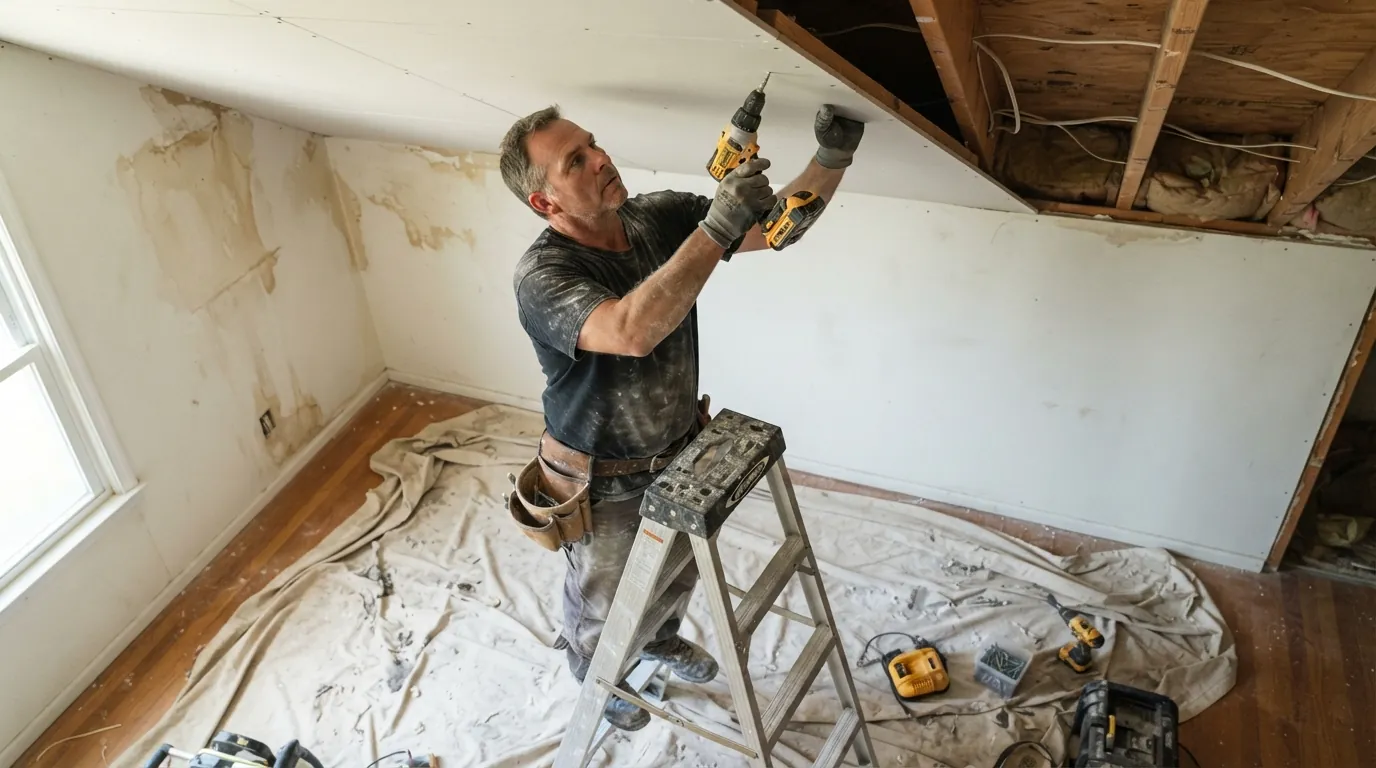
- Drywall replaced. Sagging or soft sections cut out.
- Joints finished. Seams taped and feathered to disappear.
- Stains sealed. Stain-blocking primer on remaining marks.
- Texture matched. Knockdown, popcorn or smooth finish.
- Paint. Ceiling or wall repainted to the corners.
Ceiling drywall replacement
Drywall that sagged, softened or crumbled at the edges has lost its strength and needs replacing, not patching. We cut the damaged area back to the nearest framing, check the joists and insulation above for moisture, and replace wet insulation. New drywall is screwed to the framing, taped, and finished in coats so the joint lines disappear under paint. Ceilings with a large sag are drained and shored safely first, since water-heavy drywall can fall without much warning at all.
Water-stained wall repair
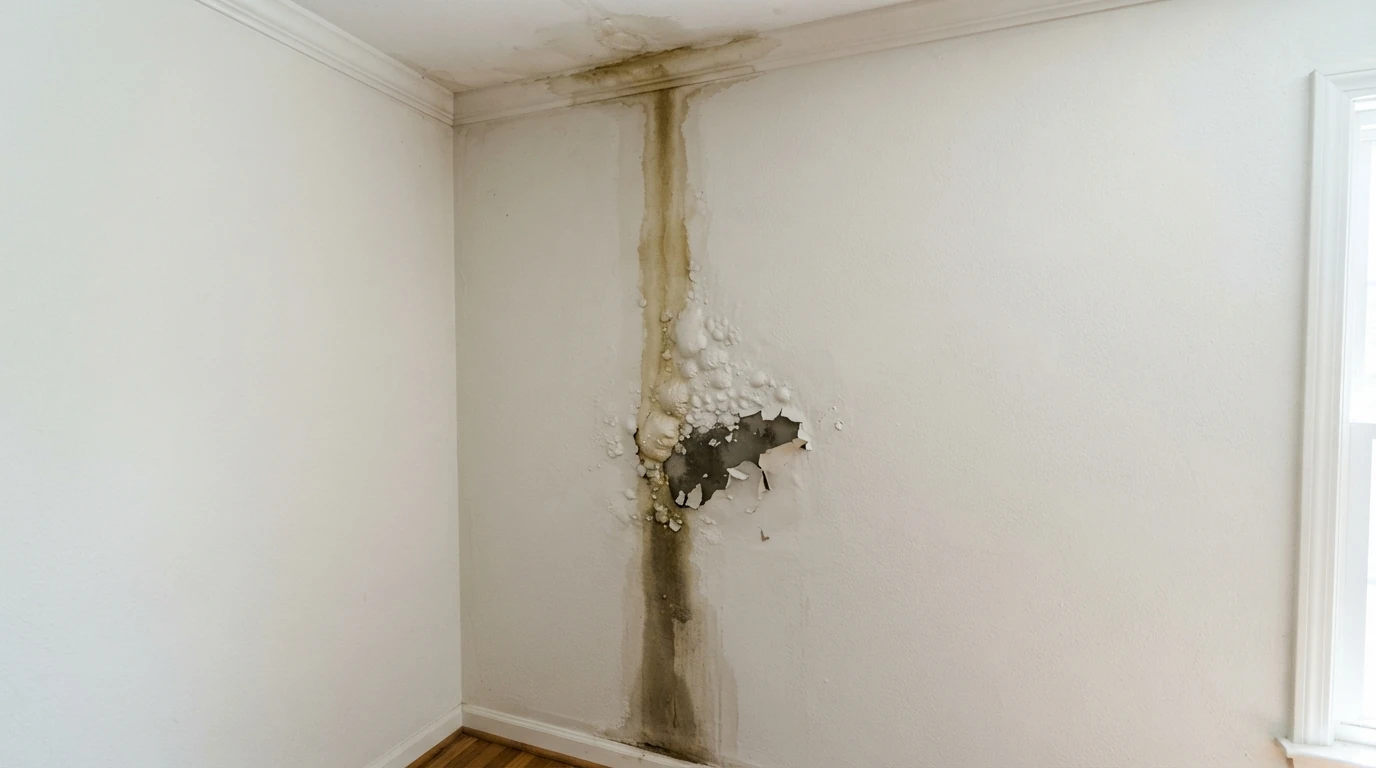
Water that reaches a wall usually runs down from the top plate, leaving a stain that starts at the ceiling line and fans out. If the drywall is dry and firm, the stain can be sealed and painted. If it is soft or the paper has bubbled, we cut out the damaged section, check the insulation and framing behind it, and replace it. Baseboards stay put unless water reached the floor, and trim that must come off is removed and reinstalled cleanly.
Paint and texture matching
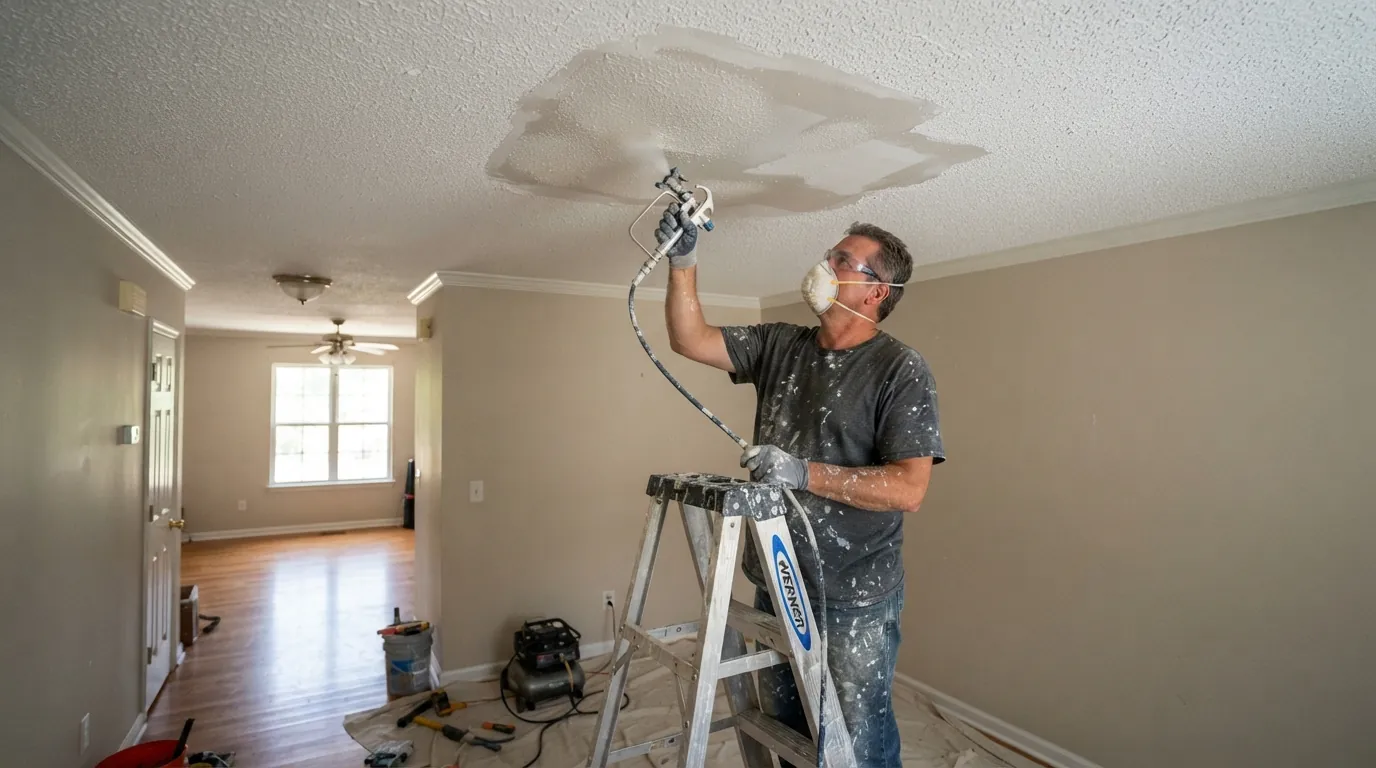
The repair only disappears if the finish matches. We seal every remaining water mark with a stain-blocking primer, because regular paint lets tannins and minerals bleed through. Textures such as knockdown, orange peel and popcorn are sprayed and feathered into the surrounding ceiling. Ceilings are usually painted wall to wall rather than spot-patched, since new paint on an older ceiling shows. Walls are painted corner to corner for the same reason, with the color matched from a chip taken on site.
Why Atlanta ceilings stay wet longer than they look
Atlanta's above-average rainfall means a small roof leak rarely gets a quiet week to dry out. Storm after storm, the same ceiling takes another soaking, so by the time a stain appears, the drywall and insulation above it are often wetter than they look from below. That is why we check the ceiling cavity with a moisture meter before closing anything, even when the stain looks old and dry.
How it runs
How an interior leak repair runs
- 1
Roof fixed first
The leak is stopped before anything inside.
- 2
Dry and measure
Moisture checked in drywall and framing.
- 3
Protect the room
Floors and furniture covered.
- 4
Cut out and replace
Damaged drywall and insulation removed.
- 5
Finish and texture
Taped, finished and textured to match.
- 6
Prime and paint
Stain-blocking primer, then paint.
DIY or call
Fixing leak damage yourself or having us do it
| Task | Doing it yourself | Having us do it |
|---|---|---|
| Painting a small stain | Fine on dry, firm drywall with stain-blocking primer. | Done as the last step of a full repair. |
| Sagging ceiling | Dangerous; water weight can bring it down. | Drained safely, cut out and replaced. |
| Matching texture | Popcorn and knockdown are hard to blend. | Texture sprayed and feathered to match. |
| Hidden moisture | Hard to tell if the cavity is dry. | Meter checks before anything is closed. |
If a stain is small and dry and the roof is fixed, primer and paint may be all it needs.
FAQ
Leak damage repair questions
Only after sealing it with a stain-blocking primer, and only if the drywall is dry and firm. Plain paint lets the stain bleed back.
Until a moisture meter reads dry. It depends on how long it was wet, so we check rather than guess.
Yes. Water-heavy drywall can fall. Keep people out from under it and call; we drain and remove it safely.
Yes. Knockdown, orange peel and popcorn can all be matched and feathered into the surrounding ceiling.
Small areas on drywall come out with it. Growth found in the cavity is treated before the ceiling is closed.
If the leak came from covered storm damage, the resulting interior damage is often part of the claim. Your insurer decides.
Related
Roof repairs behind interior damage
Stain on the ceiling from a roof leak?
Call and we will fix the roof, dry the ceiling, and make the repair disappear.