Chimney leaks
Chimney flashing and cricket repair on Atlanta roofs
Stains next to the chimney usually trace to the metal where brick meets roof. We replace that flashing properly and add a cricket where water piles up behind it.
- Calls answered 24/7
- Flashing rebuilt, not caulked
- Atlanta service office
Quick answer
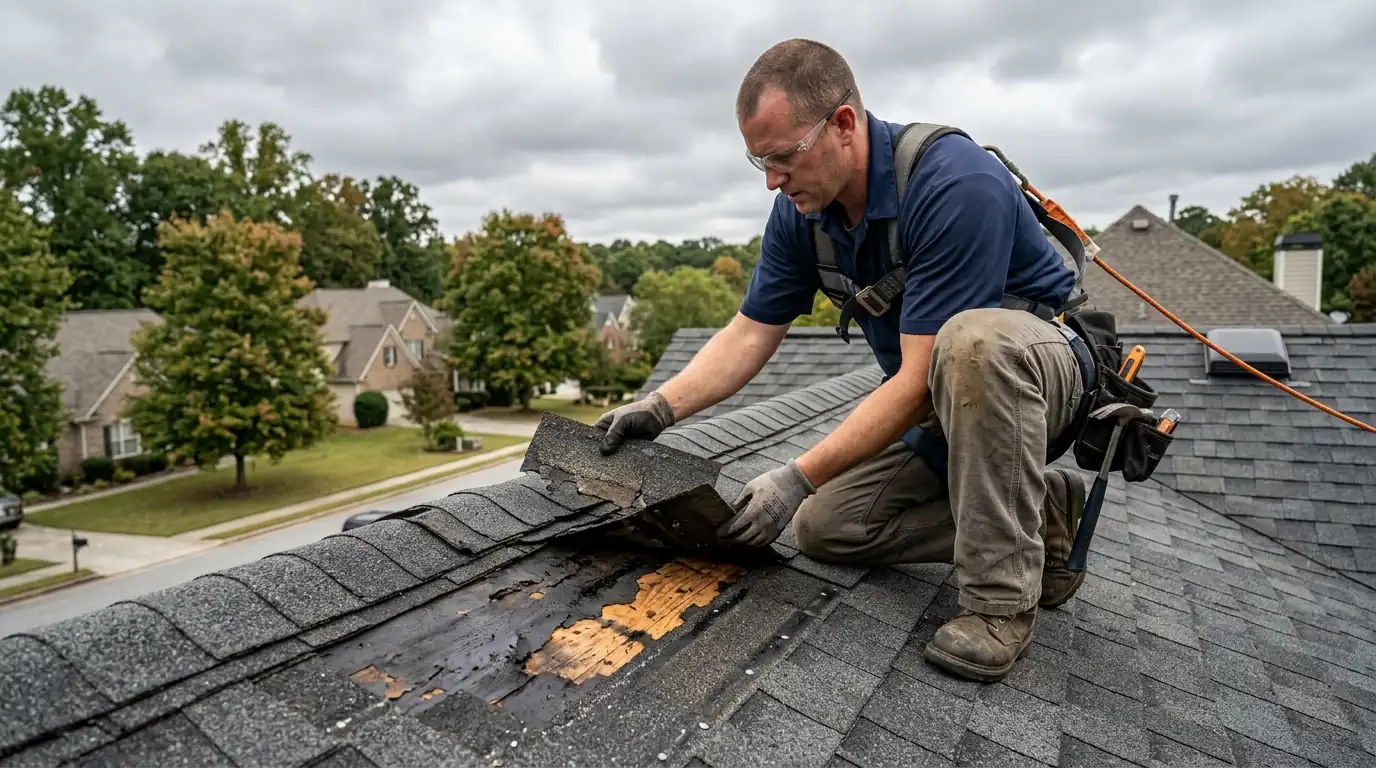
Chimney leaks in Atlanta usually come from failed flashing where the brick meets the shingles, not from the chimney itself. The lasting fix is new step flashing woven into each shingle course plus counter-flashing set into the mortar joints, with a cricket behind wide chimneys to split the water. A bead of caulk only buys time.
The work
Where chimney leaks really start
A chimney interrupts the water path down the roof. The joint is covered by two layers of metal: step flashing tucked under each shingle course and bent up the brick, and counter-flashing set into the mortar and folded over it. When either layer rusts, pulls out, or was swapped for a caulk bead years ago, water runs behind it.
The stain rarely shows directly under the leak. Water tracks along rafters and appears a few feet away, so we trace it from the attic before deciding what to rebuild.
Updated September 2026
Cost
What goes into a chimney flashing price
Chimney work is priced after a look at the flashing, the brick and the roof around it.
- Chimney width
Wider chimneys need more metal and often a cricket.
- Flashing material
Copper costs more than aluminum or steel.
- Cricket framing
Adds lumber, sheathing and metal.
- Mortar condition
Soft joints need attention first.
- Roof pitch and height
Steep or tall roofs slow the work.
- Shingle condition
Brittle shingles may not survive being lifted.
Step and counter-flashing rebuilds
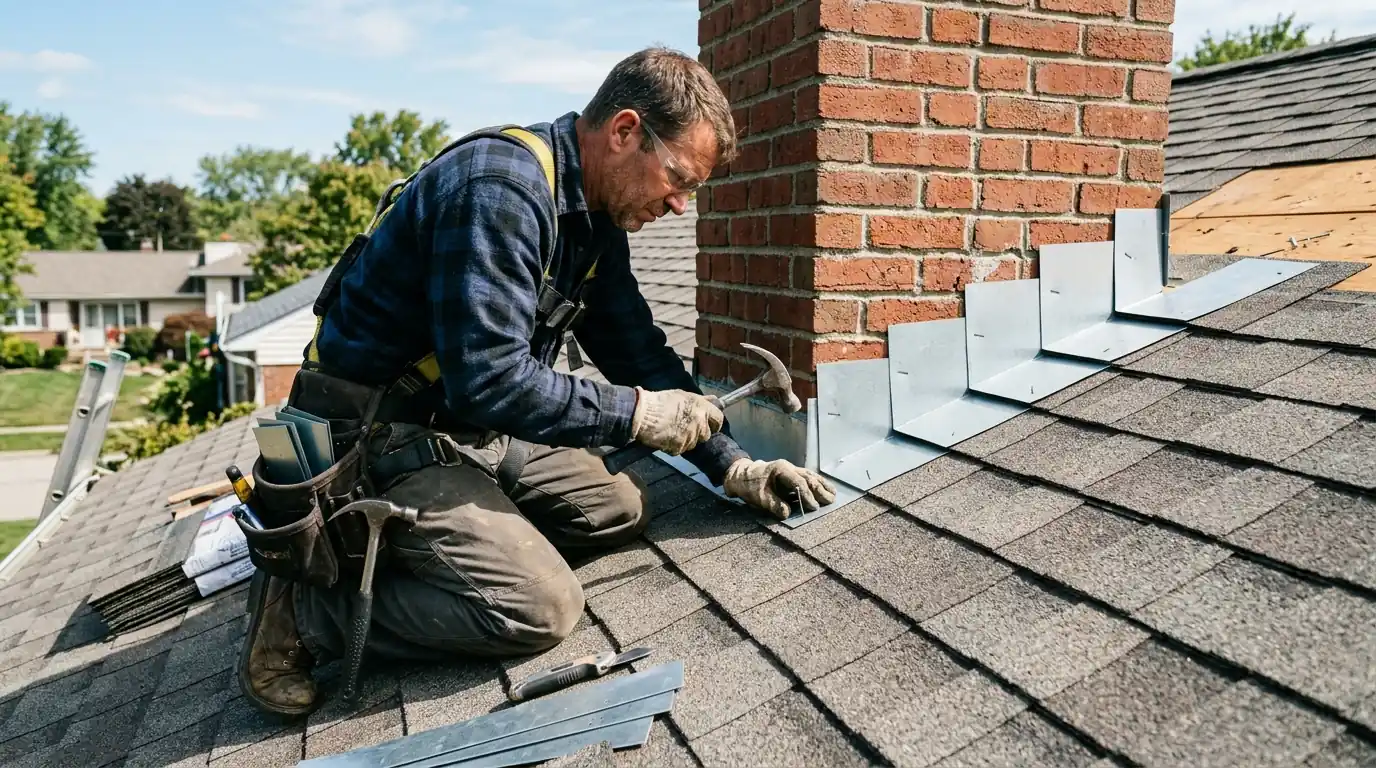
On older chimneys the counter-flashing is often face-nailed or glued to the brick instead of set into the mortar, and the caulk holding it has cracked. We remove the shingles along the chimney, fit new step flashing piece by piece with each course, then cut a reglet into the mortar joint and set new counter-flashing into it. Aluminum or galvanized steel suits most roofs; copper is an option on older brick where it fits the house. The shingles go back on, sealed by hand.
Cricket installation
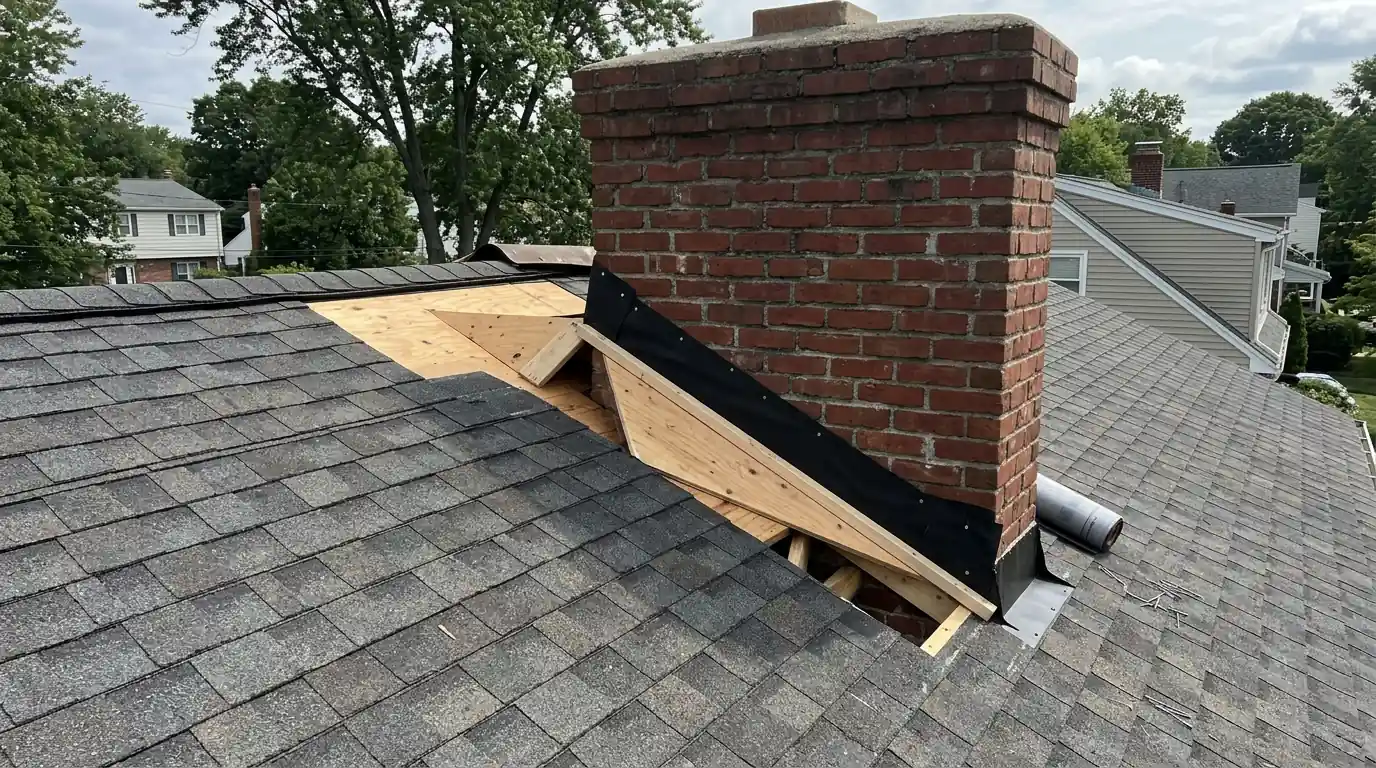
Water running down the roof hits the uphill side of the chimney and stalls there with leaves and pine straw, soaking the flashing every storm. A cricket, also called a saddle, is a small peaked frame behind the chimney that splits that water around both sides. We frame it on the deck, sheath it, and cover it with underlayment and metal that ties into the chimney flashing. Wide chimneys and low-pitch roofs benefit most, and adding one during a flashing rebuild costs far less than doing it later.
Chimney cap and crown leaks
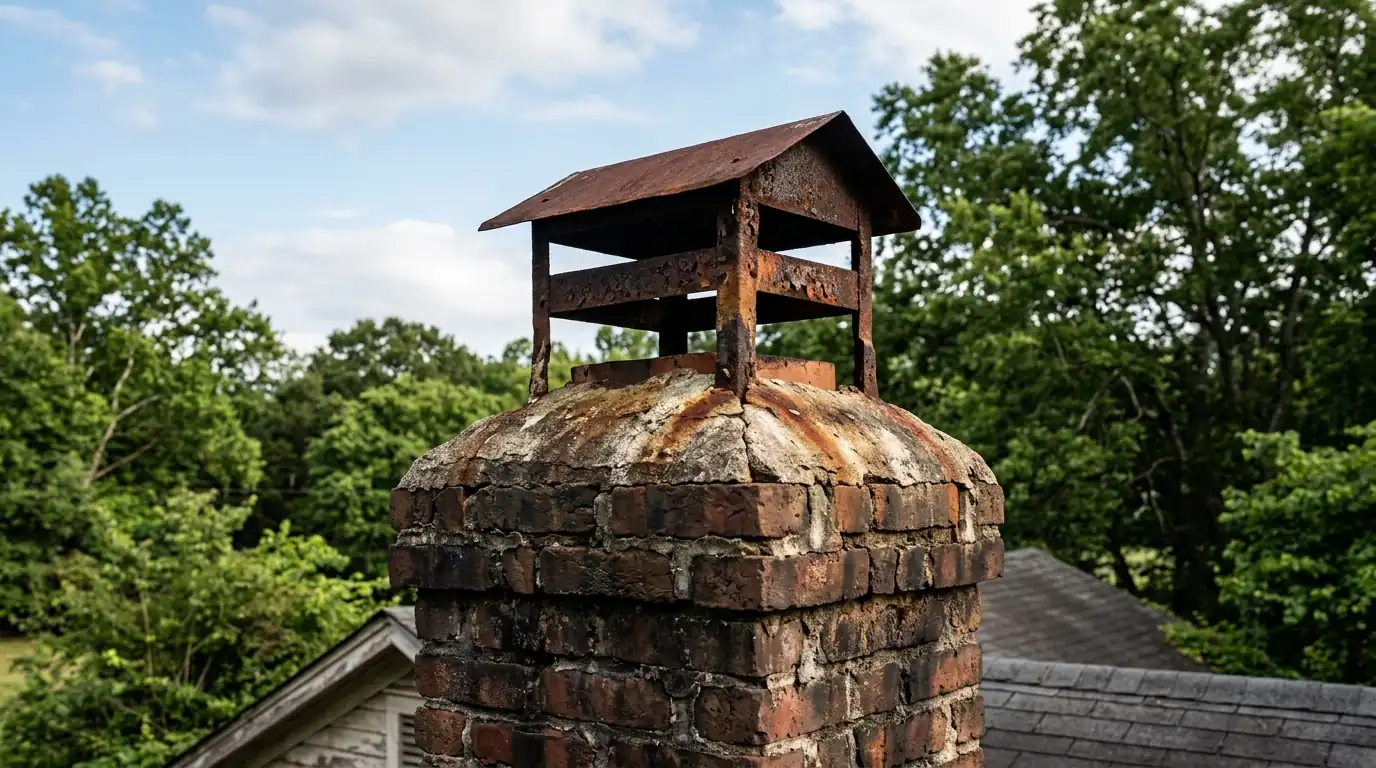
Not every chimney leak is flashing. A cracked mortar crown lets water into the brick, and a missing or rusted cap lets rain straight down the flue. The symptoms look alike from inside: stains on the chimney breast, a damp smell at the fireplace, white mineral streaks on the brick. We check the top of the chimney before rebuilding flashing, seal small crown cracks, and replace missing caps. Crumbling crowns and loose brick are mason's work, and we flag them with photos first.
Chimneys on older and newer Atlanta homes
Atlanta's housing runs from early bungalows to brand-new construction, and chimney leaks tend to follow that age line. Older brick chimneys often carry flashing that has been patched with caulk more than once, while newer homes usually have framed chimney chases wrapped in siding, where the weak point is the flashing at the siding instead. On a full replacement, which requires a permit in Fulton County, the chimney flashing should be rebuilt rather than reused.
How it runs
How a chimney flashing repair runs
- 1
Trace the leak
Attic check to confirm the water comes from the chimney joint.
- 2
Inspect top to bottom
Crown, cap, brick and flashing all looked at.
- 3
Written scope and price
Flashing, cricket and cap work itemized.
- 4
Open the courses
Only the shingles along the chimney come off.
- 5
Install new flashing
Step flashing with each course, counter-flashing in the mortar.
- 6
Reset and water test
Shingles sealed; hose test when the leak was hard to find.
DIY or call
Caulking it yourself or having it rebuilt
| Task | Doing it yourself | Having us do it |
|---|---|---|
| Sealing a small gap | Sealant can slow a drip for a season. | We find why the gap opened and fix the metal. |
| Replacing step flashing | Shingles crack easily when lifted. | Shingles removed, reset and sealed by hand. |
| Counter-flashing | Cutting mortar joints needs a grinder at height. | Reglet cut and flashing set into the joint. |
| Adding a cricket | Framing on a roof is carpentry at height. | Framed, sheathed and flashed as one job. |
Sealant is a stopgap, not a repair, and layers of it make the rebuild harder.
Warning signs
Signs the chimney flashing is failing
Stains beside the chimney
Ceiling or wall marks within a few feet of it.
Caulk smeared on the brick
An old patch that is now cracking open.
Rusted or lifted metal
Flashing pulled away from the brick.
Debris behind the chimney
Leaves and pine straw holding water upslope.
Damp attic framing
Dark wood or wet insulation around the chimney.
Musty smell by the fireplace
Water getting into the chimney or the joint.
FAQ
Chimney flashing questions
Caulk can stop a drip for a while, but it cracks as brick and metal move.
Water runs along rafters and framing before it drips, so the stain can show up several feet from where it got in.
Wide chimneys, and chimneys on low-pitch roofs where water and debris pile up behind them, benefit most.
Either is possible. We check the crown and cap before rebuilding flashing, because a cracked crown or missing cap looks similar from inside.
Yes. Only the shingle courses along the chimney are removed and reset.
We handle flashing, crickets, caps and small crown sealing. Rebuilding crowns or loose brick is mason's work, and we flag it with photos first.
Related
Leak repairs related to chimney work
Wind Damage Roof Repair
Lifted and creased shingle tabs, missing shingles and exposed underlayment and more.
Learn moreRoof Insurance Claim Help
Covers adjuster meetings and supplements and scope disputes.
Learn moreTree Damage Roof Repair
Framing and decking repairs, plus limb strikes and punctures.
Learn moreStain by the chimney again?
Call and we will trace the water, check the flashing and the crown, and tell you what actually needs rebuilding.