Commercial roofing
Commercial roof installation for Atlanta buildings
Warehouses, retail strips, offices and churches need a roof that fits the building's use, the energy code and the people working under it. We install the whole system, from insulation to the last curb flashing.
- Calls answered 24/7
- TPO, PVC, EPDM and metal
- Commercial buildings
Quick answer
Commercial roof installation in Atlanta usually means a TPO or PVC membrane over tapered insulation, or a metal system on steeper roofs, built to the energy code and, inside city limits, the 2026 cool-roof reflectance standard. We tear off and install in sections so the building stays dry and occupied, and coordinate rooftop units with your mechanical contractor.
The work
What goes into a commercial roof system
A commercial roof is an assembly, not a membrane: deck, vapor control where needed, insulation, cover board, membrane or panels, and the flashing at every wall, curb and drain. The membrane gets the attention, but most failures start at edges and penetrations.
Choosing the system comes down to the building: how much foot traffic the roof gets, what vents onto it, what it costs to cool, and how long the owner plans to hold it.
Updated September 2026
We install shingle, metal and membrane systems from GAF, Owens Corning, CertainTeed, Carlisle and Firestone.
Options
Choosing a commercial roof system
| Factor | TPO | PVC | EPDM | Standing seam |
|---|---|---|---|---|
| Surface | White welded sheet | White welded sheet | Rubber sheet | Steel or aluminum panels |
| Strength | Reflective, economical | Resists grease | Flexible, proven | Long service life |
| Weak point | Needs good welds | Higher material cost | Black absorbs heat | Needs slope |
| Typical use | Offices, retail, warehouses | Restaurants | Low-traffic roofs | Pitched roofs |
Inside city limits, low-slope roofs must meet the reflectance rule, which favors white TPO and PVC.
Cost
What drives a commercial roofing budget
Commercial roofs are budgeted per square foot, and the assembly under the membrane moves the number as much as the membrane does.
Planning range from published Atlanta and Georgia market data: $65,000 to $95,000. That is 2026 Atlanta pricing for a 10,000-square-foot flat retail roof; warehouses and premium membranes scale from there. Every roof measures differently; this is a planning band, not a quote.
- Roof area
Larger roofs lower the cost per square foot.
- Tear-off
Existing layers and wet insulation removed.
- Insulation
Code thickness and tapered drainage.
- System
TPO, PVC, EPDM or metal.
- Penetrations
Units, curbs, drains and pipes flashed.
- Access and staging
Crane lifts, street use, occupied space.
What is included
What a commercial installation includes
- Roof survey. Moisture scan and core cuts on re-roofs.
- Drainage design. Tapered insulation laid out to the drains.
- Code insulation. Insulation above the deck per the energy code.
- Membrane or panels. Installed to the manufacturer's specifications.
- Curbs and penetrations. Every unit, pipe and vent flashed.
- Edge metal. Coping and edge metal built to hold in wind.
- Closeout. Seam testing, photos and a walk-through.
TPO and PVC single-ply
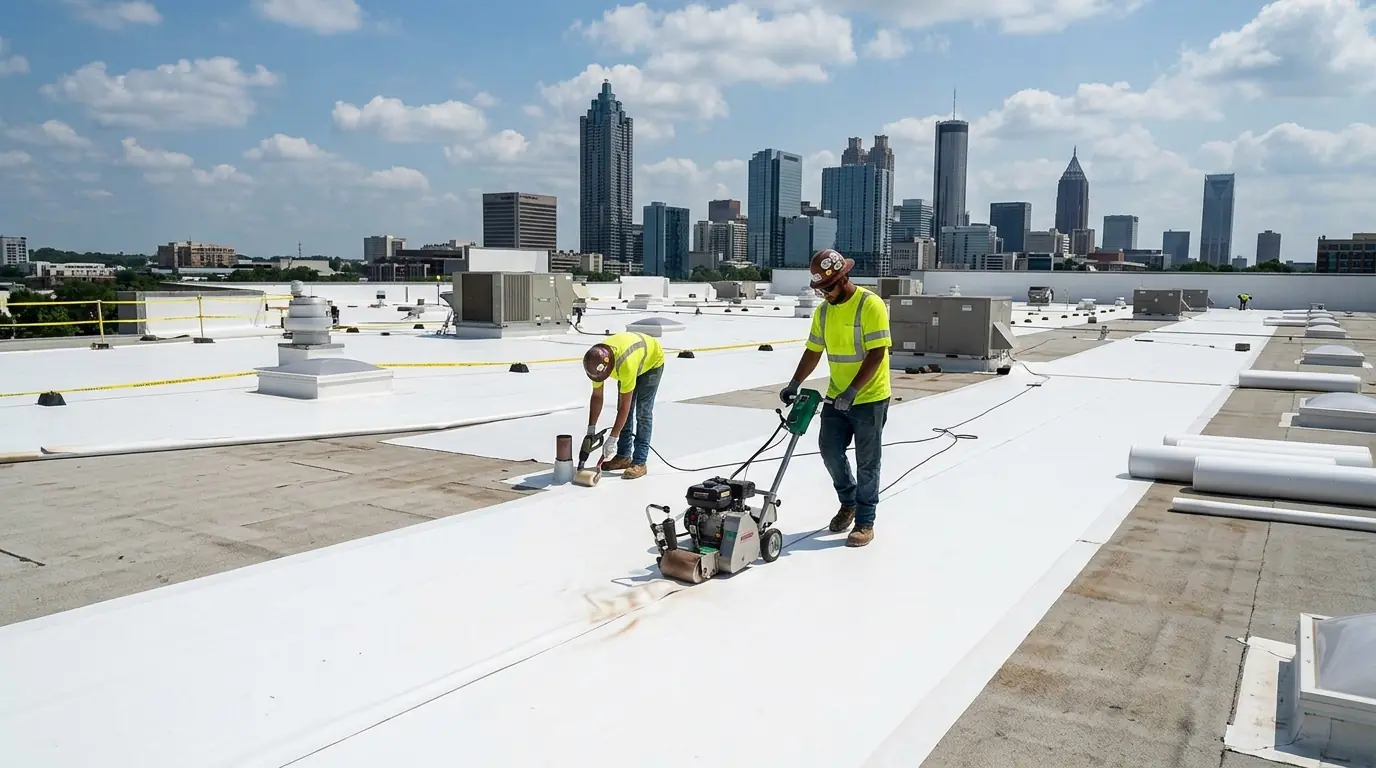
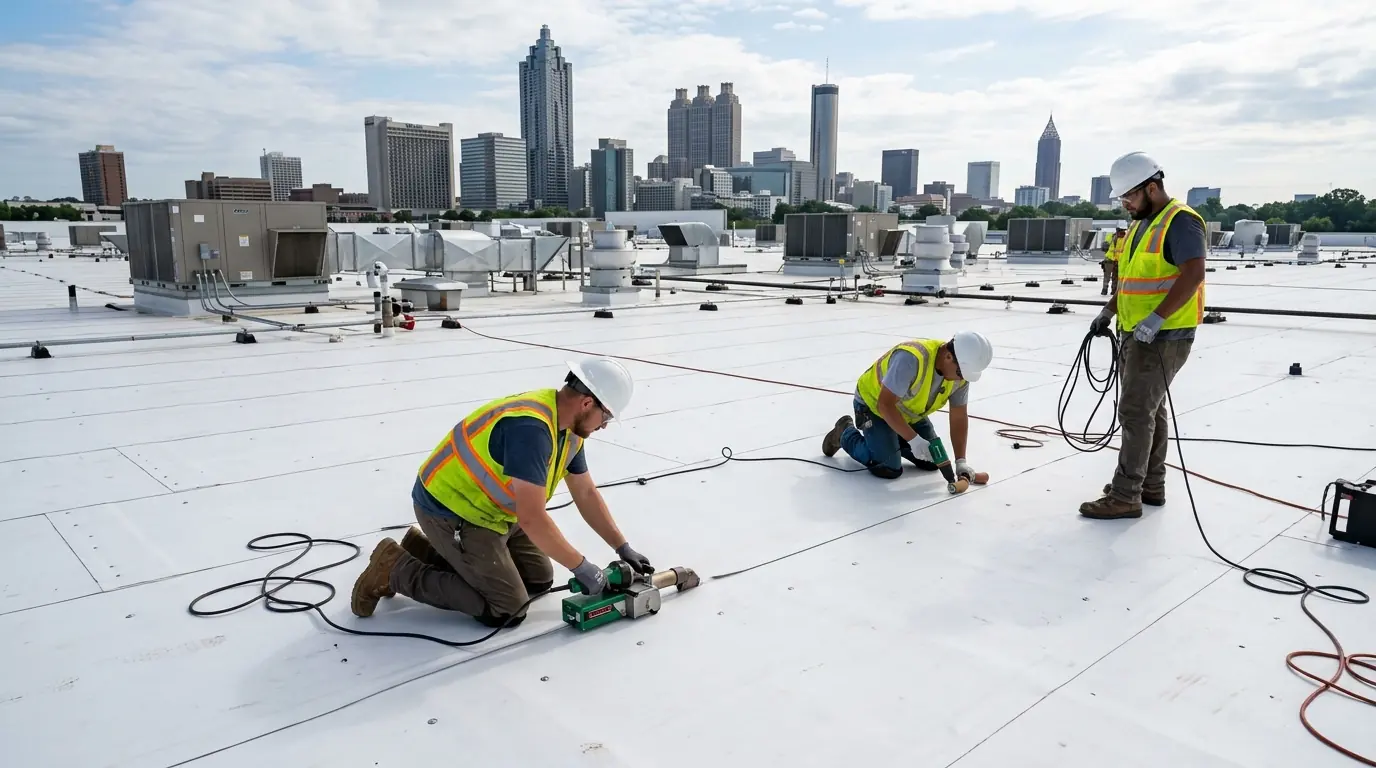
TPO and PVC are white thermoplastic membranes with seams welded by hot air, and on most Atlanta commercial roofs one of them is the default. TPO costs less and suits offices, retail and warehouses. PVC holds up better where grease or chemicals land on the roof, so it is the usual choice over restaurant kitchens and some light industrial space. Both reflect sunlight and lower cooling load, and both depend on careful welding, so we probe seams daily as the roof goes down.
EPDM
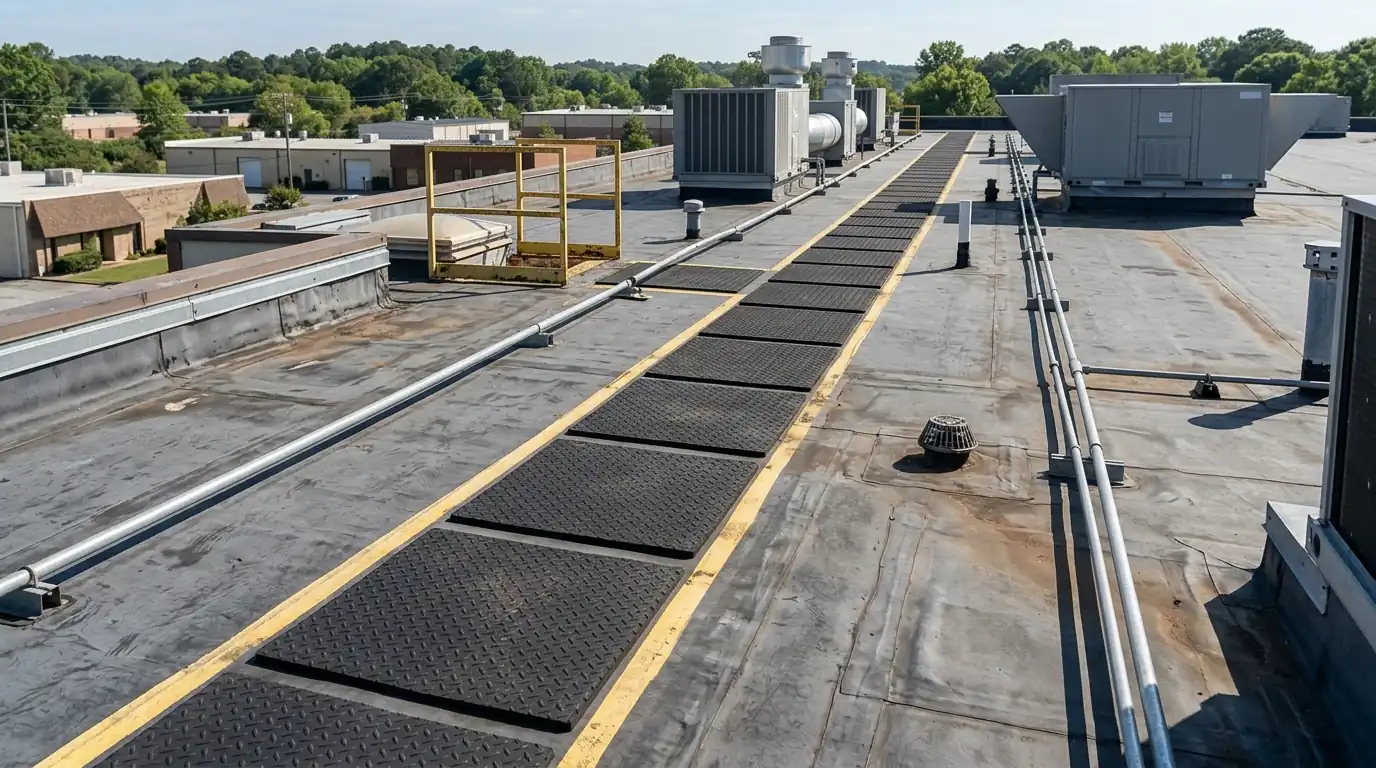
EPDM is a rubber membrane laid in wide sheets and joined with seam tape, with decades of use on low-slope commercial roofs. It is flexible, forgiving on older buildings that move, and often economical on roofs that see little foot traffic. The standard black sheet absorbs heat, so inside city limits a full replacement needs a white EPDM or another system to meet the reflectance rule. EPDM punctures more easily than welded membranes, so walkway pads go down along every service route.
Metal commercial roofing
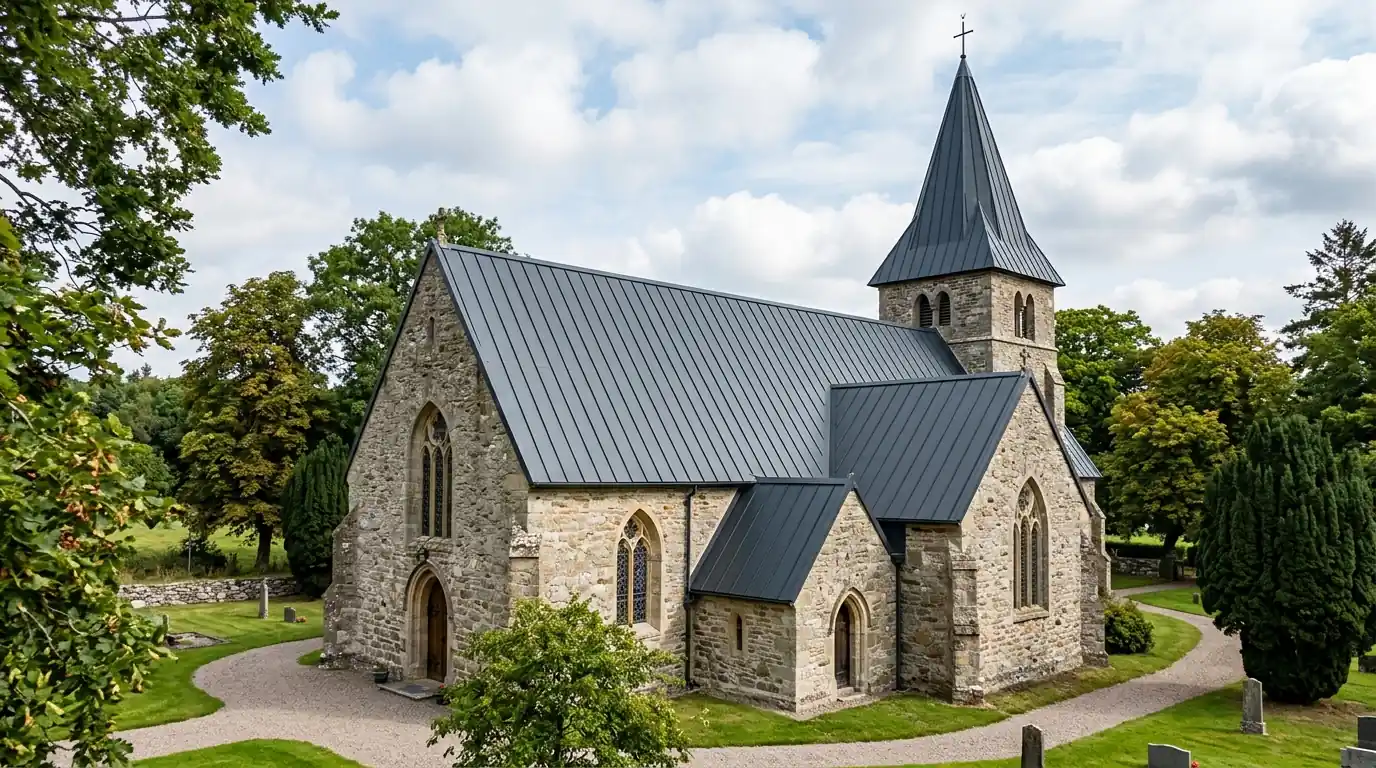
Metal suits commercial buildings with enough slope to shed water: churches, schools, shops and pre-engineered steel buildings. Standing seam panels hide their fasteners and move with temperature, while exposed-fastener panels cost less and suit utility buildings. We check the structure and purlin spacing, match the panel to the building's wind requirements, and detail the trim at walls, ridges and gutters, which is where metal roofs leak if they are going to. Light-colored finishes also help with cooling cost on a big, sunny roof.
Cooling costs and Atlanta's commercial roofs
TPO has become the dominant commercial membrane in metro Atlanta mostly because it reflects heat and lowers cooling cost, and that advantage grows intown, where summer afternoons can run as much as 15 degrees Fahrenheit hotter than the city's most forested areas. For an owner paying to cool a warehouse or a row of storefronts, a white membrane is an operating decision as much as a roofing one, which is why we price the reflective option first.
How it runs
How a commercial roof project runs
- 1
Survey and core cuts
Moisture, deck and drainage checked before pricing.
- 2
System and schedule
Specified to use, code and the tenants' hours.
- 3
Permit and staging
Permit filed; crane and material staging planned.
- 4
Tear-off in sections
Only what can be dried in each day is opened.
- 5
Install and flash
Insulation, membrane, curbs and edge metal.
- 6
Closeout
Seams tested, photos, walk-through with the owner.
FAQ
Commercial roofing questions
Usually. We work in sections, keep entrances clear, and plan noisy tear-off around the tenants' hours where we can.
PVC. Grease from kitchen exhaust breaks down TPO and EPDM over time; PVC resists it.
Yes. Inside Atlanta city limits, new and replacement low-slope roofs must meet the reflectance standard, which white TPO and PVC do.
We coordinate with your mechanical contractor to lift or disconnect units, then flash new curbs into the roof.
Sometimes, if there is one layer and the insulation is dry. Core cuts and a moisture scan decide it.
Yes, on buildings with enough slope. Standing seam suits most; exposed-fastener panels suit utility buildings.
Related
Other commercial roofing services
Planning a commercial roof?
Call to set up a roof survey. We will scope the system, the schedule and the budget for the building you have.