Copper
Copper roofing for Atlanta homes, bays, porches, gutters and flashing
Copper is the roof metal that outlasts everything around it. Most homes use it where it shows and where it works hardest: bay windows, porch roofs, gutters and the flashing on slate and tile roofs.
- Calls answered 24/7
- Formed and soldered on site
- Bays, porches and gutters
Quick answer
Copper roofing in Atlanta is mostly accent work: standing seam copper over bay windows, porches and dormers, half-round copper gutters and downspouts, and copper flashing for slate, tile and premium shingle roofs. We form and solder copper on site, use copper or stainless fasteners so the metals never mix, and detail it to move with heat. Copper weathers from bright to brown to green over the years unless it is coated.
The work
Why copper is used where it is
Copper costs far more than steel or aluminum, but it does not rust, it can be soldered watertight, and it lasts for generations. That makes it the natural choice for small roofs that are hard to reach and very visible, such as a curved bay or a porch, and for the flashing and gutters on roofs that are themselves built to last a century.
It also has rules: copper must never touch steel or aluminum, because the dissimilar metals corrode, and water running off copper stains light-colored stone and siding below. Good copper work plans for both.
Updated September 2026
Options
Copper or another metal
| Factor | Copper | Painted steel | Aluminum |
|---|---|---|---|
| Lifespan | Generations | Decades with good paint | Decades |
| Joins | Soldered watertight | Sealed laps | Sealed laps |
| Appearance | Weathers to brown, then green | Holds its paint color | Holds its paint color |
| Cost position | Highest | Middle | Lowest |
For a small, visible roof or the flashing on a long-life roof, copper usually earns its price; for large plain roofs, painted steel is the practical choice.
Cost
What copper roofing costs depends on
Copper is priced by the weight of copper used and the hours of forming and soldering the job needs.
- Copper weight
Heavier gauge costs more and lasts longer.
- Shape
Curved bays and cones take more labor.
- Gutter style
Half-round with leader heads costs more.
- Soldered joints
Every soldered seam adds time.
- Access
Second-story and steep work needs rigging.
- Coating
Optional clear coat to slow weathering.
Copper bay and porch roofs
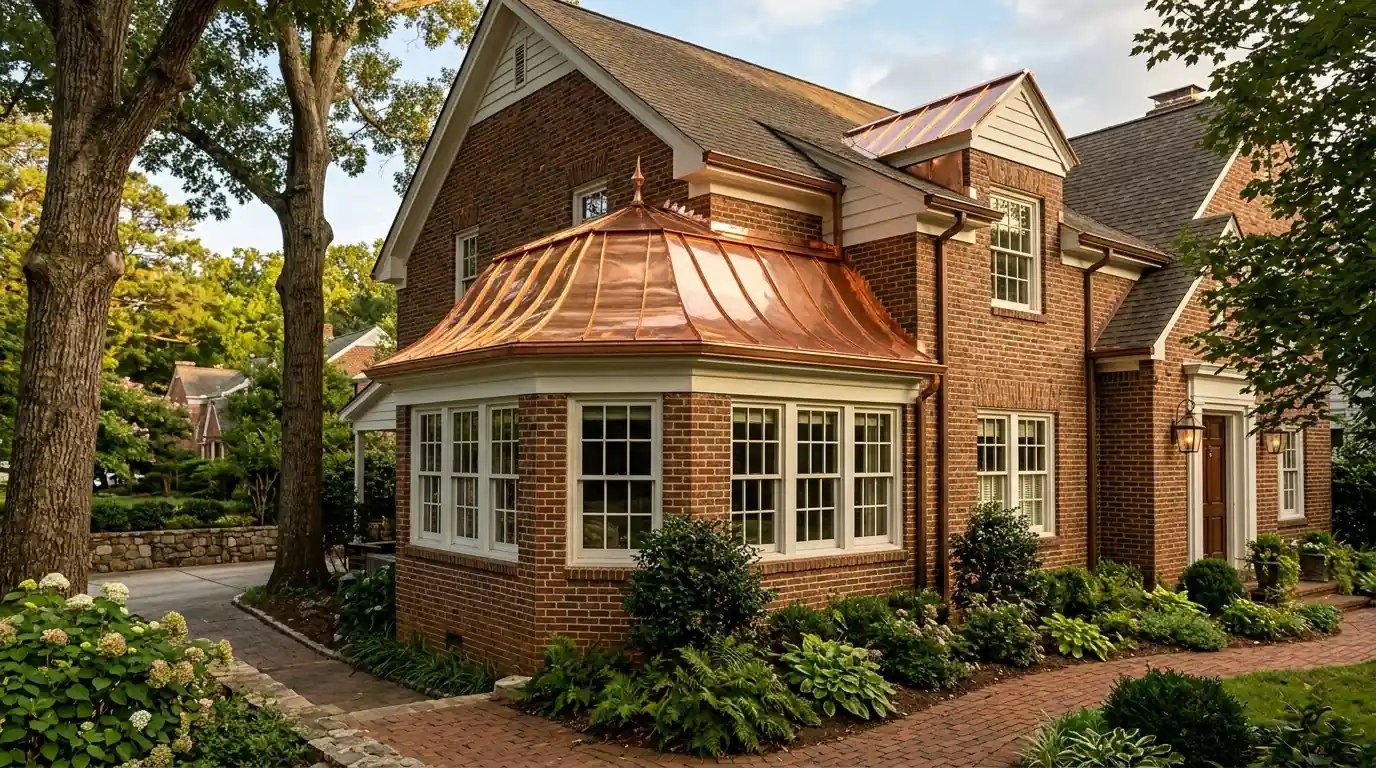
Bay windows, porch roofs, dormers and eyebrow roofs are where copper looks best and works hardest, because they are small, often curved, and right at eye level. We form standing seam or flat-lock copper panels to the shape, solder the joints that need it, and flash the roof into the wall above so water cannot get behind it. Cleats let the panels move with the heat, which matters on a south-facing bay in an Atlanta summer, and we keep every fastener copper or stainless so nothing corrodes where the metals meet.
Copper gutters and downspouts
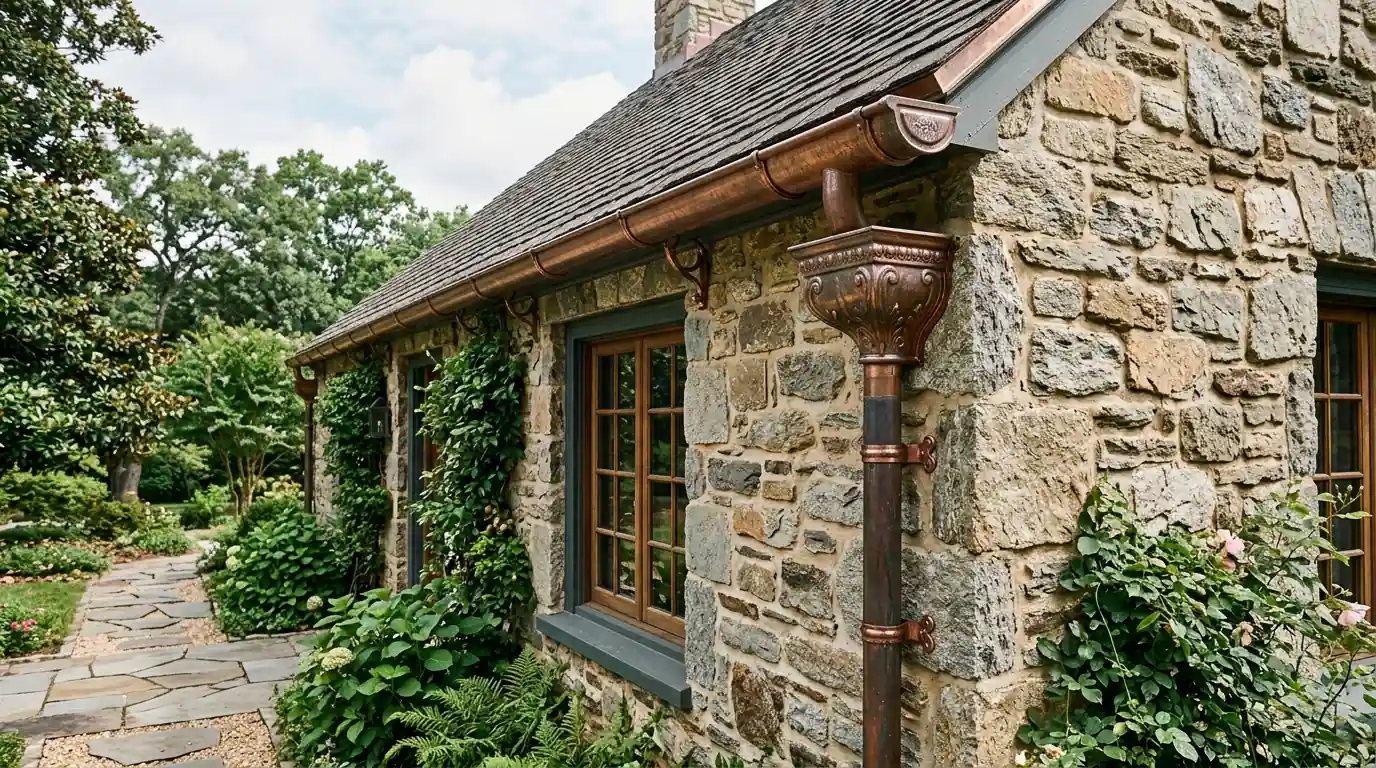
Half-round copper gutters with round downspouts suit older and higher-end homes and last far longer than aluminum. We hang them on copper hangers, solder the end caps, corners and outlets so they do not leak at the joints, and can add leader heads where the house calls for them. Because water off copper can stain light stone, brick and siding, we plan where the downspouts discharge before anything is hung, and we size the gutters and outlets for the roof area they drain so the heaviest summer storms do not overflow them.
Copper flashing and accents
On slate, tile and premium shingle roofs, copper flashing at valleys, walls, chimneys and skylights means the flashing will not wear out before the roof does. We form step, counter and valley flashing on site, solder where joints must be watertight, and fasten with copper or stainless steel so no other metal touches it. Copper finials, cupola tops and ridge details can be added where the architecture calls for them, and copper flashing can be fitted during a repair on an existing roof without replacing the whole thing.
Copper on Atlanta's older and north metro homes
Copper work in Atlanta often lands on houses where looks are reviewed. In Roswell's historic district, which covers about 544 acres around Canton Street and the Mill Village, the Historic Preservation Commission reviews exterior changes, and copper bay roofs and gutters are a common in-kind choice on older homes. Interest in long-life metal has also grown across north Atlanta suburbs such as Alpharetta, where owners plan to stay for decades.
Timeline
How copper changes over time
New copper is bright, turns a warm brown within months, and over many years develops the green patina people associate with old copper roofs. In Atlanta's climate the green comes slowly, often taking decades. A clear coating can hold the bright or brown stage for a while, but most owners let it weather naturally.
How it runs
How a copper job runs
- 1
Look at the house
Where copper fits and where it would stain.
- 2
Choose the details
Panel style, gutter profile and finish.
- 3
Measure and form
Copper cut and formed for each surface.
- 4
Install with cleats
Panels free to move with the heat.
- 5
Solder the joints
End caps, corners and seams sealed.
- 6
Final check
Water test and cleanup.
FAQ
Copper roofing questions
The metal costs much more than steel or aluminum, and copper is formed and soldered by hand. In return it lasts for generations.
Eventually, but slowly. It turns brown within months and may take decades in Atlanta's climate to develop a green patina.
No. Copper and aluminum or steel corrode where they touch, so we use copper or stainless fasteners and keep the metals apart.
Water running off copper can leave green-blue stains on light materials. We plan where downspouts discharge to avoid it.
Yes. Copper bay roofs, porch roofs, flashing and gutters can be added without replacing the main roof.
It is usually welcomed as an in-kind material on older homes, but the review board decides. We prepare the details for review.
Related
Work that pairs with copper
Thinking about copper?
Call and we will look at where copper fits your house and where it would stain.