Roof coatings
Commercial roof coatings for Atlanta buildings
A coating is not a new roof, but on the right roof it adds years without a tear-off. The key word is right: the roof underneath has to be sound and mostly dry.
- Calls answered 24/7
- Silicone and acrylic systems
- Commercial buildings
Quick answer
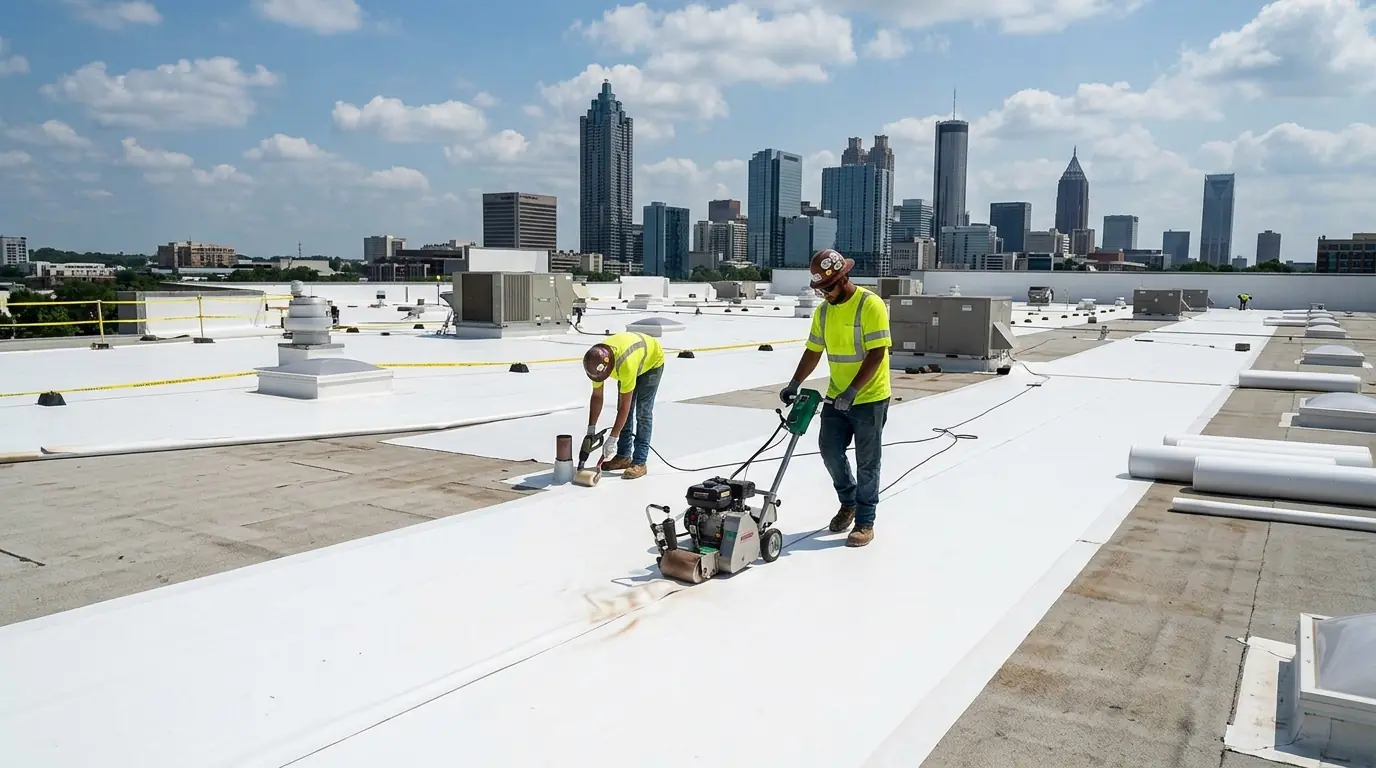
Commercial roof coatings in Atlanta are silicone or acrylic layers rolled or sprayed over an existing membrane or metal roof to seal it and reflect sunlight. They only work when the roof is structurally sound and most of the insulation is dry, so every coating job starts with a moisture survey, and wet areas are cut out and replaced before any coating goes down.
The work
When a coating makes sense
Coatings suit roofs that are weathered but sound: a TPO or EPDM membrane with surface wear, a modified bitumen roof losing granules, or a metal roof with rusting fasteners. They seal small cracks and seams, reflect heat, and can often be recoated later instead of torn off.
They do not fix wet insulation, failed decking or a roof that ponds badly. Coating those just hides the problem.
Updated September 2026
We install shingle, metal and membrane systems from GAF, Owens Corning, CertainTeed, Carlisle and Firestone.
Options
Silicone or acrylic coating
| Factor | Silicone | Acrylic |
|---|---|---|
| Ponding water | Tolerates ponding | Breaks down where water stands |
| Application | Thick coats, fewer passes | Water-based, easy cleanup |
| Dirt pickup | Holds dirt, loses some brightness | Stays cleaner and brighter |
| Best fit | Flat roofs with some ponding | Sloped metal and well-drained roofs |
The roof's drainage usually decides it: silicone where water lingers, acrylic where it runs off.
Cost
What drives the cost of a roof coating
Coatings are priced per square foot, and the prep work under the coating is often the bigger share of the price.
- Roof area
Square feet coated.
- Wet areas
Insulation cut out and replaced first.
- Seam and fastener prep
Fabric, sealant and new screws.
- Coating type
Silicone or acrylic system.
- Thickness
Mils specified for the roof.
- Access
Lifts and staging on tall buildings.
What is included
What a coating job includes
- Moisture survey. Infrared scan or core cuts to find wet areas.
- Wet areas replaced. Soaked insulation cut out and patched.
- Cleaning. Washed and primed where the system requires.
- Seams and penetrations. Reinforced with fabric and base coat.
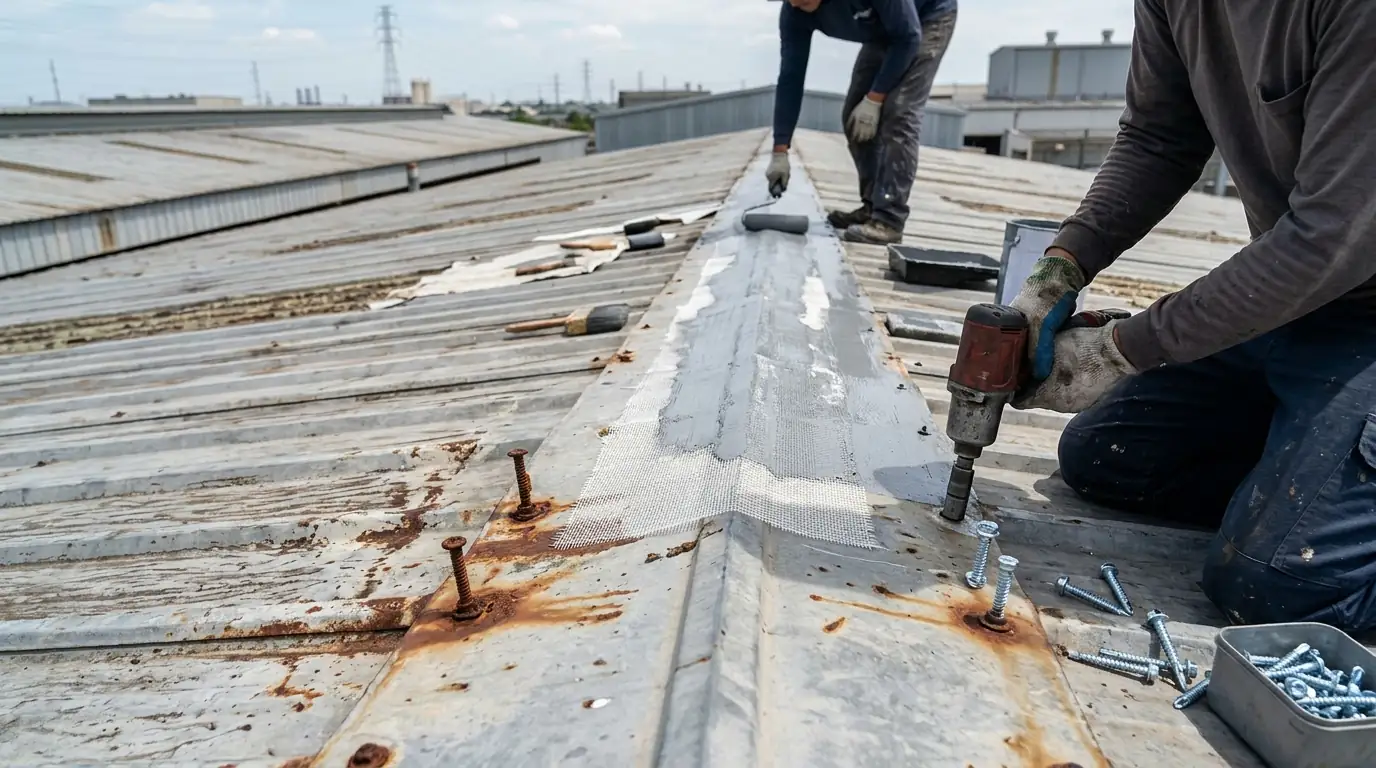
- Fasteners. Metal roof screws replaced or sealed.
- Coating applied. Rolled or sprayed to specified thickness.
- Thickness checked. Mil readings taken across the roof.
Silicone coatings
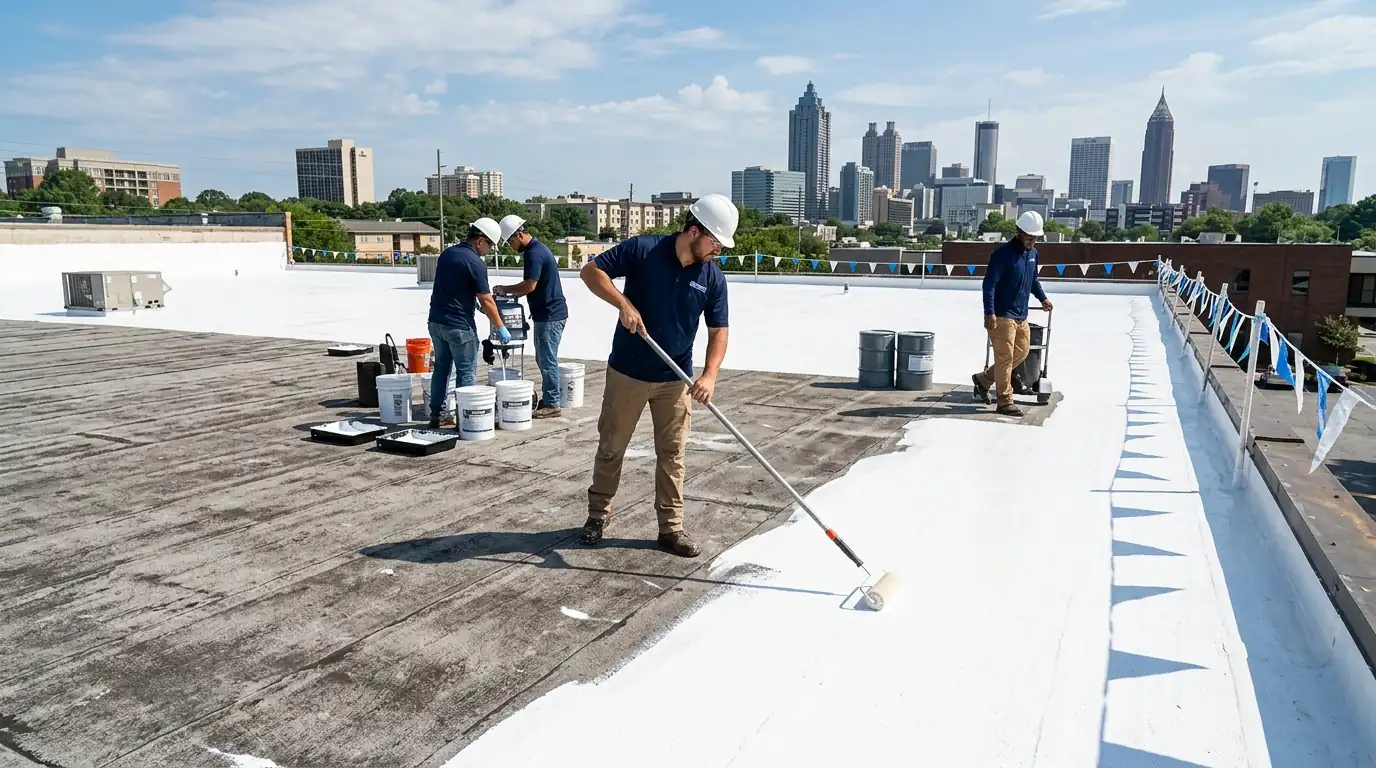
Silicone is the usual choice on flat commercial roofs around Atlanta because it tolerates water that stands for a day or two after a storm without breaking down. It goes on in thick coats, often in a single pass, over a cleaned and primed membrane with seams and penetrations reinforced first. The trade-off is that silicone collects dirt and loses some brightness over time, and very little bonds to it later except more silicone, so a future recoat stays silicone.
Acrylic coatings
Acrylic coatings are water-based, reflect well and stay cleaner than silicone, which keeps them brighter and cooler over the years. They suit sloped metal roofs and low-slope roofs that drain properly, because standing water softens acrylic and wears it away. Acrylic goes on in two or more coats, a base and a top coat, and it is easy to recoat later. Weather matters: it needs dry conditions and warm enough temperatures to cure, which rules out some of the colder winter days.
Coating over metal roofs
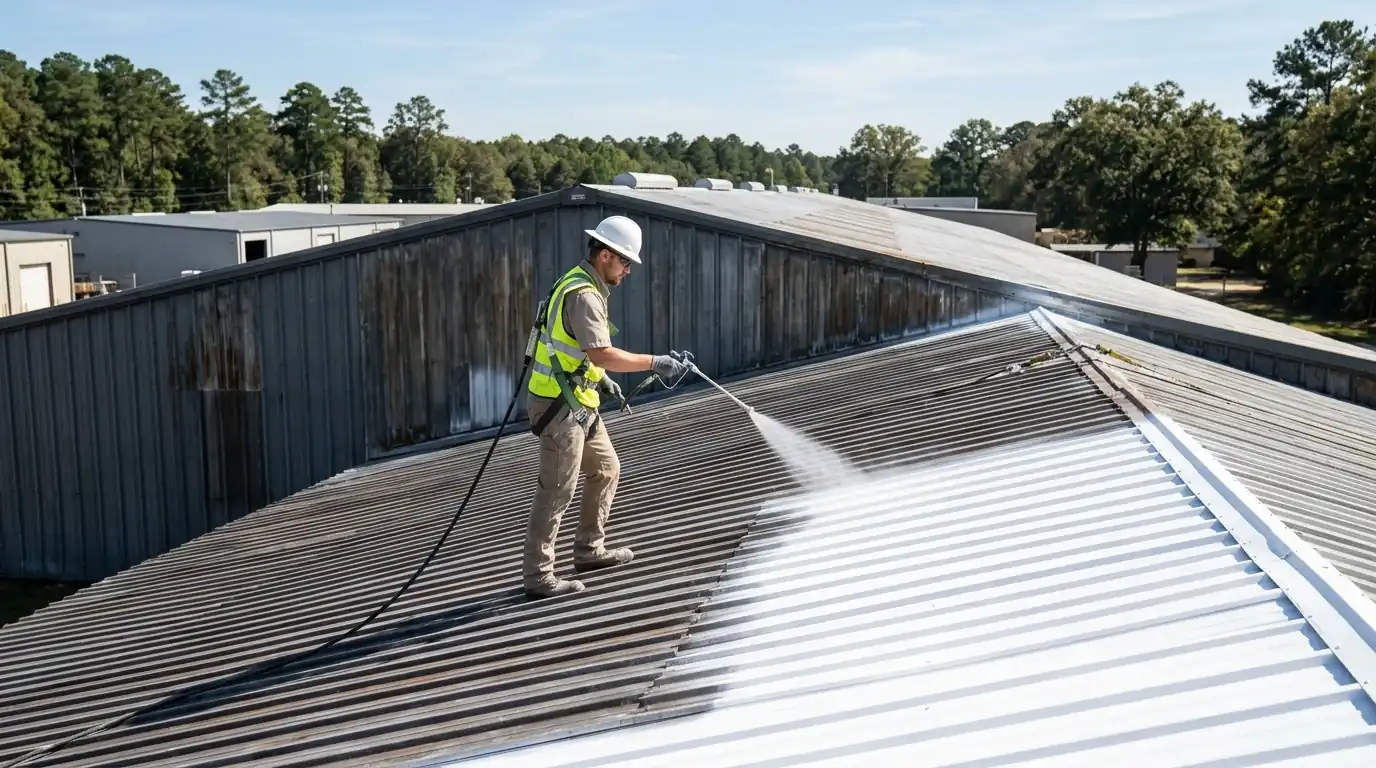
Older metal roofs usually fail at the fasteners and seams long before the panels themselves wear out. Screws back out, washers dry and crack, and rust starts at the laps. We replace or seal every fastener, treat rust, reinforce seams and laps with fabric and base coat, and then coat the whole roof. The result is a sealed, reflective surface over panels that still have years of structural life, without the cost of new metal or a tear-off inside an occupied building.
Heat, reflectance and coatings in Atlanta
The heat island is measurable here: Georgia Tech researchers put intown temperatures up to 15 degrees Fahrenheit above Atlanta's most wooded areas on summer afternoons, and dark roofs add to it. The city's cool-roof ordinance now holds low-slope replacements to a 3-year aged solar reflectance of 0.70 and an aged SRI of 85, a useful yardstick for how bright a white coating should stay. Whether a coating counts toward that rule on a given project is a question for the building department, and we check before quoting.
How it runs
How a coating project runs
- 1
Moisture survey
Wet areas found before quoting.
- 2
Scope and system
Coating type and thickness chosen.
- 3
Repairs and wet areas
Replaced before any coating.
- 4
Clean and prime
Surface prepared for adhesion.
- 5
Reinforce and coat
Seams reinforced, coating applied.
- 6
Check thickness
Mil readings and a photo closeout.
FAQ
Roof coating questions
It depends on the system and the thickness applied. A coating can usually be cleaned and recoated later instead of torn off.
Yes, once the leaks and wet areas are repaired. Coating over wet insulation traps the water.
Silicone where water ponds, acrylic on sloped or well-drained roofs. The roof's drainage usually decides it.
A reflective coating reduces the heat the roof absorbs, which helps the floors below. How much depends on insulation and the building.
Yes. Fasteners, seams and rust are treated first, then the roof is coated.
No. It restores and protects a sound roof. Failed decking or widespread wet insulation still needs replacement.
Related
Other commercial roof work
Commercial Roof Repair
Membrane seam and puncture repair, ponding and drain repair and more.
Learn moreCommercial Roof Maintenance
Covers drain and debris clearing and condition reports and repair budgeting.
Learn moreCommercial Roof Inspection
Post-storm and insurance inspections, plus annual and pre-lease inspections.
Learn moreAging roof, sound deck?
Call for a moisture survey and we will tell you whether a coating or a replacement makes more sense.