Preventive roof care
Roof maintenance and tune-ups for Atlanta homes
Most roof leaks start small: a cracked boot, a valley packed with pine straw, one nail backing out. A tune-up finds them while they are still cheap to fix.
- Calls answered 24/7
- Photos of every fix
- Atlanta service office
Quick answer
Roof maintenance in Atlanta is a yearly visit, ideally before the April to September storm season, that reseals pipe boots and flashing, clears valleys and gutters, and fixes loose or cracked shingles. It catches the small failures behind most leaks, and you get photos of each item so you can see exactly what was done.
The work
What a tune-up actually prevents
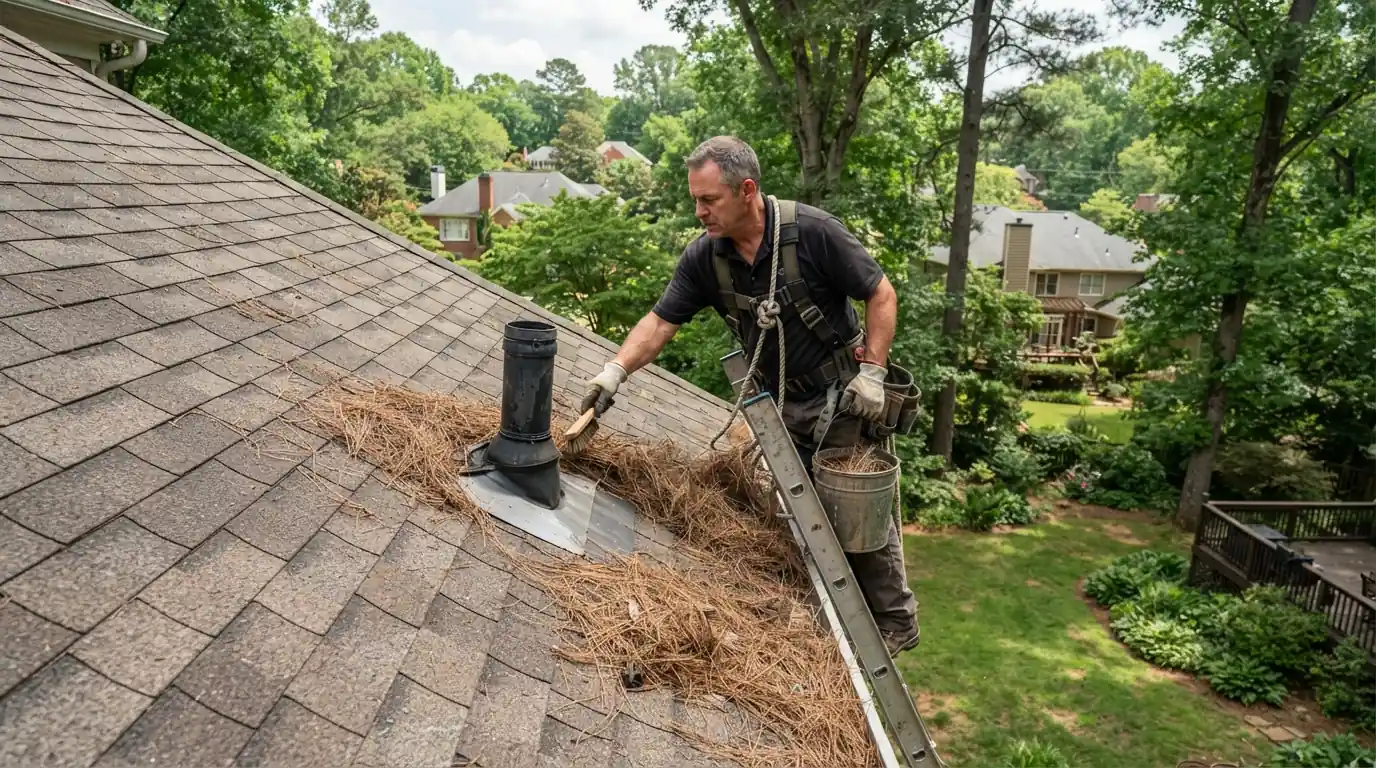
Shingles rarely fail all at once. The leaks come from the parts around them: pipe boots that crack in the sun, flashing sealant that dries out, nails that back out and lift a tab, valleys that dam up with debris. Each is a small fix on a dry day and a ceiling repair after a storm.
A tune-up is hands-on work, not a report. Anything bigger is priced separately, with photos.
Updated September 2026
What is included
What a roof tune-up covers
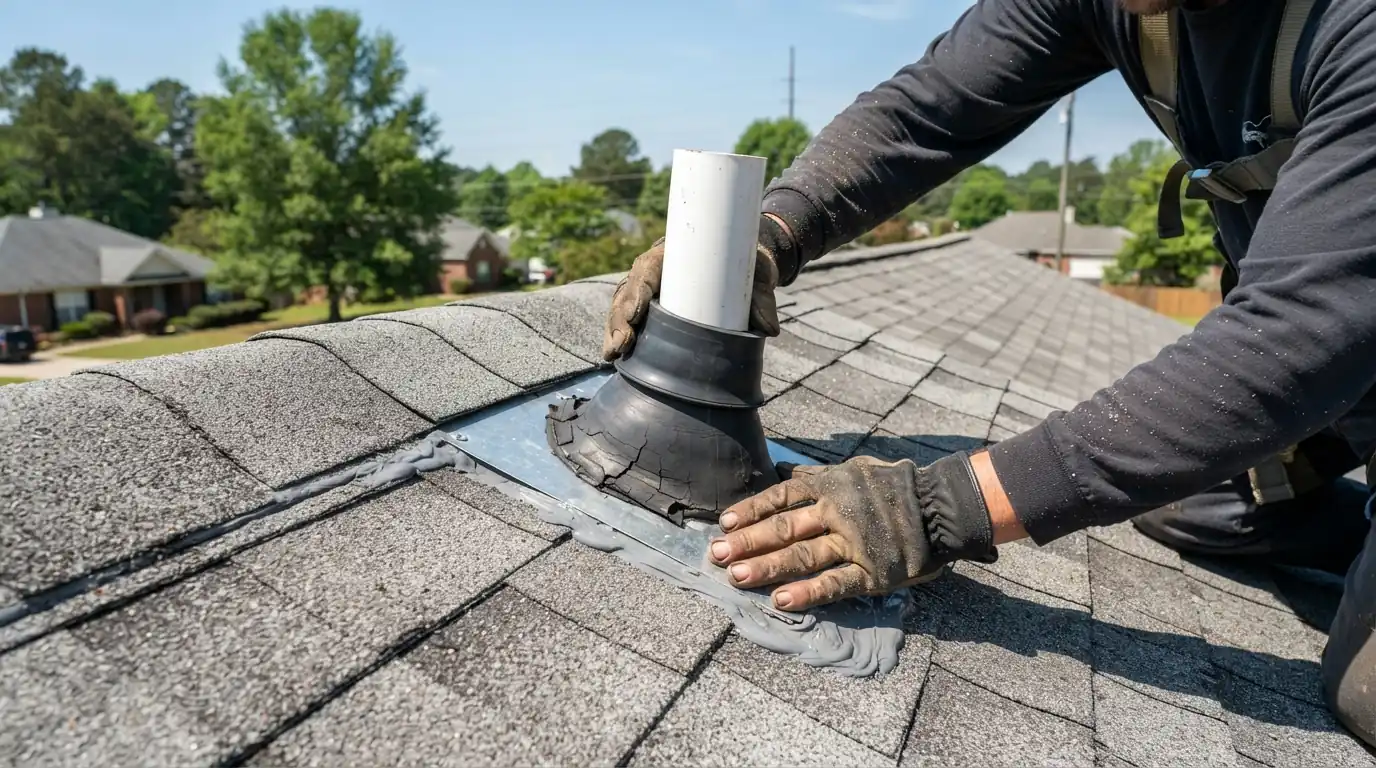
- Pipe boots checked. Cracked or split boots resealed or replaced.
- Flashing resealed. Walls, chimneys and vents where sealant dried out.
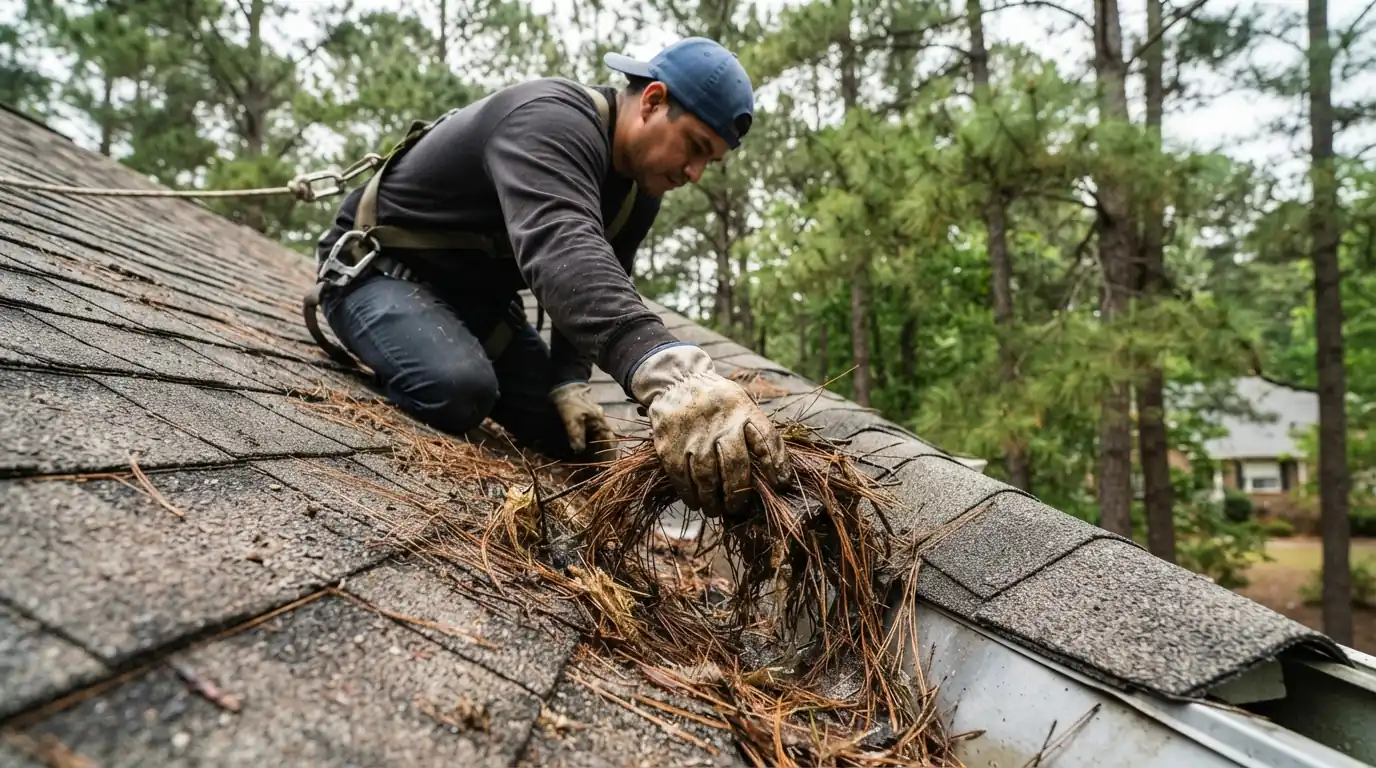
- Valleys cleared. Pine straw and leaf mats removed by hand.
- Exposed nails sealed. Backed-out nails reset and covered.
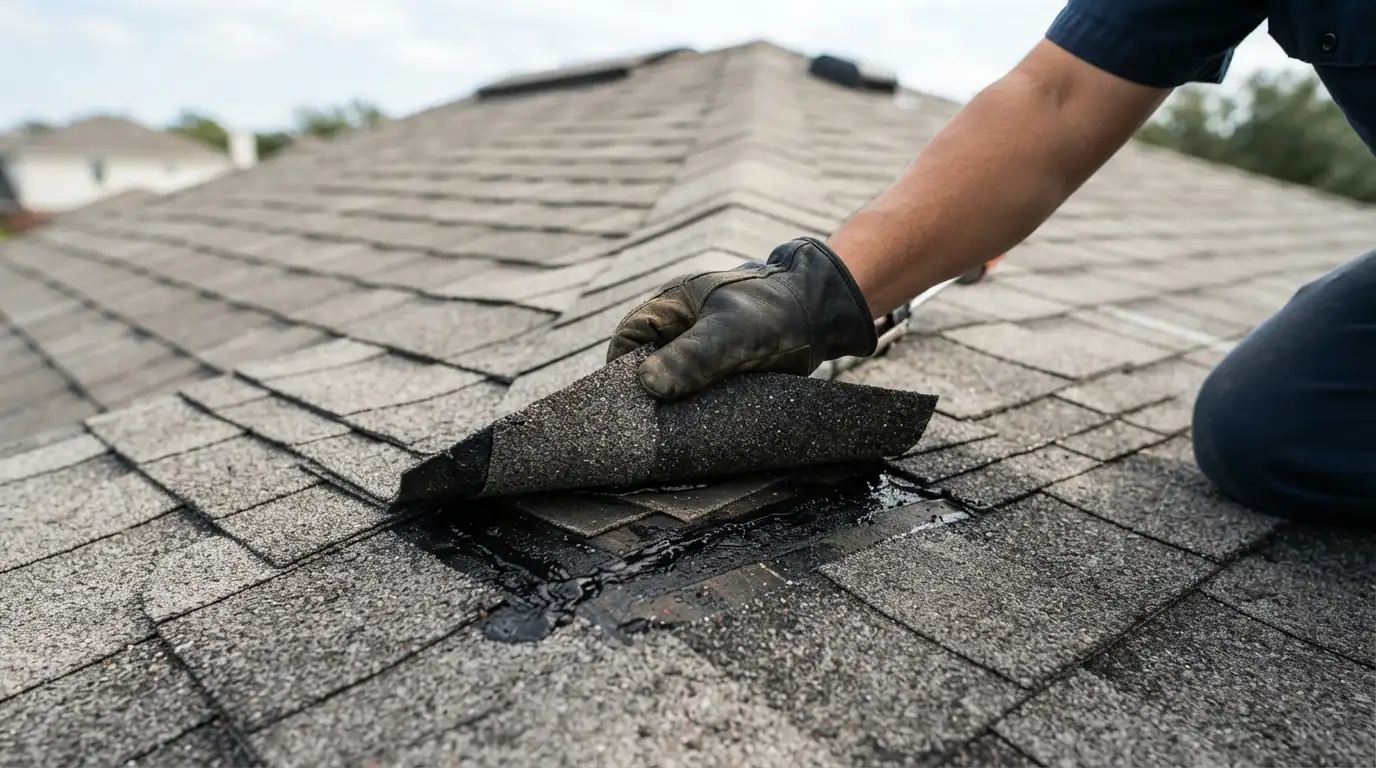
- Loose shingles secured. Unsealed tabs hand-sealed down.
- Gutters checked. Clogs cleared, loose hangers noted.
- Photo report. Every item shown before and after.
Sealant and pipe-boot refresh
The rubber collar around each plumbing vent is the first thing to fail on most roofs, splitting after years of sun while the shingles around it still look new. We check every boot, replace the cracked ones or slip a new collar over them, and reseal flashing where old sealant has shrunk away from a wall or chimney. Sealant goes only where it belongs, at edges and fastener heads, never smeared over a joint that should shed water on its own metal.
Debris and valley clearing
Valleys carry more water than any other part of the roof, and around Atlanta they fill with pine straw, oak leaves and seed pods that dam the flow and push water sideways under the shingles. We clear each valley by hand, pull debris from behind chimneys and skylights, and empty the gutters so the water has somewhere to go. Roofs under heavy canopy may need this more than once a year, and we will tell you honestly if yours does.
Minor shingle and flashing fixes
A tune-up covers the small repairs that do not need a separate trip: a few lifted tabs hand-sealed, a cracked shingle swapped for a match, a backed-out nail reset and sealed, a loose drip edge refastened. Anything bigger, like soft decking, widespread granule loss or a flashing rebuild, gets photographed and priced on its own so the tune-up stays predictable. You decide whether to handle it now or plan it for next season, and nothing is added without your approval.
Timing maintenance around Atlanta's storm season
Metro Atlanta's severe weather runs heaviest from April through September, and storms like the late-July cells that loosened shingles across Cobb County and Gwinnett County go straight for the weak spots a tune-up would have caught, so late winter is the best window. The canopy matters too. With more than fifty inches of rain a year and trees over so many roofs, valleys and gutters refill quickly, and a heavily shaded roof often earns a second visit in fall once the leaves are down.
How it runs
How a roof tune-up visit runs
- 1
Ground walk first
Gutters, downspouts and visible slopes checked.
- 2
Attic look where accessible
Stains or daylight point to trouble spots.
- 3
Roof walk
Every boot, flashing joint and valley inspected.
- 4
Clean and clear
Valleys, chimney backs and gutters emptied.
- 5
Fix the small items
Boots, sealant, nails and loose tabs handled.
- 6
Photo report
Before and after shots, plus anything needing a quote.
DIY or call
Maintenance you can do, and what to leave to us
| Task | Doing it yourself | Having us do it |
|---|---|---|
| Clearing gutters | Reasonable from a ladder on a one-story home. | Done with every tune-up, at any height. |
| Checking from the ground | Binoculars show missing or lifted shingles. | Close look at boots, flashing and nails. |
| Resealing flashing | Sealant smeared over joints can trap water. | The right sealant, only where it belongs. |
| Replacing a shingle | Easy to crack the neighbors while lifting. | Matched shingle, neighbors resealed. |
Ground checks after a big storm are always worth doing yourself.
Cost
What a maintenance visit costs depends on
A tune-up is priced after we see the roof, and repairs beyond it are quoted separately.
- Roof size
More slopes, more boots and flashing to check.
- Pitch and stories
Steep or tall roofs need more rigging.
- Penetrations
Every vent, boot and skylight gets checked.
- Debris load
Heavy canopy means more clearing.
- Gutter length
Longer runs take longer to empty.
- Small fixes found
Replaced boots and shingles add material.
FAQ
Roof maintenance questions
Once a year for most Atlanta roofs, and twice for roofs under heavy tree cover where valleys and gutters fill quickly.
Late winter or early spring, before the April to September storm season, so small failures are fixed before the heaviest weather.
No. An inspection documents condition for a sale, claim or plan. A tune-up is hands-on work that fixes small problems on the spot.
You get photos and a separate price. Nothing beyond the tune-up is done without your approval.
It can add useful years by keeping water out of the deck, but it cannot reverse worn-out shingles. We tell you when a roof is near the end.
Yes. Metal roofs get fastener and seam checks; flat roofs get seam, drain and flashing checks.
Related
Work a tune-up sometimes turns up
Small roof problems are cheap to fix
Call to book a tune-up and you will get photos of every item we fix.