Guide
The Atlanta cool roof ordinance, explained for homeowners
Since June 2026, every new roof and full replacement inside Atlanta city limits has to meet a reflectance standard. For most homeowners it changes the product on the quote, not the budget.
- Calls answered 24/7
- In effect June 2026
- City of Atlanta only
Quick answer
Atlanta's cool roof ordinance, passed June 2, 2025 and in effect since June 2026, requires new roofs and full replacements inside City of Atlanta limits to meet reflectance standards. Steep-slope roofs need a 3-year aged solar reflectance of at least 0.21 and an aged SRI of at least 20, which cool-rated shingles meet in many colors. Repairs are not covered.
- What the ordinance is
- The numbers, by roof type
- Who it applies to, and who it doesn't
- Do I have to get a white roof?
- What it costs
- How compliance is checked
- Why the city did it
What the ordinance is
The Atlanta City Council passed Ordinance 25-O-1310 unanimously on June 2, 2025. It amends the city's building code to require reflective roofing on new construction and full roof replacements, with a one-year lead-in that brought it into force in June 2026. Unlike many cool-roof rules that cover only flat commercial roofs, Atlanta's applies to all building types and zoning districts, which includes the pitched roofs on single-family homes. It also created a simplified permitting procedure so the city can enforce it.
The numbers, by roof type
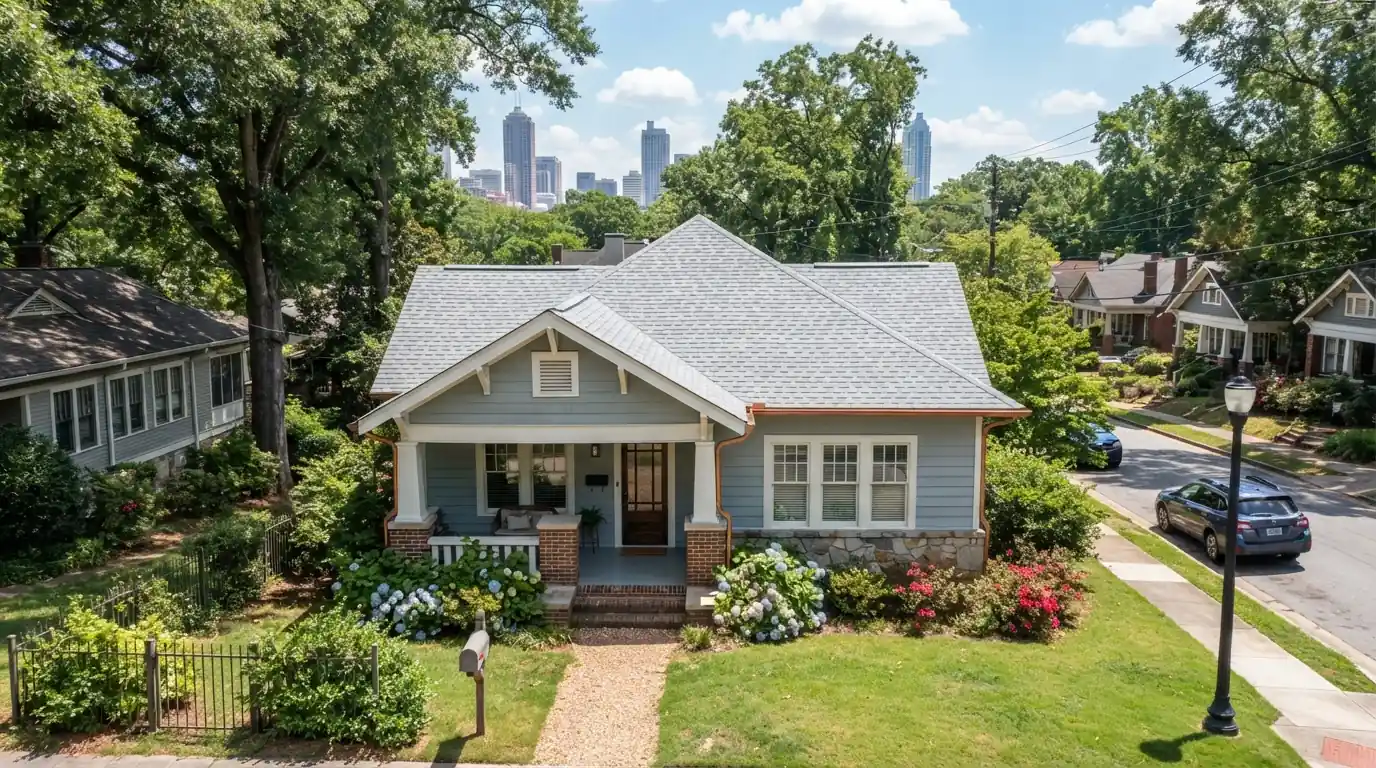
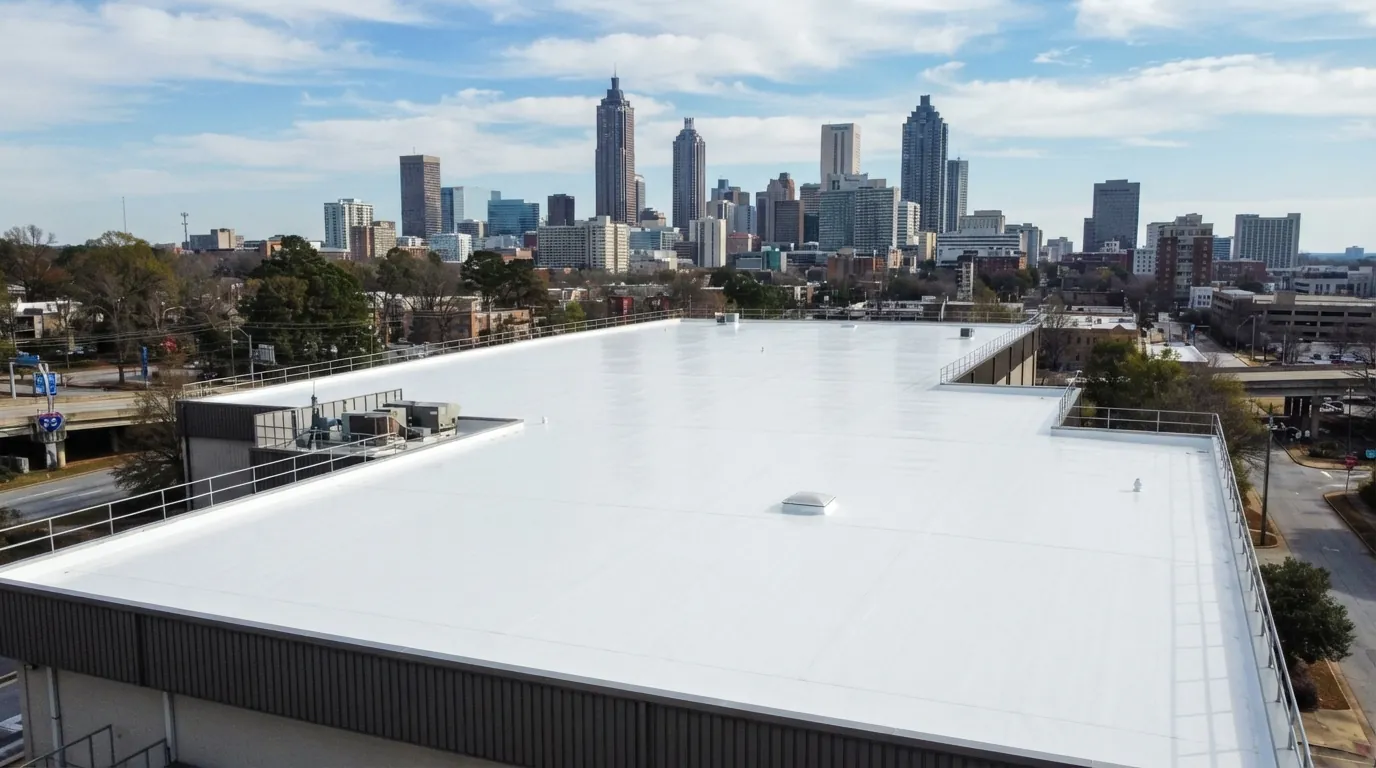
Both standards use 3-year aged values, meaning the roof has to perform after three years of weathering, not just on the day it goes on. Steep-slope roofs, the pitched roofs on most houses, need an aged solar reflectance of at least 0.21 and an aged Solar Reflectance Index of at least 20. Low-slope roofs are held to a much higher bar, summarized by the ordinance tracker as an aged reflectance of 0.70 and an SRI of 85.
One caution: some code summaries list lower low-slope figures, so for flat roofs the permit reviewer's reading on your project is what counts. For a typical pitched house roof, the steep-slope numbers are the ones that matter.
Who it applies to, and who it doesn't
The rule applies inside City of Atlanta limits. It is a city law, so separate jurisdictions such as Marietta in Cobb County and Woodstock in Cherokee County are not governed by it, and neither are other independent cities around the metro. If you are not sure whether your address is inside city limits, check before you sign a contract.
It covers full replacements and new construction. Minor repairs are not held to the replacement standard, although the city's permitting threshold decides when a project counts as a replacement, so splitting a full re-roof into small repair jobs is a bad idea.
Do I have to get a white roof?
No. The steep-slope threshold was set to be achievable. Cool-roof rated architectural shingles use reflective granules and come in a range of grays, browns and darker tones that meet it, and metal roofs with rated finishes meet it easily. The ordinance also allows darker materials when added insulation achieves equivalent thermal performance, although that route takes more paperwork.
What it costs
For most homes, very little extra. Cool-roof rated architectural shingles are generally priced in line with standard architectural shingles from the same manufacturers, and on flat roofs white membranes were already the common choice. The practical cost is making sure the quote names a rated product, because an older unrated shingle can fail inspection.
How compliance is checked
Compliance is shown through a product rating from the Cool Roof Rating Council or an ENERGY STAR roof-product listing. The permit names the product, and the final inspection confirms the installed roof matches what was permitted. Ask your roofer for the rated spec sheet for the exact shingle and color going on your house, and keep it with your permit records for resale and insurance.
Why the city did it
Atlanta runs hot. Georgia Tech researchers have measured intown neighborhoods up to 15 degrees Fahrenheit warmer than the city's most forested areas on summer afternoons, and dark roofs are part of the reason. The ordinance is projected to cool the city by about 2.4 degrees Fahrenheit in peak summer, and a cooler roof also means a cooler attic for the house underneath it.
Replacing a roof inside city limits?
We quote rated products by default and name them on the permit, so the roof passes inspection the first time.
Call (470) 802-9803FAQ
Related questions
Minor repairs are not held to the replacement standard. Full replacements and new construction are.
No. It is a City of Atlanta law, and those are separate jurisdictions.
Many darker cool-rated colors meet the steep-slope standard. Check the rated color list for the product you like.
Usually not by much. Rated architectural shingles are generally priced in line with standard ones.
The product's CRRC or ENERGY STAR rating is named on the permit and checked at final inspection. Keep the spec sheet.
Keep reading
More roofing guides for Atlanta homeowners
Choosing a Roofing Contractor in Atlanta: What to Ask
The questions that separate a solid roofing quote from a risky one.
Read the guideFiling a roof insurance claim in Georgia, step by step
The claim process from storm day to final payment, and where claims go wrong.
Read the guideGutter sizing for Atlanta rain
How roof size, pitch and Atlanta's heavy rain set the size.
Read the guideQuestions about the rule and your roof?
Call and we will tell you whether your address is covered and which rated products fit your house.