Guide
How long an Atlanta roof really lasts, and what shortens it
A shingle package might promise decades, but a roof's real life depends on heat, shade, storms, ventilation and how it was installed. In Atlanta, several of those work against it at once.
- Calls answered 24/7
- Lifespan by material
- Local wear factors
Quick answer
Architectural asphalt shingles on an Atlanta home typically last about 25 to 30 years, and standing seam metal can last 50 years or more. Heat, humidity, tree shade, poor attic ventilation and storm damage shorten those numbers; good ventilation, clear valleys and prompt repairs help a roof reach them. Curling, heavy granule loss and repeated leaks signal the end.
- Typical lifespans by material
- Heat and sun
- Rain, shade and trees
- Storms
- Ventilation and installation
- Signs a roof is near the end
- How to get the most out of a roof
Typical lifespans by material
Architectural asphalt shingles, the most common roof on Atlanta homes, typically last about 25 to 30 years. Older three-tab shingles, still found on many houses, generally wear out sooner. Standing seam metal can last 50 years or more, and exposed-fastener metal panels last a long time too, provided their screws are maintained.
Low-slope membranes on porches and additions depend heavily on drainage: a membrane that ponds wears out much faster than one that drains within a day or two of rain.
Heat and sun
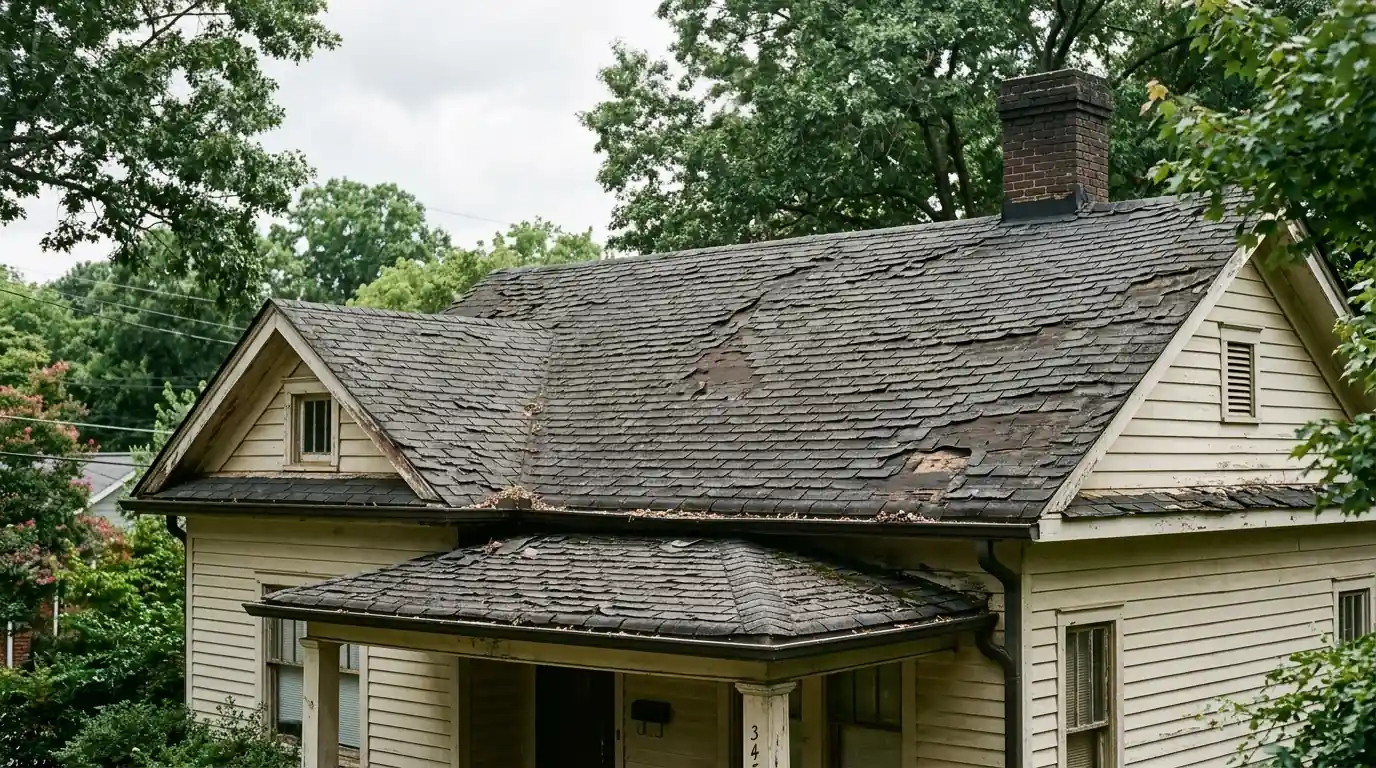
Summer heat bakes asphalt from above, and an attic that cannot vent bakes it from below. Intown Atlanta can run up to 15 degrees Fahrenheit warmer than the city's leafiest areas on summer afternoons, which adds to the load on dark roofs. Heat dries out the asphalt, loosens granules and makes shingles brittle, and brittle shingles crack in wind and hail.
Rain, shade and trees
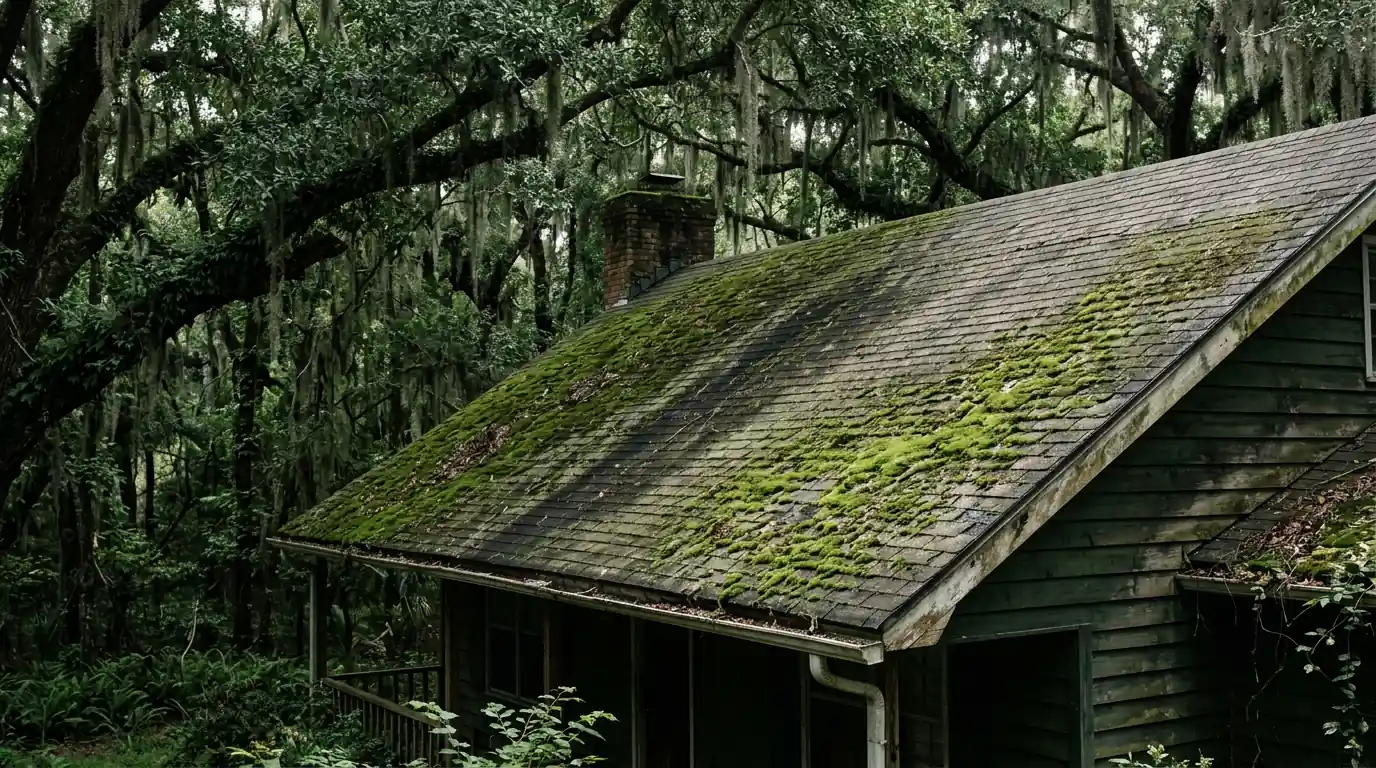
Atlanta gets more than fifty inches of rain a year, and its large tree canopy keeps many roofs shaded and damp. That combination feeds algae and moss on north slopes and fills valleys and gutters with debris that dams water under the shingles. Shade is pleasant for the house and hard on the roof, so shaded roofs need their valleys cleared and their growth treated more often.
Storms
Metro Atlanta's severe-weather season runs from April through September, and one storm can take years off a roof. Hail bruises shingles and knocks granules loose; wind breaks the seal strips that hold tabs down. Neither always leaks right away, which is why a roof that came through a big storm deserves an inspection even if it looks fine.
Ventilation and installation
Two roofs of the same age can be in very different shape because of what is under them. A balanced ridge and soffit vent keeps attic heat and moisture down; a starved attic shortens shingle life and can rot the decking from below. Installation matters just as much: nails placed high or too few per shingle, missing drip edge, and reused flashing all show up years later as early failures.
Signs a roof is near the end
Look for shingles curling at the edges or cupping in the middle, bare patches where granules are gone, heavy grit in the gutters, cracked or missing tabs across several slopes, and leaks in more than one place. Inside, dark or sagging decking in the attic is a strong sign. One of these can be a repair; several together usually mean it is time to plan a replacement.
How to get the most out of a roof
Keep valleys and gutters clear, especially under trees. Fix pipe boots and flashing when they first fail instead of after a ceiling stains. Make sure the attic is ventilated. And after any major hail or wind event, have the roof checked. None of this makes an old roof new, but it keeps a sound one from failing early.
Wondering how much life your roof has left?
An inspection gives you an honest remaining-life range, so you can plan instead of react.
Call (470) 802-9803FAQ
Related questions
Architectural shingles typically last about 25 to 30 years, less under heavy shade, poor ventilation or storm damage.
Standing seam metal can last 50 years or more with little upkeep. Exposed-fastener panels need screw maintenance to get there.
It can keep a sound roof from failing early by stopping leaks and debris damage, but it cannot reverse worn-out shingles.
Often, if the damage is isolated. If it is failing in several places, repairs usually buy less time than they cost.
Heat, trapped attic moisture, shade and debris, and storm damage that goes unrepaired.
Keep reading
More roofing guides for Atlanta homeowners
Roof Leak After a Storm in Atlanta: What to Do First
Safety, containment and photos in the first hour, and when to call for a tarp.
Read the guideRoof permits in Atlanta, DeKalb and Gwinnett: who issues them and when you need one
City or county, when a re-roof needs a permit, and where historic reviews and the cool-roof rule come in.
Read the guideShingle vs metal roofs
Shingles versus metal roofing in Atlanta: 2026 installed prices, lifespan, heat, storms and the city's cool-roof rule compared side by side.
Read the guideNot sure how old your roof really is?
Call for an inspection and a written estimate of how much life it has left.