Guide
How to spot hail damage on an Atlanta roof
Hail rarely leaves a hole in a roof. It leaves bruises and dents that are easy to miss from the driveway, and the leaks tend to show up weeks later.
- Calls answered 24/7
- Ground checks first
- What roofers look for
Quick answer
Hail damage on an Atlanta roof shows first on soft metal: dents in gutters, downspouts, vent caps and chimney flashing, plus shingle granules washed to the downspouts. On the shingles themselves, look for dark, soft bruises where granules are gone and cracked tab corners. Most of it cannot be seen from the driveway, so a close inspection confirms it.
- Start with what you can see from the ground
- What hail does to a shingle
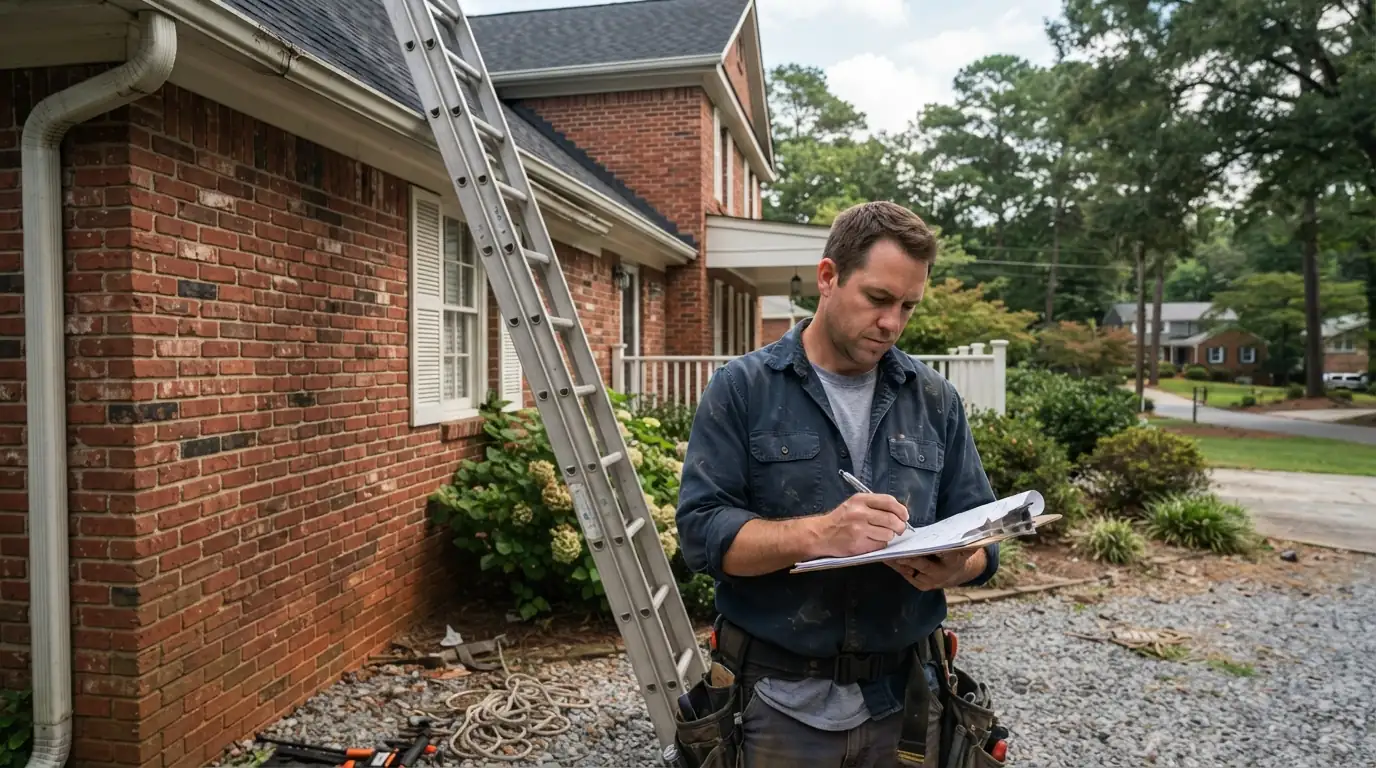
- How a roofer checks for hail
- Hail damage versus ordinary wear
- The storms that hit the metro in 2026
- Before you file a claim
Start with what you can see from the ground
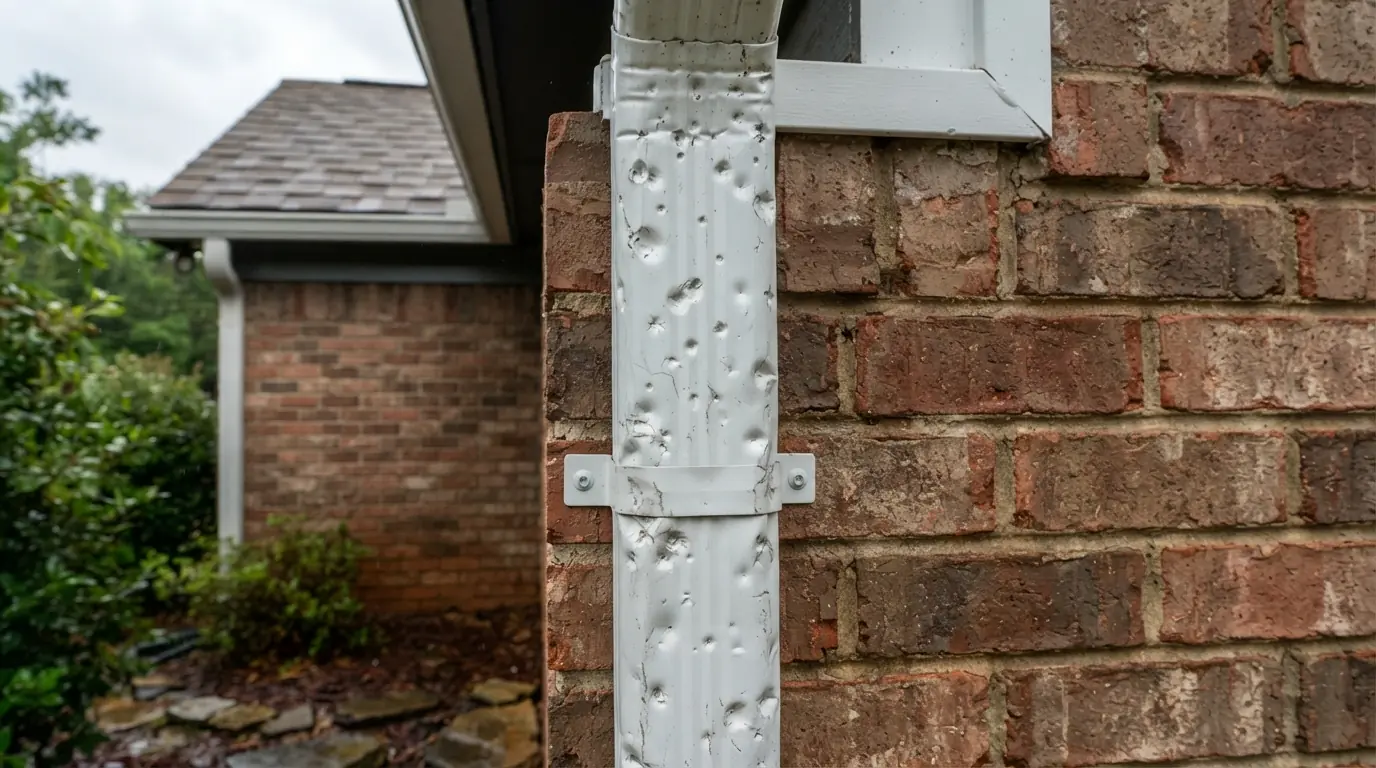
Walk around the house the day after the storm. Look at the gutters and downspouts for round dents, and at the splash blocks for piles of dark grit, which are granules knocked off the shingles. Check the car, the mailbox, the grill cover and any window screens: if hail dented or tore those, it reached the roof too.
Siding and fences can show spatter marks, small clean spots where hail knocked off dirt and mildew. Those marks also show which direction the storm came from, which tells you which slopes took the worst of it.
What hail does to a shingle
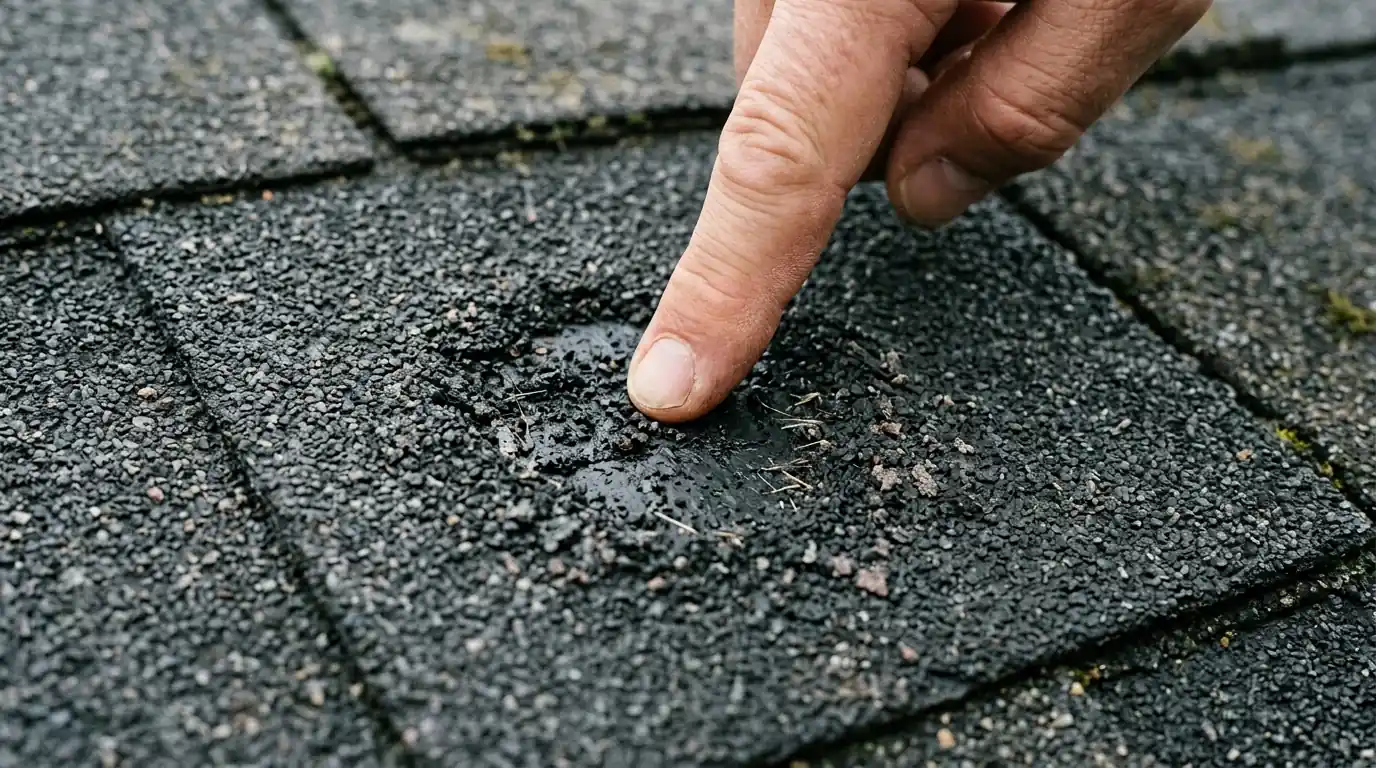
An asphalt shingle is a fiberglass mat coated in asphalt and topped with granules that protect it from the sun. A hailstone that lands hard crushes the granules and can fracture the mat underneath. The shingle still sheds water at first. Over the following months, sun works on the exposed asphalt, the bruise softens and cracks, and water starts getting through.
How a roofer checks for hail
A proper inspection walks every slope where it is safe. Roofers mark a test square, usually ten feet by ten feet, on each slope and count the hits inside it, pressing each suspected bruise to feel for softness. Metal on the roof gets photographed too: vent caps, pipe collars, chimney caps and flashing all dent in a way that records hail size.
The result is a set of photos with a scale in the frame, organized by slope. That is what an adjuster needs to see, and it is far more useful than a handful of phone pictures taken from the yard.
Hail damage versus ordinary wear
Not every dark spot is hail. Aging shingles lose granules evenly across a slope, blisters form small raised bubbles that pop, and foot traffic scuffs shingles near chimneys and vents. Hail damage is random in placement, shows a soft or fractured center, and usually appears on the slopes that faced the storm.
The distinction matters, because insurers cover storm damage and not wear. A good inspection report says plainly which is which.
The storms that hit the metro in 2026
Several 2026 storms are worth knowing about. On February 26, hail from pea to ping-pong-ball size fell across the north Georgia mountain counties, and homeowners downwind in Cherokee County, Cobb County and Woodstock reported dented gutters and granules at their downspouts. On July 3, a warned storm over Acworth brought quarter-size hail and 60 mph gusts, and on July 28 dime-to-quarter hail and 60 mph winds crossed much of the metro.
If your neighborhood sat under any of those storms and nobody has looked at your roof, it is worth an inspection even if nothing is leaking.
Before you file a claim
Wind and hail are standard covered perils on most Georgia homeowner policies, while age and wear are not. Most policies also require prompt notice of the loss, and many set a window of one to two years from the date of loss. Get the roof inspected and documented first, so you know whether the damage is real before you file, and keep the storm date with the photos.
Think the hail hit your roof?
We inspect every slope, photograph what we find, and tell you plainly whether it is worth a claim.
Call (470) 802-9803FAQ
Related questions
Yes. Most hail damage is bruising and granule loss that looks minor from the ground and leaks later.
It depends on the roof's age and the wind behind the hail. Older, brittle shingles are damaged by smaller stones than a newer roof.
Not always, but they show hail hit the house hard enough to dent metal. The shingles should be checked.
Many Georgia policies set a window of one to two years from the date of loss, but most require prompt notice. File sooner rather than later.
We would rather you did not. Ground checks are useful and safe; leave the roof itself to someone with fall protection.
Keep reading
More roofing guides for Atlanta homeowners
How Long a Roof Lasts in Atlanta, GA
Typical lifespans by material, what Atlanta weather does to them, and end-of-life signs.
Read the guideYour roof is leaking in a storm: what to do in the first hour
Safety, containment and photos in the first hour, and when to call for a tarp.
Read the guideRoof permits in Atlanta, DeKalb and Gwinnett
Who issues the roof permit in Atlanta, DeKalb and Gwinnett, when a re-roof needs one, and where historic reviews fit.
Read the guideHail in your neighborhood?
Call for a slope-by-slope inspection with photos you can keep, whether or not you file.