Guide
Filing a roof insurance claim in Georgia, step by step
A roof claim is mostly paperwork and timing. Homeowners who document early, report promptly and understand the scope tend to have far smoother claims than those who wait for a leak.
- Calls answered 24/7
- Step by step
- Georgia timing
Quick answer
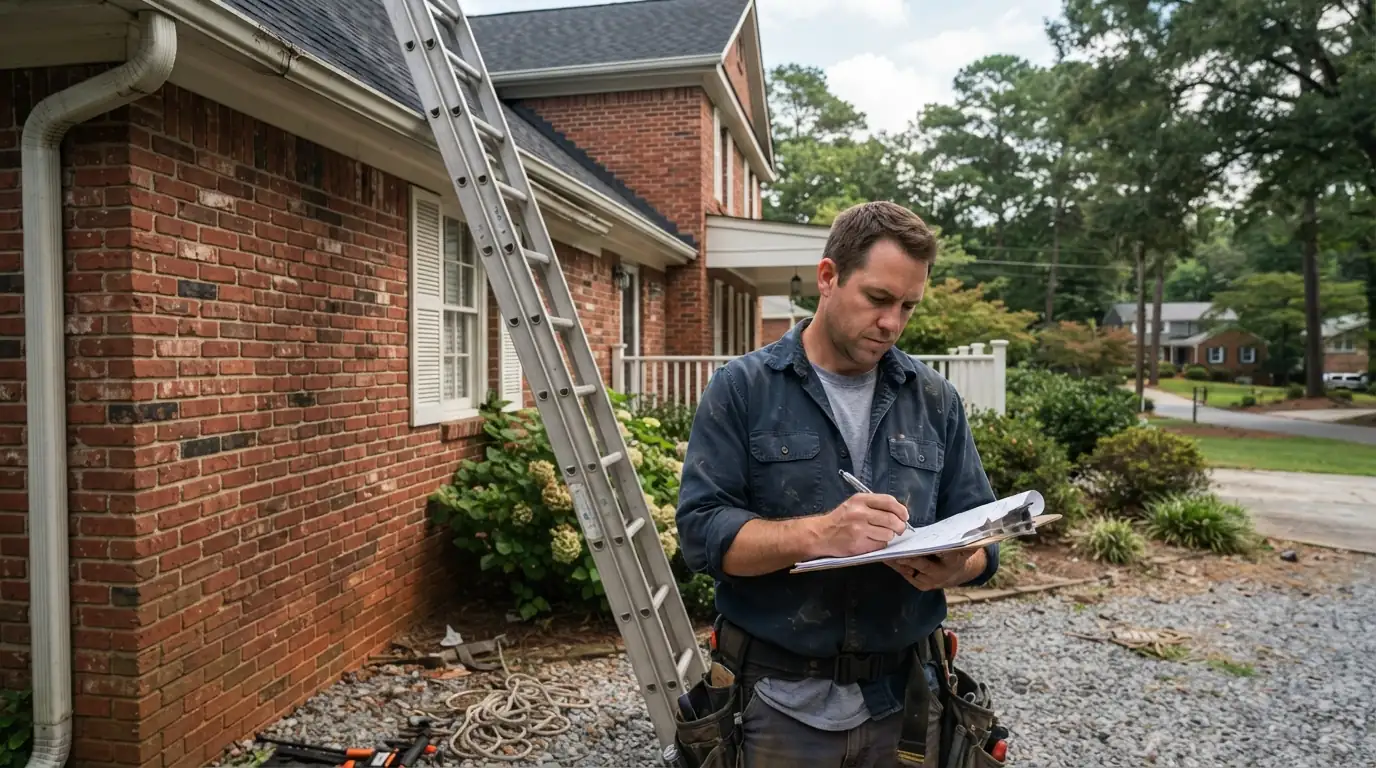
To file a roof insurance claim in Georgia, document the damage with dated photos soon after the storm, get the roof inspected, and report the loss to your insurer promptly, since most policies require prompt notice and many set a one-to-two-year window. An adjuster then inspects, the insurer approves a scope, and repairs follow, with you paying the deductible.
- Step 1: Make the house safe and document the damage
- Step 2: Get the roof inspected
- Step 3: Report the loss promptly
- Step 4: The adjuster's inspection
- Step 5: Understand the money
- Step 6: Supplements and disagreements
- Mistakes that cost homeowners
Step 1: Make the house safe and document the damage
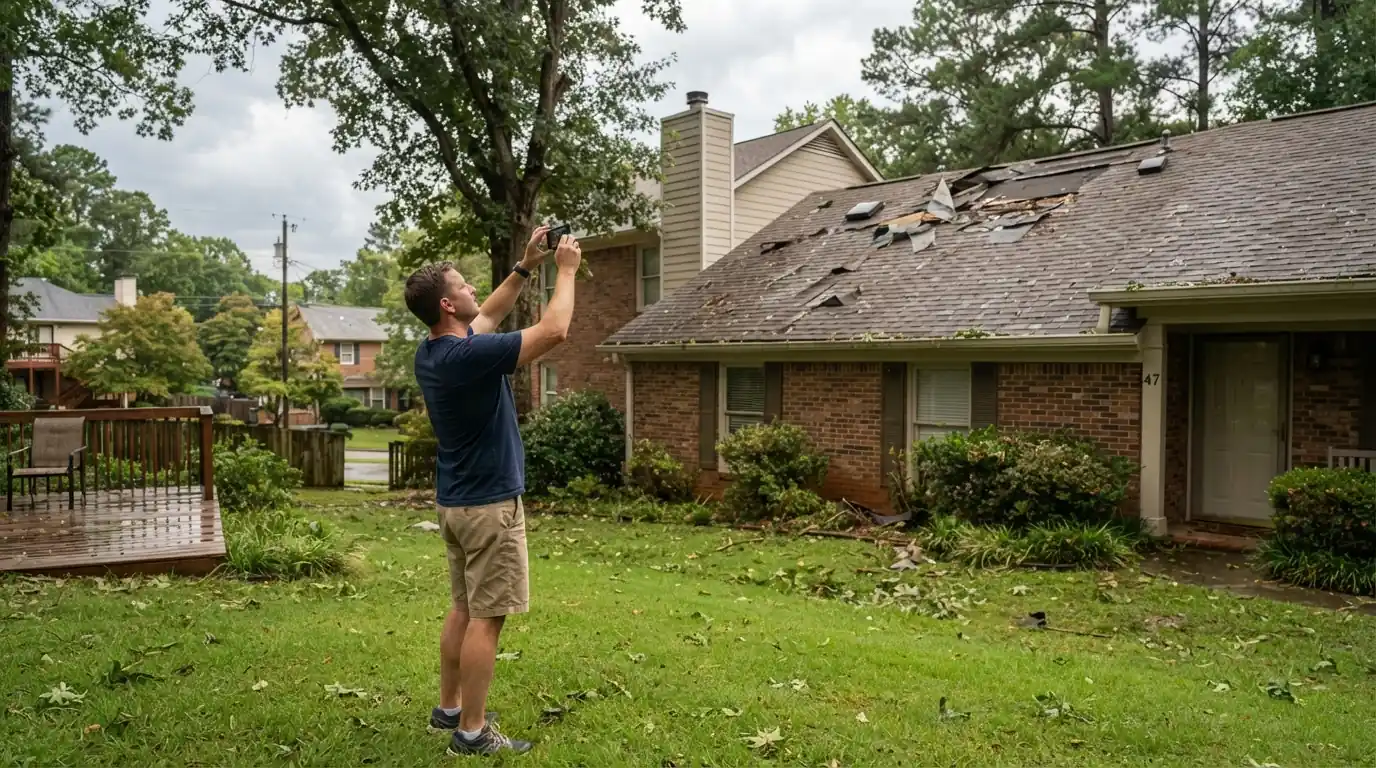
Start inside: stop water where you can, move valuables, and take photos and video of every stain, drip and wet spot. Outside, photograph shingles or debris in the yard, dented gutters and anything the storm broke. Your phone records the date and time, which ties the damage to the event.
If the roof is open, get it tarped. Covering an opening protects the house and the claim, and insurers expect reasonable steps to limit further damage. Keep the receipt and the before-and-after photos.
Step 2: Get the roof inspected
Before filing, many homeowners have the roof inspected so they know whether the damage is actually storm-related. Most Georgia homeowner policies cover hail and wind as causes of loss and exclude wear and age, so a report that separates the two is the backbone of the claim. A good inspection includes slope-by-slope photos, test squares for hail, and damaged metal such as vents and gutters.
Step 3: Report the loss promptly
Most Georgia policies require prompt notice of a loss, and many set a window of one to two years from the date of loss. Waiting risks the claim and makes it harder to show the damage came from a specific storm. When you call, give the storm date, a short description, and whether any temporary repairs were made.
Step 4: The adjuster's inspection
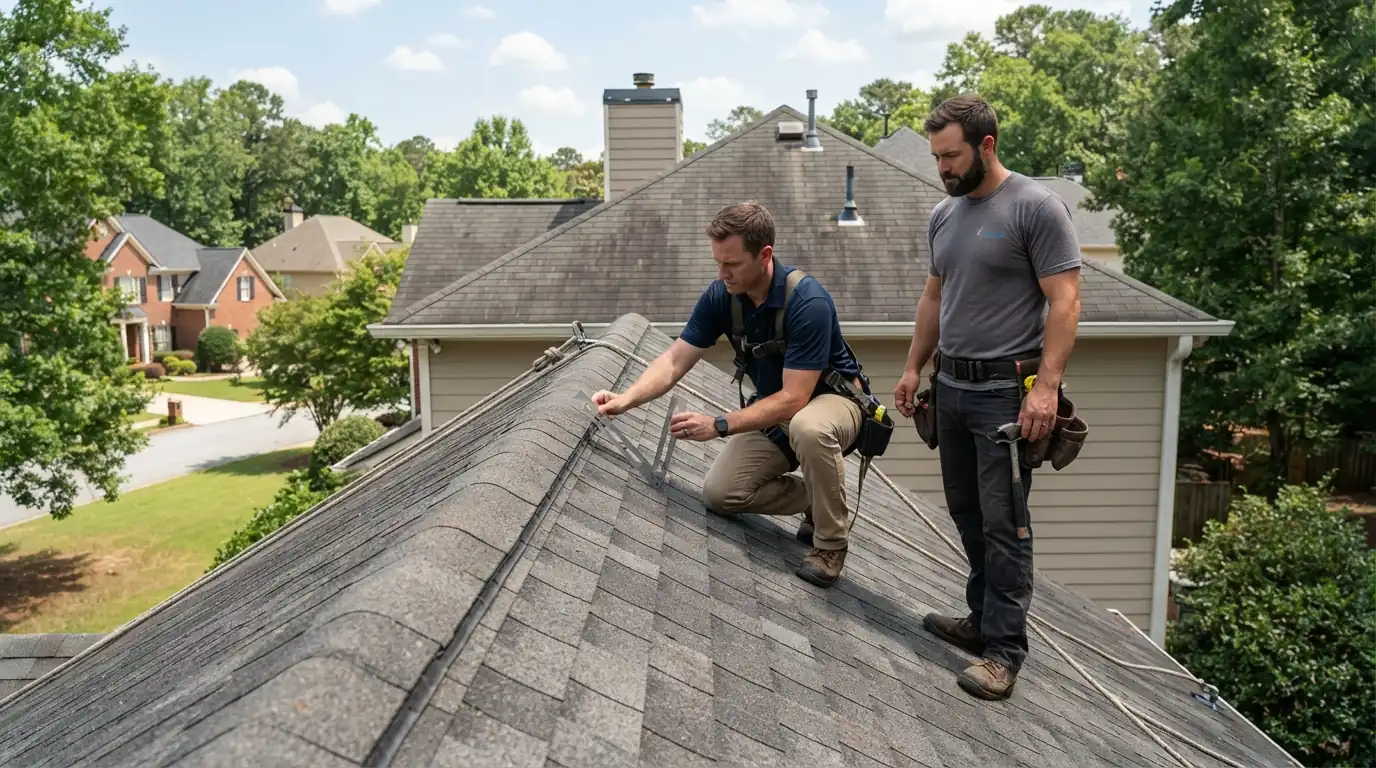
The insurer sends an adjuster to inspect the roof. It helps to have your roofer there, with your permission, to point out each marked hit, lifted tab and dented vent, and to share measurements. The adjuster decides what the policy covers; the roofer's job is making sure nothing is missed because it was hard to see.
Afterward, you receive a scope of loss, the list of work and prices the insurer agrees to pay for. Read it line by line against your roofer's estimate.
Step 5: Understand the money
Your deductible is yours to pay. Beyond it, how the insurer pays depends on your policy: some pay replacement cost, often in two payments with depreciation released after the work is done, while others pay actual cash value, which subtracts wear. Ask your insurer which applies and whether your policy includes ordinance or law coverage, which can matter for code-required items such as drip edge or Atlanta's cool-roof rule.
Step 6: Supplements and disagreements
Some needed items only show up once work starts, such as rotten decking found at tear-off. Those are documented with photos and submitted to the insurer as a supplement. If you disagree with the insurer's scope, your policy describes the options; get the reason for any denial in writing, and keep your photos and reports organized.
Mistakes that cost homeowners
The most common are waiting too long, climbing onto a wet roof to take pictures, signing a contract on the spot with a door-knocker after a storm, and letting a small leak go until the interior damage is bigger than the roof damage. The claim is yours. A roofer can document and repair, but you stay in charge of every decision.
Storm damage on your roof?
Get an inspection and photo report before you file, and a straight answer about whether it is worth a claim.
Call (470) 802-9803FAQ
Related questions
No. You choose who repairs your home. The insurer decides what the policy covers.
Many Georgia policies allow one to two years from the date of loss, but most require prompt notice. Sooner is safer.
That depends on your insurer and policy. Ask them directly before you file if it concerns you.
Your roofer can document the missed items with photos, and you can ask the insurer to review them.
Yes. Photograph the damage first, then cover it. Temporary repairs protect the house and the claim.
Keep reading
More roofing guides for Atlanta homeowners
Gutter Sizing for Atlanta Rain: 5-Inch or 6-Inch Gutters?
How roof area, pitch, valleys and Atlanta's downpours decide gutter and downspout size.
Read the guideHow to spot hail damage on an Atlanta roof
What to check from the ground after hail, and what a close inspection finds.
Read the guideHow long a roof lasts in Atlanta
Typical lifespans for shingle and metal roofs in Atlanta, the local conditions that wear them faster, and the signs a roof is near its end.
Read the guideFiling after a storm?
Call for a documented inspection so you know what the storm did before you talk to your insurer.