Guide
Your roof is leaking in a storm: what to do in the first hour
Water coming through the ceiling in the middle of a storm feels urgent, and it is. But the first hour is about keeping people safe and limiting damage, not fixing the roof.
- Calls answered 24/7
- Step by step
- Safety first
Quick answer
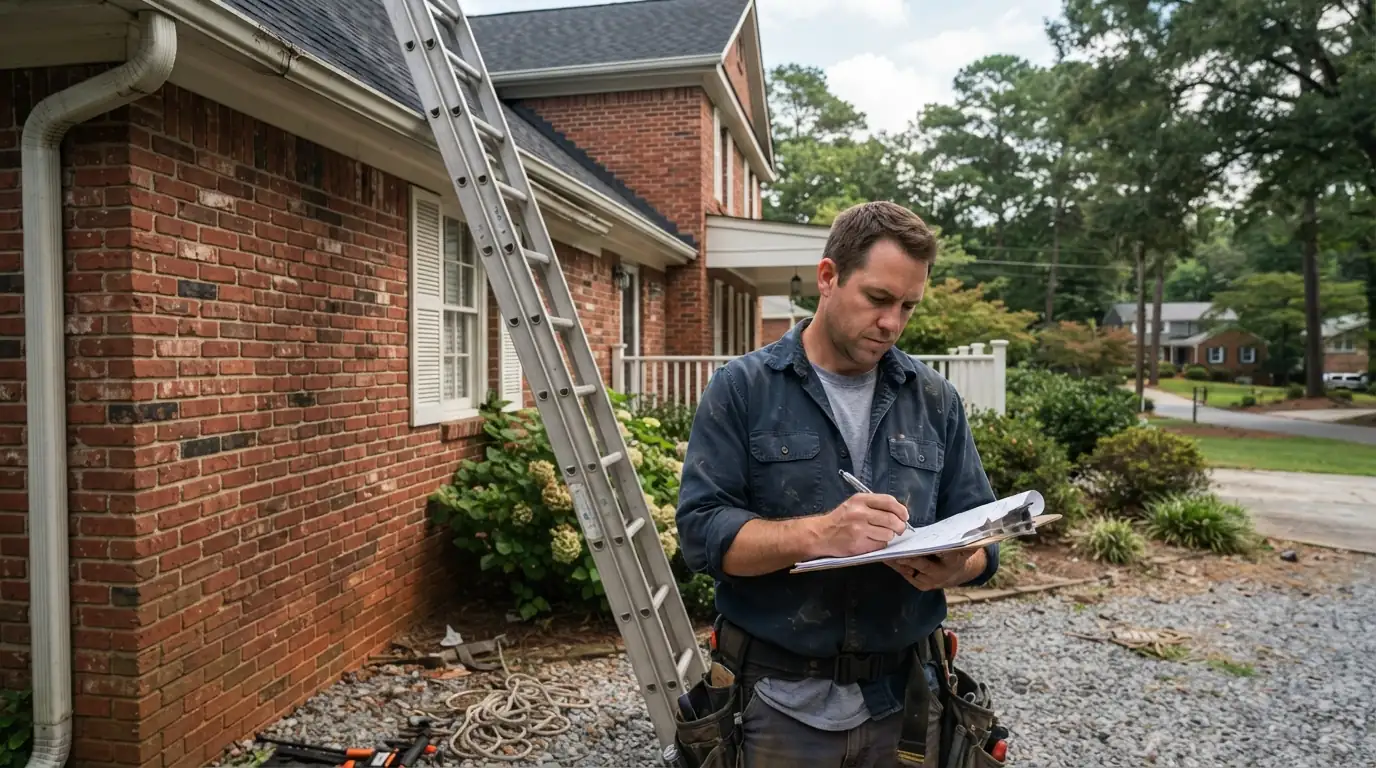
If your roof is leaking during a storm in Atlanta, move people and valuables away from the drip, switch off power to any wet light fixture at the breaker, catch the water, and photograph the damage. Stay off the roof until the storm passes. Then call a roofer to tarp or dry in the opening and trace the leak once it is safe.
- First, make the room safe
- Catch and contain the water
- Photograph everything before cleanup
- Stay off the roof
- When to call for an emergency tarp
- After the storm passes
- Leaks that start days later
First, make the room safe
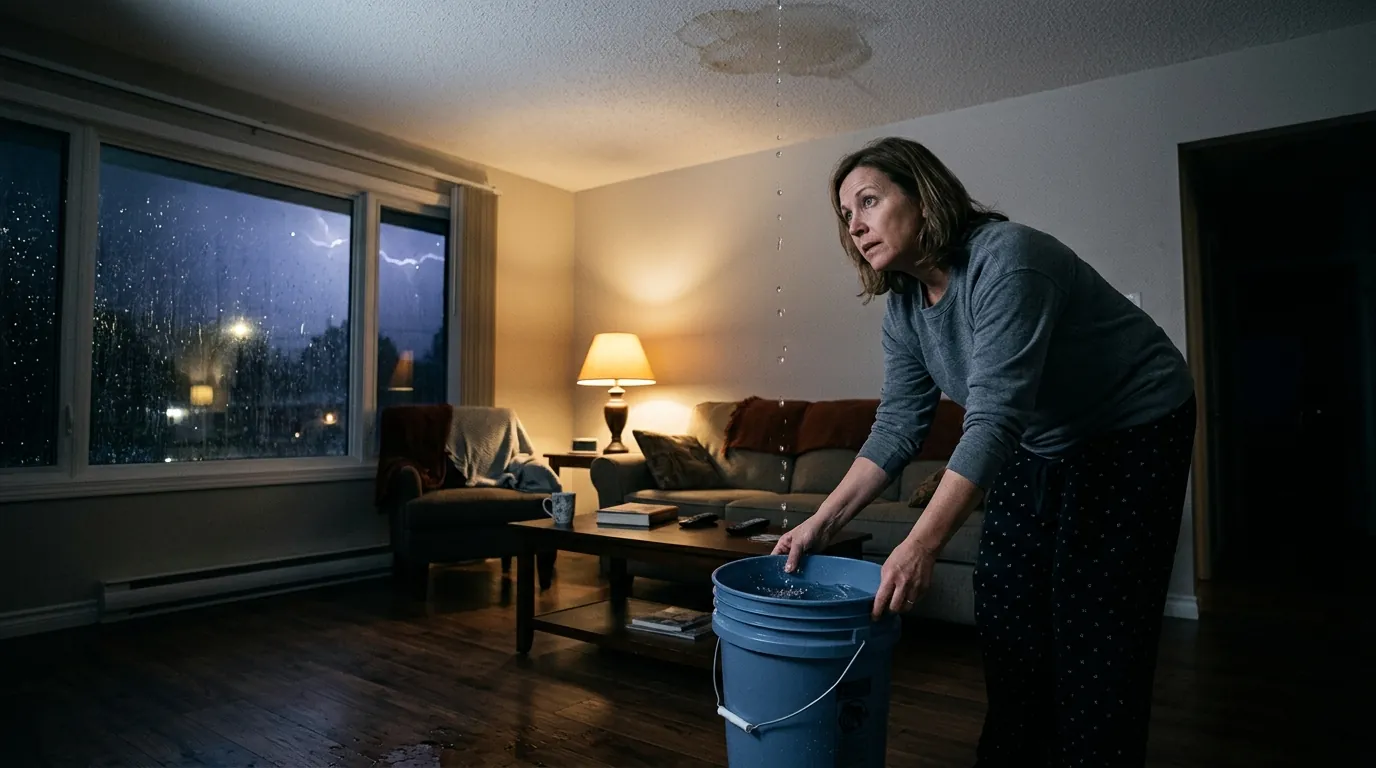
Water and electricity are the real hazard. If water is dripping from a light fixture or running near outlets, switch off that circuit at the breaker, and do not stand in water to reach a switch. Keep people out from under any section of ceiling that is sagging or bulging, because wet drywall is heavy and can come down without much warning.
Move electronics, rugs and anything valuable out of the path of the water. Photos and papers go first; furniture can be covered with plastic if it is too heavy to move.
Catch and contain the water
Put a bucket or trash can under each drip and towels around it to catch splashing. If water is spreading across the ceiling, it is often traveling along a joist or seam; the drip point may move, so check every few minutes.
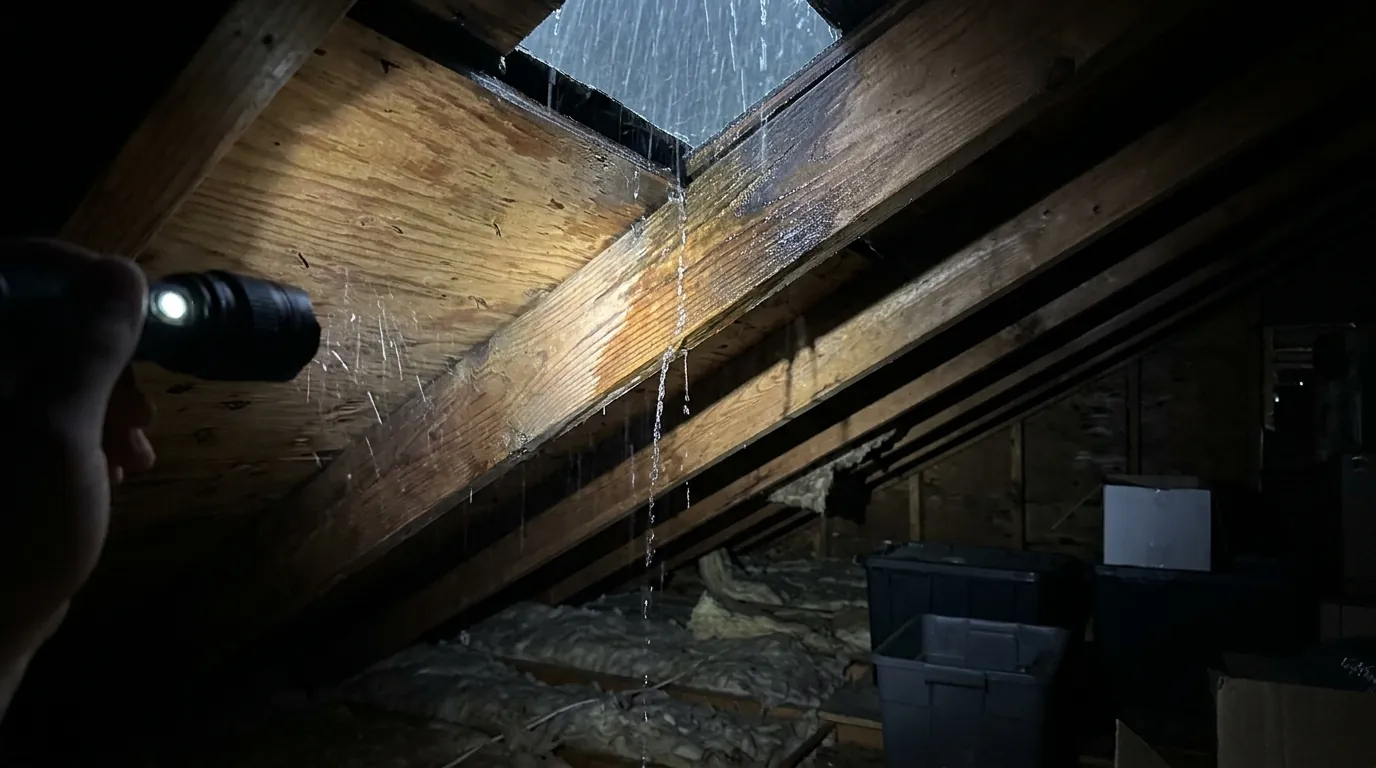
If the attic is easy and safe to reach, a quick look with a flashlight can show where the water is entering. Step only on joists or a walkway, never on the drywall between them, and do not stay up there during lightning.
Photograph everything before cleanup
Before you mop up, take photos and short videos: the ceiling stain, the drip, wet flooring, the attic if you can see it, and anything outside such as shingles or branches in the yard. Your phone records the date and time automatically, which ties the damage to the storm.
Most Georgia homeowner policies require prompt notice of a loss, so note the storm date and report it once everyone is safe. Photos taken now are far more convincing than photos taken after the room is dry.
Stay off the roof
Wet shingles are slick, wind gusts arrive without warning, and a damaged deck may not hold weight. Storm-night falls from ladders and roofs are how a leak becomes an injury. Even after the rain stops, wait for daylight and dry conditions, or leave the roof to a crew with fall protection.
When to call for an emergency tarp
Call right away if you can see daylight through the attic, if shingles or felt are lying in the yard, if a limb is on the roof, or if water is coming in faster than a bucket can handle. Those openings will keep taking water with every rain until they are covered.
A proper tarp runs over the ridge and is fastened through wood battens, which keeps it from peeling back in wind. It is a stopgap measured in weeks, but it protects the house while the claim and the permanent repair are sorted out.
After the storm passes
Once it is safe, the leak should be traced from the attic to the roof. The stain is rarely directly under the entry point, because water runs along rafters first. The repair might be a cracked pipe boot, a valley, flashing or storm damage to the shingles themselves.
The cause matters for insurance. Wind and hail are generally covered perils on Georgia policies, while wear and age are not, so ask for photos that show which it is.
Leaks that start days later
Some storm damage waits. Hail can bruise shingles that still shed water for a few weeks, and wind can break the seal strips under tabs without tearing them off. When a leak appears on a later rain, the earlier storm is often the cause, which is another reason to keep those first photos and note the date. Metro Atlanta's severe-weather season runs from April through September, so a roof that came through one storm will likely face another soon.
Water coming in right now?
Call any hour. A roofer answers, talks you through the next steps, and gets the opening covered.
Call (470) 802-9803FAQ
Related questions
Get safe first. Report the loss promptly once you can, since most Georgia policies require prompt notice.
Once lightning has passed and the wind drops enough to work safely, yes. Otherwise the inside is protected first.
Not always, but water spreads under the surface. Call the same day so it can be traced before it soaks decking or insulation.
Only if the drywall sagged or stayed soft. Dry, firm drywall can often be sealed with stain-blocking primer and painted.
Hail-bruised or wind-creased shingles often fail on a later rain, even when the roof looked fine right after the storm.
Keep reading
More roofing guides for Atlanta homeowners
Roof Permits in Atlanta, DeKalb & Gwinnett: Who Issues Them
City or county, when a re-roof needs a permit, and where historic reviews and the cool-roof rule come in.
Read the guideShingles or metal for an Atlanta home: an honest comparison
Price, lifespan, heat, storms and the city rule, compared honestly.
Read the guideTree on the roof: the first hour
What to do in the first hour: safety, power lines, photos, covering the opening.
Read the guideLeak after the storm?
Call and we will cover the opening, trace the water and photograph the damage for your records.