Guide
A tree just hit your roof. Here is what to do in the first hour.
The first hour after a tree hits the house is about keeping people safe and keeping the damage from spreading. The repairs come later, and they go better when the first hour went right.
- Calls answered 24/7
- Safety first
- Who to call, in order
Quick answer
If a tree hits your roof, get everyone out of the rooms under it, stay away from any downed power lines and call the utility if lines are involved. Then take photos from the ground, call a roofer to cover the opening and check the structure, and call your insurance company. Do not climb onto the roof or cut the tree yourself.
- Get people out from under it
- Look for power lines before anything else
- Take photos from the ground
- Call a roofer to cover the opening
- Let the tree crew handle the tree
- What happens after the first hour
Get people out from under it
The weight of a tree on a roof can shift as branches settle or as rain soaks into the wood, and a ceiling that looks fine can give way. Move everyone, including pets, out of the rooms below the impact point and keep them out until a roofer or engineer says the structure is carrying the load.
If water is coming in, move valuables and electronics away from the drip and set out buckets, but do not stand under a sagging or cracked ceiling to do it. Turn off power at the breaker to any room where water is reaching light fixtures or outlets.
Look for power lines before anything else
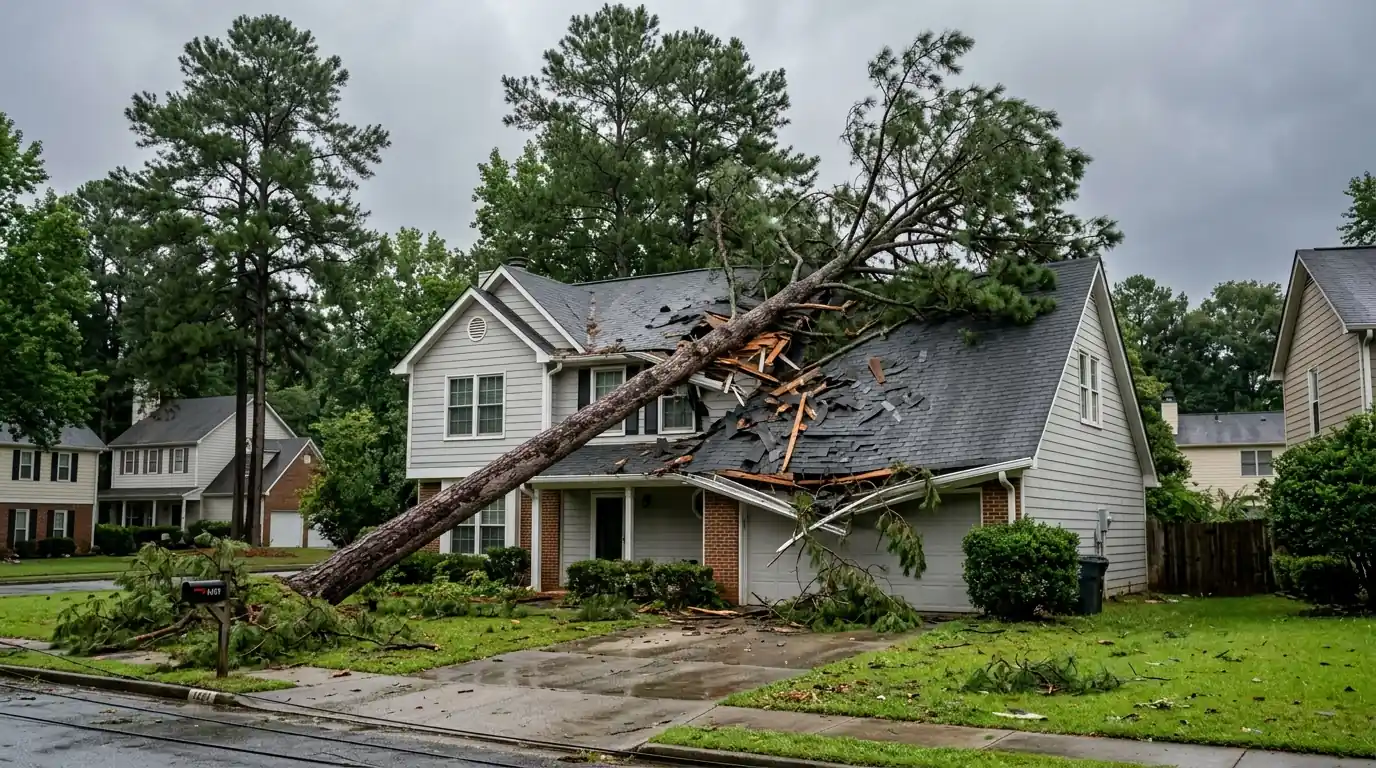
Trees that fall in storms often bring service lines down with them, and a line lying across a wet roof or a fence can be live. If any line is down or touching the tree, stay well away, keep others back and call the utility. Nobody, including the roofer and the tree crew, should go near the tree until the utility says it is safe.
If the service line to your house was pulled away, the meter base or the mast on the roof may be damaged too. That usually needs an electrician before the power can be restored.
Take photos from the ground
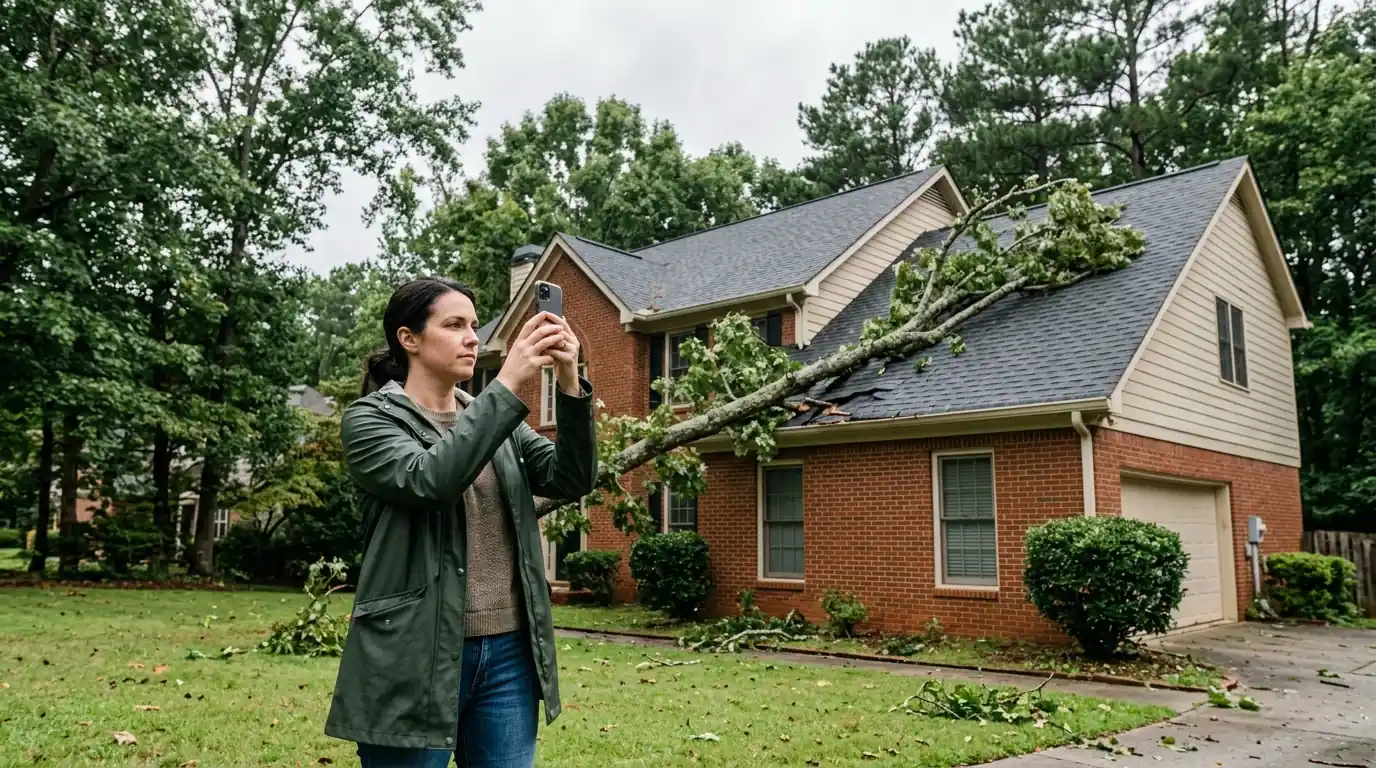
Your insurance company will want to see the damage before anything is moved. From a safe distance, photograph the tree on the roof from several sides, the broken gutters and fascia, and any damage inside: ceiling cracks, water stains and wet insulation. Wide shots that show the whole house help as much as close-ups.
Most Georgia homeowner policies require prompt notice of a loss, and many set a one-to-two-year window for a claim, so it is worth calling your insurer the same day and writing down the claim number.
Call a roofer to cover the opening
A roofer can dry in what is reachable, check the attic for cracked rafters, and tell you whether the structure is still carrying the load. When the tree is still on the roof, the roofer works alongside the tree crew so the weight comes off in sections without tearing more of the roof open.
Once the tree is off, the opening gets a proper temporary cover fastened to the roof, not a tarp held down with bricks, and the permanent repair is scheduled once the insurance adjuster has seen the damage.
Let the tree crew handle the tree
Cutting a tree that is lying on a roof is one of the most dangerous jobs in storm cleanup, because the trunk can roll or spring when it is cut. Leave it to a tree crew with rigging and a crane or bucket truck when needed, and do not let anyone climb onto the roof with a saw.
Inside the City of Atlanta, a tree that has already fallen does not need a removal permit, though the city's Arborist Division asks to be told about the removal and the tree's condition. A standing dead or damaged tree that has not come down yet needs a permit before it is removed.
What happens after the first hour
Once the weight is off and the opening is covered, the roof is opened back to sound wood and the real damage is measured: broken decking, cracked rafters, torn gutters and fascia, and whatever water reached the ceilings. That scope, with photos, goes to your insurance adjuster.
The permanent repair rebuilds the framing and decking first and then the roof covering, matched to the rest of the roof. If rafters were broken, the repair may need a permit, which the roofer should pull.
Tree on your roof right now?
Call any hour. A roofer answers, talks you through the next steps and gets the opening covered.
Call (470) 802-9803FAQ
Related questions
No. The trunk can roll or spring when cut and the roof can shift as the weight comes off. A tree crew with rigging should do it while a roofer watches the structure.
Wind is a standard covered peril on most Georgia homeowner policies, and a tree that falls on the house in a storm is usually covered. Call your insurer the same day.
Not for a tree that has already fallen, though the Arborist Division asks to be notified. A standing dead or hazardous tree needs a permit first.
Stay out of the rooms under the impact point until the structure has been checked. If the tree hit the main roof hard or lines are down, it may be safer to leave until it is assessed.
Usually the same day once lines are cleared and the tree crew has taken the weight off or made it safe to work around.
Keep reading
More roofing guides for Atlanta homeowners
What a Roof Replacement Costs in Atlanta, GA
Published 2026 price ranges by material, and the line items that change a quote.
Read the guideThe Atlanta cool roof ordinance, explained for homeowners
What the 2026 rule requires, who it covers, and how compliance is checked.
Read the guideChoosing a roofing contractor
Questions to ask any Atlanta roofer: permits, rated products, decking, scope, insurance and storm-chaser red flags.
Read the guideTree or limb on the house?
Call any hour. A roofer answers and gets the opening covered as soon as it is safe.